
Langtang Valley Trek 11 Days: Into the Heart of the Himalayas
Langtang Valley Trek 11 Days: Journey to Kyanjin Gompa
The Langtang Valley Trek 11 Days is one of Nepal’s most rewarding Himalayan journeys for travelers who want spectacular mountain scenery, traditional mountain culture, beautiful forests, high-altitude landscapes and an authentic trekking experience without committing to a very long expedition.
Located north of Kathmandu near the Nepal–Tibet border, the Langtang region combines dramatic Himalayan landscapes with centuries-old Tamang and Tibetan-influenced culture. The trail begins at Syabrubesi, follows the Langtang Khola through dense forests and mountain villages, and gradually climbs toward Kyanjin Gompa, one of the most beautiful destinations in the Langtang Valley.
The journey becomes even more memorable with an optional high-altitude excursion toward Tserko Ri, reaching around 5,000 meters, or a more moderate alternative to Langsisa Kharka.
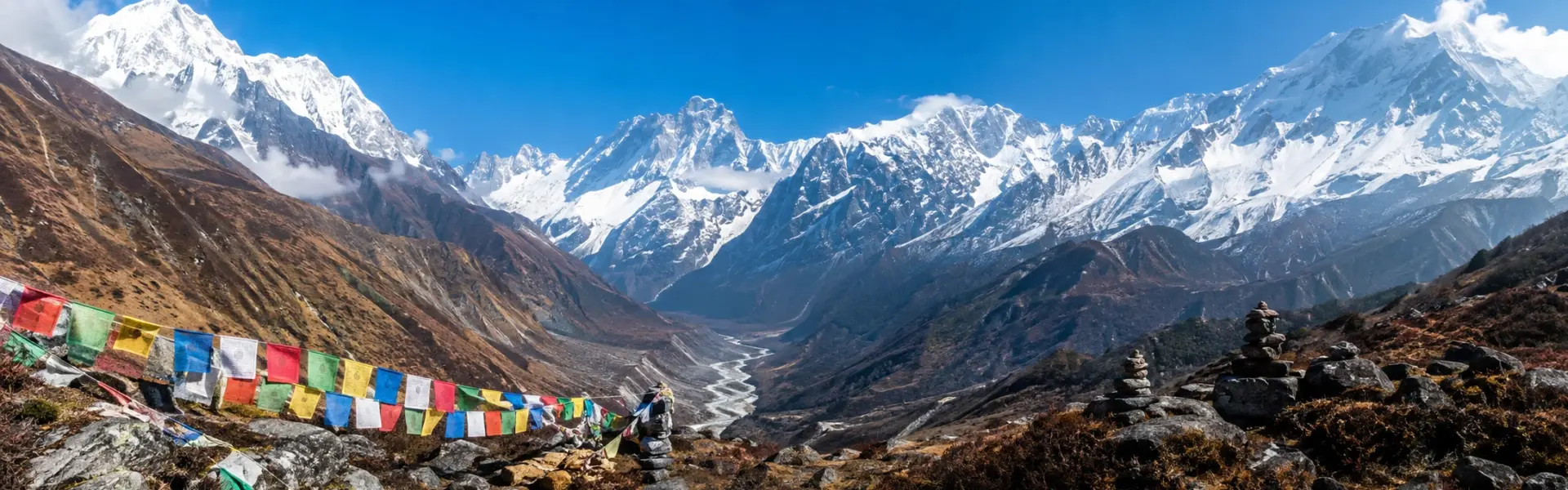
Unlike some of Nepal’s more crowded trekking routes, Langtang offers a quieter Himalayan experience while still providing remarkable mountain views. During the trek, travelers encounter rhododendron and oak forests, waterfalls, yak pastures, Buddhist prayer walls, monasteries, mountain streams and panoramic views of peaks including Langtang Lirung and Ganchenpo.
This carefully designed 11-day Langtang Valley Trek itinerary also includes Kathmandu sightseeing before the trek, allowing travelers to experience some of Nepal’s most important cultural and historical landmarks.
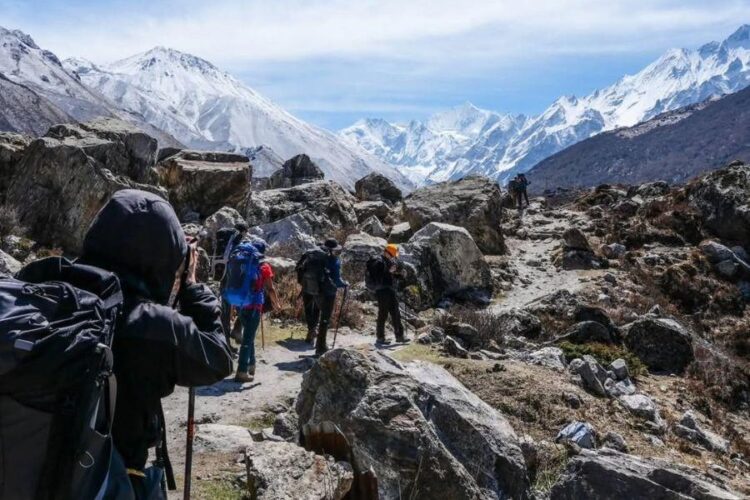
The Langtang Valley Trek is an excellent choice for travelers looking for a combination of mountains, culture, nature and adventure within a relatively compact trekking schedule.
One of the biggest advantages of this route is its accessibility. From Kathmandu, trekkers can reach Syabrubesi by road and begin walking directly into the Himalayan landscape.
The trek offers an impressive variety of scenery within a single journey:
- Dense Himalayan forests
- Rhododendron and oak trees
- Waterfalls and mountain streams
- Tamang villages
- Buddhist monasteries
- Mani walls and prayer wheels
- Yak grazing pastures
- Traditional mountain settlements
- High Himalayan valleys
- Langtang Lirung views
- Ganchenpo mountain scenery
- Kyanjin Gompa
- Tserko Ri
- Langsisa Kharka
For travelers who want a meaningful Himalayan adventure without spending three weeks or more on the trail, the Langtang Valley Trek 11 Days provides an excellent balance.
Langtang Valley Trek at a Glance
| Trek Information | Details |
|---|---|
| Trek Name | Langtang Valley Trek 11 Days |
| Destination | Langtang Valley, Nepal |
| Starting Point | Kathmandu |
| Trek Starting Point | Syabrubesi |
| Main Destination | Kyanjin Gompa |
| Highest Point | Approximately 5,000 m at Tserko Ri |
| Trek Duration | 11 Days |
| Walking Days | Approximately 5 days |
| Trekking Region | Langtang |
| Accommodation | Hotels and mountain guesthouses |
| Meals During Trek | Breakfast, Lunch and Dinner |
| Main Cultural Group | Tamang communities |
| Guide | English-speaking licensed trekking guide |
| Transportation | Private city transportation and bus/optional private jeep |
| Difficulty | Moderate to challenging depending on high-altitude hike |
| Major Highlight | Kyanjin Gompa and Tserko Ri |
| Best For | Adventure, culture, nature and Himalayan views |
Langtang Valley Trek 11 Days Cost
The group discount pricing for this trekking package is designed to make the journey more affordable for travelers booking together.
Group Discount Price
| Number of People | Price Per Person |
|---|---|
| 1 person | US$750 |
| 2 people | US$650 |
| 3–5 people | US$600 |
| 6–9 people | US$550 |
| 10–15 people | US$530 |
| 16+ people | US$500 |
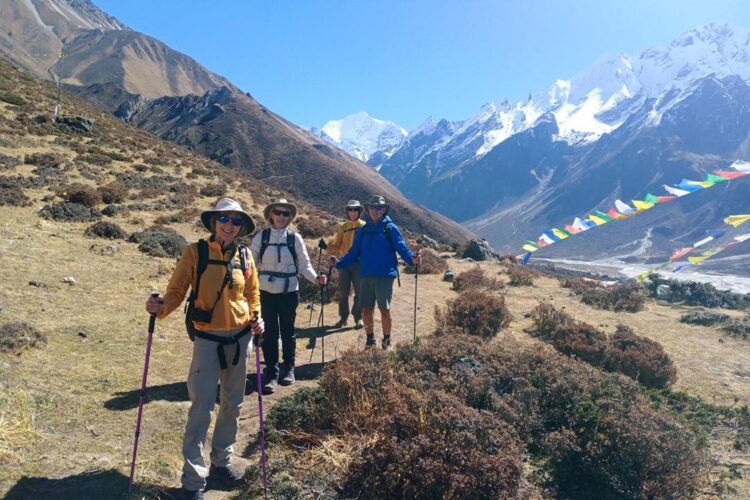
The price per person decreases as the group size increases, making the Langtang Valley Trek 11 Days particularly attractive for friends, families, private groups and organized trekking groups.
What Can Affect the Final Trek Cost?
The final cost of a Langtang trek can depend on several factors, including:
- Group size
- Transportation preference
- Private jeep versus local bus
- Hotel category in Kathmandu
- Additional accommodation requirements
- Personal expenses
- Travel insurance
- Emergency evacuation coverage
- Optional services
- Additional activities
Travelers who prefer more comfortable transportation can choose the private jeep option between Kathmandu and Syabrubesi at an additional cost.
Detailed Langtang Valley Trek 11 Days Itinerary
Day 1: Arrival in Kathmandu – Transfer to Hotel
Altitude: 1,300 m / 4,265 ft approximately
Transportation: Private car
Driving Time: Approximately 30 minutes
Accommodation: Hotel
Meals: Dinner
Your Langtang adventure begins when you arrive at Tribhuvan International Airport in Kathmandu.
A representative from the trekking team will meet you at the airport and transfer you to your hotel by private vehicle.
After checking in, you can take some time to relax and recover from your journey.
In the evening, a traditional Nepali welcome dinner is arranged. This provides your first opportunity to experience Nepalese cuisine, hospitality, music and cultural traditions.
Your trekking guide will also provide an introduction to the upcoming journey and explain important information regarding the trail, accommodation, meals, altitude, walking conditions and trekking preparation.
Overnight
Hotel in Kathmandu.
Day 2: Kathmandu Sightseeing and Trek Preparation
Altitude: 1,300 m
Transportation: Private vehicle
Duration: Approximately 6–7 hours
Accommodation: Hotel
Meals: Breakfast
Before heading toward the mountains, you will spend a day exploring the cultural heritage of Kathmandu Valley.
Kathmandu is home to centuries-old temples, monasteries, stupas, palaces and traditional neighborhoods.
Depending on the sightseeing schedule, the itinerary includes some of the valley’s most significant heritage landmarks:
Pashupatinath Temple
One of Nepal’s most important Hindu religious sites, Pashupatinath stands on the banks of the Bagmati River and is known for its intricate architecture and spiritual significance.
Swayambhunath Stupa
Also popularly known as the Monkey Temple, Swayambhunath sits on a hill overlooking Kathmandu Valley and provides impressive views of the city.
Boudhanath Stupa
Boudhanath is one of the largest Buddhist stupas in Nepal and an important center of Tibetan Buddhist culture.
Kathmandu Durbar Square
The historic palace square features traditional Newari architecture, courtyards, temples and monuments.
The sightseeing day also provides time to make final preparations for the trek.
Overnight
Hotel in Kathmandu.
Day 3: Kathmandu to Syabrubesi
Altitude: 1,420 m / 4,658 ft
Transportation: Bus
Driving Time: Approximately 7–8 hours
Accommodation: Guesthouse
Meals: Breakfast, Lunch and Dinner
After an early breakfast, the journey toward the Langtang region begins.
The road follows the northern hills of Nepal and eventually reaches Syabrubesi, the main gateway to the Langtang Valley Trek.
There are different road approaches toward Syabrubesi, and the journey generally passes through scenic hill settlements and follows sections of the Trishuli River.
As Kathmandu gradually disappears behind you, the landscape changes from urban surroundings to green hills, river valleys and mountain settlements.
Syabrubesi is a small mountain village surrounded by spectacular Himalayan scenery. On clear days, views toward the surrounding Himalayan ranges can be seen from the region.
This is your final overnight stop before beginning the main trekking section.
Overnight
Mountain guesthouse in Syabrubesi.
Day 4: Syabrubesi to Lama Hotel
Altitude: 2,350 m / 7,709 ft
Walking: Approximately 5–6 hours
Accommodation: Guesthouse
Meals: Breakfast, Lunch and Dinner
Today you officially begin walking on the Langtang Valley trail.
The route crosses the Bhote Koshi and gradually follows the Langtang Khola through a beautiful forest environment.
The trail passes through dense vegetation dominated by rhododendron, oak and other Himalayan trees.
One of the highlights of the day is Bamboo, where trekkers can stop for a rest before continuing toward Lama Hotel.
The forest is also home to a variety of Himalayan flora and fauna. Depending on the season and conditions, you may encounter birds and other wildlife along the trail.
The trail continues gradually uphill until reaching Lama Hotel.
Overnight
Guesthouse at Lama Hotel.
Day 5: Lama Hotel to Langtang Village
Altitude: 3,500 m / 11,482 ft
Walking: Approximately 5–6 hours
Accommodation: Guesthouse
Meals: Breakfast, Lunch and Dinner
The landscape begins changing significantly as you climb higher into the Langtang Valley.
The trail continues through forested sections and opens into areas with waterfalls, streams, meadows and mountain views.
You will reach Ghoda Tabela, traditionally associated with a horse stable, where trekkers normally take a break and have lunch.
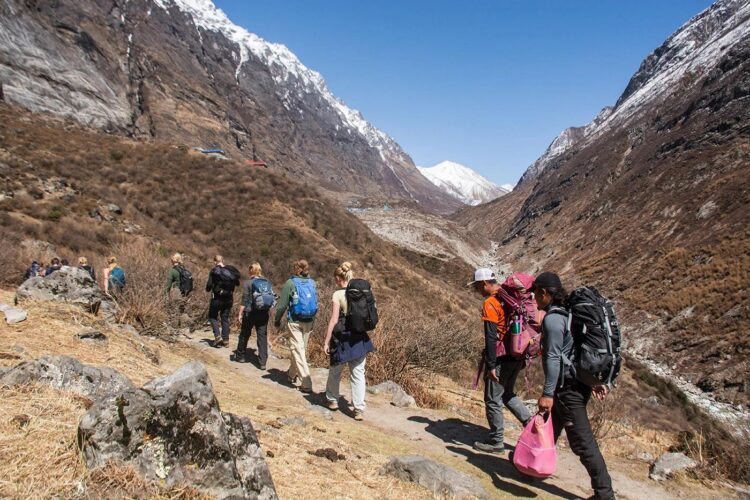
As the trail continues, the valley gradually becomes wider and the Himalayan mountains become increasingly visible.
You will encounter yak grazing areas and traditional settlements as you approach Langtang Village.
Langtang Village has an important and emotional history. The settlement was severely affected by the devastating 2015 earthquake, but the local community has worked hard to rebuild and restore life in the region.
Today, Langtang remains an important cultural and trekking settlement.
Overnight
Guesthouse in Langtang Village.
Day 6: Langtang Village to Kyanjin Gompa
Altitude: 3,860 m / 12,664 ft
Walking: Approximately 3–4 hours
Accommodation: Guesthouse
Meals: Breakfast, Lunch and Dinner
Today is one of the most exciting days of the Langtang Valley Trek 11 Days.
After breakfast, you continue toward Kyanjin Gompa, the highest overnight settlement on this itinerary.
The walking distance is relatively short compared with previous days, giving you time to enjoy the surroundings and gradually adjust to the increasing altitude.
Along the route, you will encounter:
- Mani walls
- Prayer wheels
- Buddhist shrines
- Water mills
- Mountain streams
- Traditional stone houses
- Himalayan pastureland
The trail passes through Mundu and continues toward Kyanjin Gompa.
As you approach the settlement, the surrounding Himalayan landscape becomes increasingly dramatic.
Kyanjin Gompa is a Buddhist cultural site and one of the main highlights of the entire trek.
The area also has a famous local cheese production tradition, giving visitors an opportunity to experience another part of the region’s mountain culture.
From Kyanjin Gompa, you can enjoy magnificent views of surrounding peaks, including Langtang Lirung and Ganchenpo.
Overnight
Guesthouse at Kyanjin Gompa.
Day 7: Tserko Ri or Langsisa Kharka Excursion
Highest Optional Altitude: Approximately 5,000 m at Tserko Ri
Alternative: Langsisa Kharka, approximately 4,300 m
Walking: Approximately 5–6 hours
Accommodation: Guesthouse
Meals: Breakfast, Lunch and Dinner
This is the major adventure day of the Langtang Valley Trek 11 Days.
There are two possible excursion options depending on your physical condition, weather, trail conditions and trekking preference.
Option 1: Tserko Ri
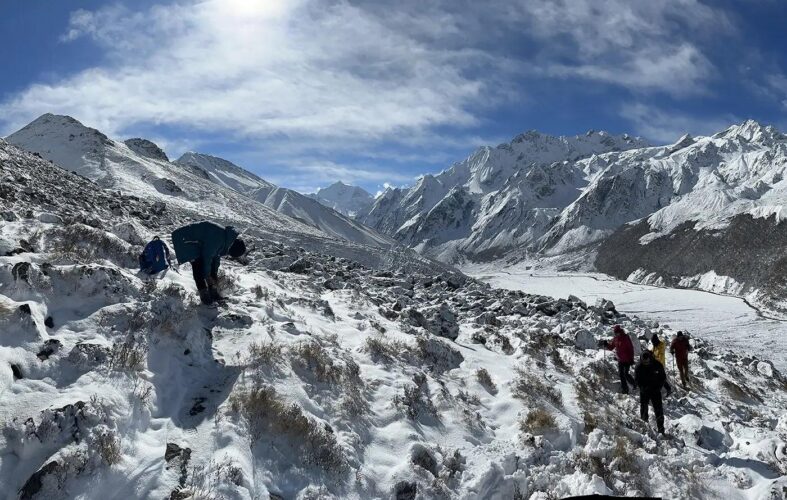
For trekkers who are physically prepared and comfortable with high-altitude walking, the route can continue toward Tserko Ri, reaching approximately 5,000 meters.
The climb is demanding, but the panoramic views from the upper sections make the effort worthwhile.
From the viewpoint, trekkers can experience an expansive Himalayan panorama and look across the spectacular mountains surrounding Langtang Valley.
Because of the altitude, the Tserko Ri option should be approached carefully and only when conditions are suitable.
Option 2: Langsisa Kharka
For travelers who prefer a less demanding alternative, Langsisa Kharka offers an excellent excursion through beautiful Himalayan pastureland.
The area is known for yak grazing and open mountain landscapes.
After the day’s excursion, everyone returns to Kyanjin Gompa for another night.
Overnight
Guesthouse at Kyanjin Gompa.
Day 8: Kyanjin Gompa to Lama Hotel
Altitude: 2,350 m / 7,709 ft
Walking: Approximately 6–7 hours
Accommodation: Guesthouse
Meals: Breakfast, Lunch and Dinner
After reaching the highest point of the journey, it is time to begin the descent.
The trail follows the route back toward Lama Hotel.
Interestingly, the return journey often feels completely different from the ascent. Descending through the valley allows you to see familiar landscapes from a different perspective.
You can stop at Tamang settlements, enjoy waterfalls and observe the changing vegetation as you lose altitude.
The lower sections of the route are rich in forests and may provide opportunities to observe Himalayan flora and fauna.
After several hours of walking, you arrive at Lama Hotel.
Overnight
Guesthouse at Lama Hotel.
Day 9: Lama Hotel to Syabrubesi
Altitude: 1,420 m / 4,658 ft
Walking: Approximately 5–6 hours
Accommodation: Guesthouse
Meals: Breakfast, Lunch and Dinner
Today is the final walking day of the Langtang trek.
The trail continues downhill toward Syabrubesi, passing through forested areas and mountain villages.
Although the route is familiar, the scenery can look completely different when traveling in the opposite direction.
You will have time to enjoy the final sections of the trail, interact with local communities and appreciate the landscapes of the Langtang region.
Eventually, you arrive back in Syabrubesi.
This marks the completion of the trekking portion of your Himalayan journey.
Overnight
Guesthouse in Syabrubesi.
Day 10: Syabrubesi to Kathmandu
Altitude: 1,300 m
Transportation: Bus
Driving: Approximately 7–8 hours
Accommodation: Hotel
Meals: Breakfast and Lunch
After breakfast, you leave Syabrubesi and begin the return journey to Kathmandu.
The road once again follows sections of the Trishuli River before continuing toward the Kathmandu Valley.
The journey takes several hours because of the mountainous terrain and road conditions.
After reaching Kathmandu, you will transfer to your hotel and have time to rest.
In the evening, you can enjoy the atmosphere of Thamel, Kathmandu’s famous tourist district, with its restaurants, cafés, shops and lively streets.
Overnight
Hotel in Kathmandu.
Day 11: Departure from Nepal or Extend Your Journey
Transportation: Private car
Duration: Approximately 30 minutes
Meals: Breakfast
Your Langtang Valley Trek 11 Days officially concludes today.
After breakfast, the trekking team will arrange your transfer to Tribhuvan International Airport according to your flight schedule.
If you have additional time in Nepal, you can also extend your holiday with another trekking route, cultural tour, wildlife experience or adventure activity.
The trekking company can assist with onward travel arrangements depending on your plans.
What Makes the Langtang Valley Trek Special?
1. Kyanjin Gompa
Kyanjin Gompa is the spiritual and geographical heart of the upper Langtang Valley.
Surrounded by mountains and high-altitude landscapes, it provides one of the most memorable overnight experiences of the trek.
2. Tserko Ri
For adventurous trekkers, Tserko Ri provides the opportunity to reach approximately 5,000 meters and enjoy spectacular Himalayan views.
3. Tamang Culture
The Langtang region is strongly associated with Tamang communities whose culture, traditions, architecture and Buddhist practices contribute significantly to the character of the trek.
4. Himalayan Forests
Lower sections of the route pass through beautiful rhododendron and oak forests.
During spring, rhododendron blooms can add vibrant colors to the trail.
5. Yak Pastures
Higher sections of the Langtang Valley contain open grazing areas where yaks are traditionally kept by local communities.
6. Buddhist Heritage
Prayer wheels, Mani walls, inscriptions, monasteries and shrines appear throughout the route.
These cultural elements make the Langtang trek more than just a mountain walk.
Langtang Valley Trek Difficulty
The Langtang Valley Trek 11 Days is generally considered a moderate trek, although the difficulty increases significantly if you choose the Tserko Ri excursion.
The main factors that determine difficulty include:
- Daily walking duration
- Increasing altitude
- Trail conditions
- Weather
- Individual fitness
- Previous trekking experience
- Pace of walking
- Acclimatization
- Choice of high-altitude excursion
Most days involve approximately 3–8 hours of movement depending on the route and transportation schedule.
The Tserko Ri climb is considerably more demanding because of the altitude.
Trekkers should prepare through regular walking, hiking, cardiovascular exercise and strength training before arriving in Nepal.
Altitude on the Langtang Valley Trek
Altitude is an important consideration on this trek.
The itinerary progresses approximately as follows:
Kathmandu – 1,300 m
↓
Syabrubesi – 1,420 m
↓
Lama Hotel – 2,350 m
↓
Langtang Village – 3,500 m
↓
Kyanjin Gompa – 3,860 m
↓
Tserko Ri – approximately 5,000 m
↓
Lama Hotel – 2,350 m
↓
Syabrubesi – 1,420 m
↓
Kathmandu – 1,300 m
The gradual progression and overnight stop at Kyanjin Gompa allow trekkers to spend time adjusting before attempting the optional high-altitude excursion.
However, altitude affects everyone differently, so trekkers should always communicate with their guide if they experience unusual symptoms.
Best Time for Langtang Valley Trek
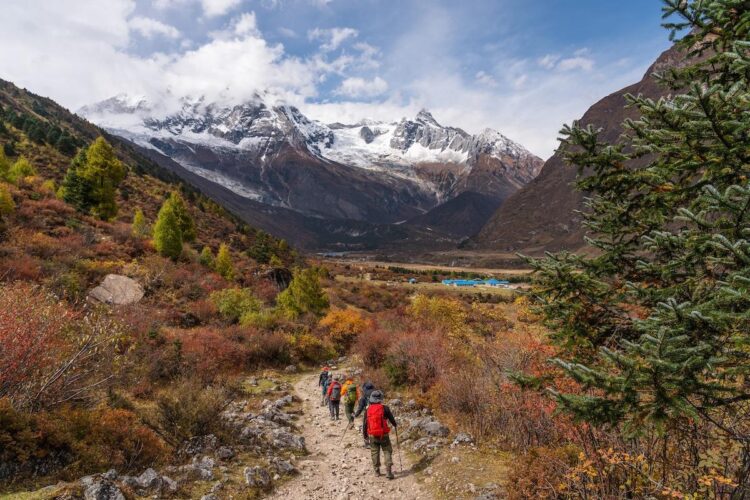
The best seasons for trekking in the Langtang region are generally the spring and autumn seasons.
Spring – March to May
Spring brings warmer temperatures, clearer mountain views and blooming rhododendrons.
This is an excellent period for travelers who want to combine Himalayan scenery with colorful mountain forests.
Autumn – September to November
Autumn is traditionally one of the most popular trekking periods in Nepal.
The weather is generally favorable, skies can be clear and mountain visibility is often excellent.
Winter – December to February
Winter can bring cold temperatures and snow at higher elevations.
Experienced trekkers who are properly equipped can still enjoy the region, but conditions may be more challenging.
Monsoon – June to August
The monsoon season brings rainfall, wet trails, clouds and possible road difficulties.
Travel is still possible in Nepal during this period, but trekkers should be prepared for changing conditions.
What Is Included in the Langtang Valley Trek 11 Days?
The trekking package includes the following services:
Transportation
- Airport pickup and drop-off by private vehicle
- Kathmandu city transportation for sightseeing
- Kathmandu to Syabrubesi transportation
- Syabrubesi to Kathmandu transportation
- Optional private jeep available at additional cost
Accommodation
- Kathmandu hotel accommodation according to the itinerary
- Complimentary breakfast in Kathmandu
- Mountain guesthouse/lodge accommodation during the trek
Meals
Full-board meals during the trekking section:
- Breakfast
- Lunch
- Dinner
Trekking Guide
A professional English-speaking trekking guide is provided.
The guide is:
- Government licensed
- Ministry of Tourism trained
- First-aid trained
- Experienced in Himalayan trekking
- Provided with salary, accommodation, meals, transportation and insurance
Porter Service
Strong porters are provided based on the stated group arrangement, with one porter shared between two paying trekkers.
Porter services include:
- Salary
- Food
- Accommodation
- Transportation
- Insurance
Trekking Equipment
The package also includes:
- Down jacket
- Sleeping bag
- Trekking map
- Trekking T-shirt
- Duffel bag
The down jacket, sleeping bag and duffel bag are provided for the trek and must be returned afterward as specified by the operator.
Other Services
The package also covers:
- Required trekking permits
- Necessary paperwork
- Government and local taxes
- Company service charges
- First-aid medicines carried by the guide
- Welcome Nepali dinner
- Trekking achievement certificate
What Is Not Included?
The following expenses are not included in the standard package price:
- International airfare
- Nepal visa fee
- Travel insurance
- Rescue and emergency evacuation insurance
- Kathmandu sightseeing entrance fees
- Mineral water
- Cold drinks
- Bar bills
- Hot showers
- Telephone expenses
- Laundry
- Personal expenses
- Additional activities
- Additional porter requirements
- Lunch and dinner in Kathmandu
- Extra accommodation caused by flight delays or early arrival
- Extra accommodation resulting from natural disasters or unforeseen circumstances
- Tips and gratuities for guides and porters
- Services not specifically mentioned in the included section
Travelers should have appropriate travel and rescue insurance before beginning the trek.
Optional Add-Ons
Travelers can customize the trip with additional services.
Private Jeep
Instead of traveling by local bus between Kathmandu and Syabrubesi, you can choose a private jeep for greater comfort and flexibility.
Luxury Kathmandu Hotel
A higher-category or luxury hotel can be arranged in Kathmandu at an additional cost.
What Should You Pack for the Langtang Valley Trek?
A well-prepared packing list can make your trek considerably more comfortable.
Clothing
- Trekking T-shirts
- Thermal base layers
- Fleece jacket
- Down jacket
- Waterproof jacket
- Trekking trousers
- Warm trousers
- Underwear
- Warm socks
- Gloves
- Woolen hat
- Sun hat
Footwear
- Comfortable trekking boots
- Lightweight camp shoes
- Extra socks
Personal Items
- Sunglasses
- Sunscreen
- Lip balm
- Water bottle
- Headlamp
- Personal toiletries
- Small towel
- Power bank
- Camera
- Personal medication
Documents
Carry:
- Passport
- Visa documentation
- Travel insurance details
- Emergency contact information
- Trekking permit-related documents
A duffel bag and sleeping bag are provided as part of the package according to the stated inclusions.
Accommodation During the Langtang Trek
Accommodation changes as you move from Kathmandu into the mountains.
In Kathmandu, travelers stay in a hotel according to the selected package.
During the trekking section, accommodation is generally provided in local mountain guesthouses or lodges.
These establishments are simple but offer the essential facilities needed by trekkers.
Rooms are generally basic, and facilities become more limited as altitude increases.
Travelers should therefore approach mountain accommodation as part of the Himalayan trekking experience rather than expecting city-hotel facilities.
Food During the Langtang Valley Trek
The trekking package includes breakfast, lunch and dinner during the trekking portion.
Mountain lodges commonly serve a mixture of local and familiar trekking meals.
Possible food options include:
- Dal Bhat
- Rice
- Vegetables
- Noodles
- Soups
- Pasta
- Potatoes
- Eggs
- Bread
- Tibetan-style dishes
- Tea
- Coffee
Dal Bhat remains one of the most popular choices among trekkers because it provides carbohydrates, vegetables and protein while being filling and practical for long trekking days.
Responsible Tourism in Langtang
The Langtang region is not simply a trekking destination. It is also home to mountain communities, wildlife, forests and culturally important sites.
Responsible travelers should:
- Carry reusable water bottles
- Avoid unnecessary plastic
- Use designated waste areas
- Respect monasteries and religious sites
- Ask before photographing local people
- Avoid damaging plants
- Stay on established trails
- Respect local customs
- Minimize noise
- Support locally owned businesses where possible
Responsible tourism helps preserve the Langtang Valley for future generations.
Who Is the Langtang Valley Trek 11 Days Suitable For?
This trek can be suitable for:
- First-time Himalayan trekkers with good fitness
- Experienced trekkers
- Couples
- Friends traveling together
- Families with suitable preparation
- Solo travelers
- Small private groups
- Adventure travelers
- Nature lovers
- Photography enthusiasts
- Travelers interested in Buddhist and Tamang culture
The Tserko Ri option requires additional physical preparation because of the altitude and demanding ascent.
Is Langtang Valley Trek Suitable for Beginners?
Yes, the standard Langtang Valley route can be suitable for reasonably fit beginners with proper preparation and an experienced guide.
However, beginners should understand that this is a genuine Himalayan trek.
The challenge is not only the walking distance. Altitude, weather, terrain and long trekking days all contribute to the difficulty.
Beginners should train before the trip and maintain a comfortable walking pace rather than trying to rush.
Langtang Valley Trek vs Other Nepal Treks
One reason travelers choose Langtang is its combination of accessibility and Himalayan scenery.
Compared with longer trekking routes, Langtang can provide a complete mountain experience within a shorter itinerary.
The route offers:
This makes it an excellent alternative for travelers who have already explored Kathmandu but do not have enough time for a much longer Himalayan expedition.
Why Kyanjin Gompa Is the Highlight of the Trek
Kyanjin Gompa is more than simply another overnight stop.
It is where several important aspects of the Langtang experience come together:
- High-altitude Himalayan scenery
- Buddhist culture
- Traditional architecture
- Mountain pastures
- Yak herding
- Cheese-making traditions
- Hiking opportunities
- Access to Tserko Ri
- Views of surrounding peaks
Spending time here allows travelers to slow down and experience the upper Langtang Valley rather than simply passing through it.
Travel Tips for Langtang Valley Trek
Start Walking Early
Morning starts are generally useful because mountain weather can change during the day.
Stay Hydrated
Drink enough water throughout the trek, particularly as you gain altitude.
Walk at Your Own Pace
There is no advantage in rushing at high altitude.
Listen to Your Guide
Your guide understands the route, weather conditions and altitude-related challenges.
Keep Your Backpack Light
Carry only the essentials.
Protect Yourself From the Sun
High-altitude sunlight can be intense, so sunglasses, sunscreen and appropriate clothing are important.
Carry Some Cash
Card facilities may not be available everywhere along the trail.
Keep Emergency Insurance
Travel and rescue insurance is strongly recommended for Himalayan trekking.
Frequently Asked Questions
How many days is the Langtang Valley Trek?
This package is designed as an 11-day Langtang Valley Trek, including Kathmandu arrival, sightseeing, trekking, return transportation and departure.
What is the highest point of the Langtang Valley Trek?
The standard overnight destination is Kyanjin Gompa at approximately 3,860 meters. The optional Tserko Ri excursion reaches approximately 5,000 meters.
How much does the Langtang Valley Trek 11 Days cost?
The group rate starts at US$750 for a solo traveler and decreases to US$500 per person for groups of 16 or more, based on the provided pricing structure.
Is Tserko Ri compulsory?
No. Tserko Ri is an optional high-altitude excursion. Depending on physical condition and preference, travelers can choose the Langsisa Kharka alternative.
Is food included?
Yes. Breakfast, lunch and dinner are included during the trekking section.
Is Kathmandu accommodation included?
Yes, Kathmandu hotel accommodation according to the itinerary is included, with complimentary breakfast.
Is a trekking guide included?
Yes. A government-licensed, English-speaking trekking guide is included.
Are porters included?
Yes. The package includes porter services based on the stated arrangement of one porter shared between two paying trekkers.
Is transportation included?
Yes. Airport transfers and Kathmandu city transportation are included. Transportation between Kathmandu and Syabrubesi is included by local bus, with private jeep available as an optional upgrade.
Do I need travel insurance?
Yes. Appropriate travel insurance covering trekking and emergency evacuation is strongly recommended.
Can beginners do the Langtang Valley Trek?
Yes, reasonably fit beginners can undertake the standard route with proper preparation and professional guidance. The Tserko Ri excursion is more demanding because of the altitude.
What is the best season for Langtang Trek?
Spring and autumn are generally the most popular seasons because of favorable trekking conditions and mountain visibility.
Where does the Langtang Trek start?
The walking portion of the trek starts at Syabrubesi, which is reached by road from Kathmandu.
What is the main highlight of Langtang Trek?
Kyanjin Gompa is the central highlight, while Tserko Ri, Langtang Lirung views, Tamang villages, Buddhist heritage and Himalayan landscapes add to the overall experience.
Where the Langtang Trail Becomes More Than a Trek
The Langtang Valley Trek 11 Days is more than a journey through the mountains. It is an experience that brings together the raw beauty of the Himalayas, the warmth of Tamang communities, ancient Buddhist traditions, peaceful forests, dramatic valleys and the unforgettable high-altitude landscape surrounding Kyanjin Gompa.
From the winding roads beside the Trishuli River to the forest trails leading toward Lama Hotel, from the rebuilt community of Langtang Village to the breathtaking surroundings of Kyanjin Gompa, every stage of the journey reveals a different side of Nepal.
The optional climb toward Tserko Ri at around 5,000 meters adds another level of adventure for trekkers who want to stand above the valley and experience a wider Himalayan panorama. Those looking for a more relaxed high-altitude excursion can instead explore Langsisa Kharka, with its open mountain landscapes and traditional yak-grazing areas.
What makes this journey especially appealing is the balance it offers. You can experience authentic Himalayan villages, Buddhist heritage, mountain wildlife, rhododendron forests, waterfalls and spectacular peaks without committing to an extremely long trekking expedition.
With group prices ranging from US$750 per person for a solo traveler to US$500 per person for groups of 16 or more, the itinerary also provides flexible options for solo adventurers, couples, families, friends and larger private groups.
Begin Your Langtang Journey with Ambition Himalaya
At Ambition Himalaya, we believe a Himalayan trek should be about more than simply reaching a destination. It should be a well-organized journey where you can enjoy the landscape, connect with local culture and experience the mountains with the support of an experienced trekking team.
From your arrival in Kathmandu and trek preparation to transportation, trekking permits, accommodation, meals, professional guide and porter support, the Langtang Valley Trek 11 Days is designed to make your journey across the Langtang region comfortable, organized and memorable.
If Kyanjin Gompa, Tserko Ri, Tamang villages and the Himalayan landscapes of Langtang are on your Nepal travel list, this 11-day adventure could be the perfect way to experience them.
Ready to explore Langtang Valley?
Ambition Himalaya Treks & Expeditions
Website: www.ambitionhimalaya.com
Email: [email protected]
Contact: +977 9851148898
Plan Your Langtang Valley Adventure
Book the Langtang Valley Trek: https://ambitionhimalaya.com/langtang-valley-trek/
Walk into the Himalayas with Ambition Himalaya — and take home a journey worth remembering.
Ready to Plan Your Trekking? Contact us
More Blog Posts
Everest Base Camp Trek – 14 Days to the Foot of Mount Everest