
Annapurna Circuit Trek Packing List 2026: Complete Gear Guide
Planning the Annapurna Circuit Trek in 2026? One of the most important things to prepare before arriving in Nepal is your trekking gear.
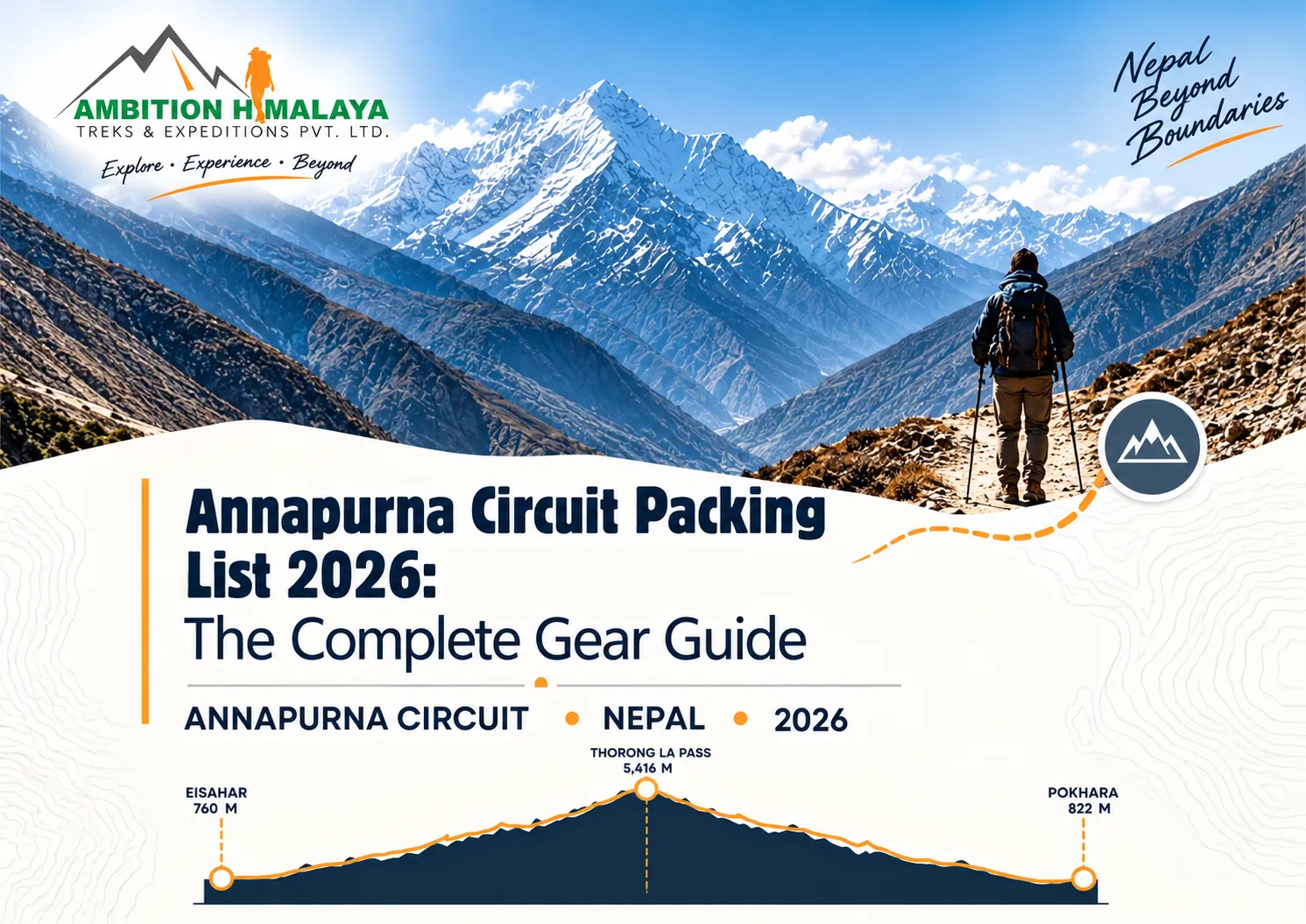
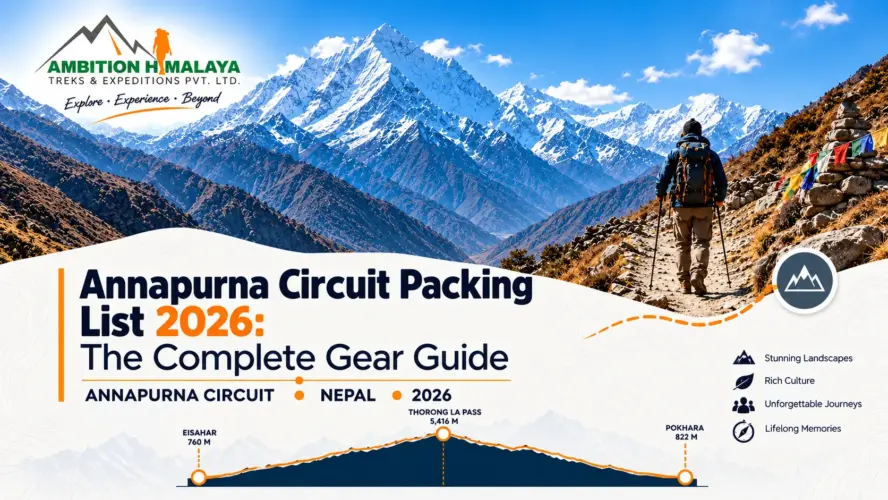
The Annapurna Circuit is different from many shorter Himalayan treks because the trail passes through several distinct environments. You may begin the journey in a relatively warm valley and gradually climb toward high-altitude landscapes, eventually reaching Thorong La Pass at 5,416 metres (17,769 feet).
That means your backpack needs to be prepared for changing temperatures, strong mountain winds, rain, cold mornings and potentially snow around the highest sections of the trail.
At Ambition Himalaya, we recommend packing smart rather than simply packing more. The goal is to carry everything you genuinely need while keeping your backpack manageable throughout the trek.
This Annapurna Circuit Trek Packing List 2026 explains what to bring, what you can rent in Nepal, what you should keep in your daypack, and which items you can safely leave behind.
 Annapurna Circuit Trek Packing List at a Glance
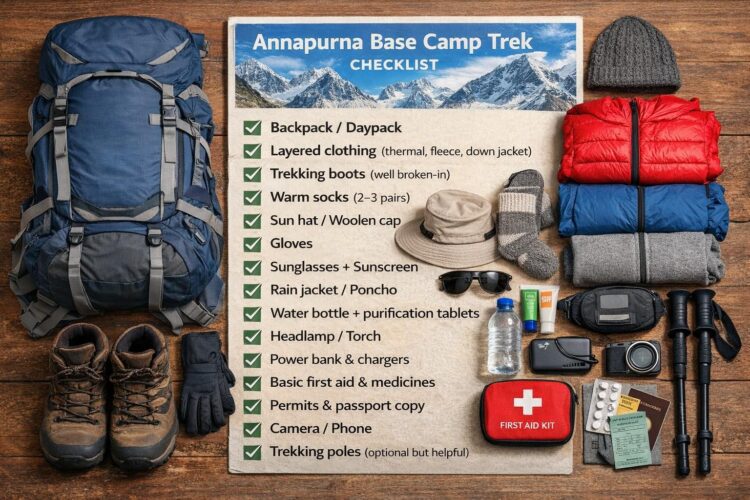
Before going into every category, here is a quick checklist of the essential equipment.
Clothing
- Moisture-wicking trekking T-shirts
- Thermal base layers
- Trekking trousers
- Fleece jacket
- Insulated/down jacket
- Waterproof and windproof jacket
- Waterproof trekking trousers
- Warm hat
- Sun hat or cap
- Buff or neck gaiter
- Trekking socks
- Warm gloves
- Underwear
Footwear
- Comfortable trekking boots
- Camp shoes or sandals
- Trekking socks
- Gaiters if travelling during snowy conditions
Trekking Gear
- 25–40 litre daypack
- Duffel bag if using a porter
- Rain cover
- Trekking poles
- Headlamp
- Water bottles or hydration system
- Sleeping bag
- Sleeping bag liner
Personal Essentials
- Passport
- Trekking permits and documents
- Travel insurance details
- Cash in Nepalese Rupees
- Sunglasses
- Sunscreen
- Lip balm with SPF
- Personal toiletries
- Small towel
Health & Safety
- Personal medication
- Basic first-aid kit
- Blister treatment
- Oral rehydration salts
- Water purification tablets/filter
- Personal altitude medication prescribed by your doctor
Electronics
- Smartphone
- Camera
- Power bank
- Charging cables
- Universal travel adapter
- Spare batteries where required
Why Packing Correctly Matters on the Annapurna Circuit
The Annapurna Circuit covers a dramatic range of elevations and landscapes. Lower sections can feel warm during the day, while the higher areas around Thorong La can become extremely cold, especially during early-morning crossings.
This is why a simple “summer clothes + one jacket” approach is not suitable.
The most useful strategy is layering.
Instead of carrying one extremely heavy jacket for every situation, use several layers that can be added or removed according to the temperature.
A practical layering system consists of:
Base layer → fleece/insulation → down jacket → waterproof/windproof outer shell
This gives you flexibility without unnecessarily increasing your pack weight.
1. Base Layers and Trekking Shirts
Your base layer sits directly against your skin and should move moisture away from your body.
Pack:
- 2–3 quick-drying T-shirts
- 1–2 thermal long-sleeve tops
- 1–2 thermal bottoms
- 4–5 pairs of trekking underwear
Merino wool or good-quality synthetic fabrics are preferable because they dry faster and manage moisture better than cotton.
Avoid Cotton
Cotton absorbs moisture and takes longer to dry.
On a Himalayan trek, wet clothing can become uncomfortable and cold very quickly.
For that reason, lightweight synthetic or merino clothing is generally more practical.
2. Trekking Trousers and Lower-Body Clothing
A pair of comfortable trekking trousers is one of the most frequently used items on the trail.
We recommend:
- 2 pairs of trekking trousers
- 1 lightweight pair of thermal bottoms
- 1 optional lightweight short
- Waterproof trekking trousers
Convertible trekking trousers can be useful in warmer lower sections.
As you gain elevation, however, long trousers and thermal layers become increasingly useful.
3. Fleece Jacket or Mid-Layer
A fleece jacket provides an important insulation layer without adding excessive weight.
A lightweight or medium-weight fleece is usually enough for everyday trekking conditions.
It can be worn:
- During cool mornings
- In shaded sections
- Around higher villages
- Inside teahouses during cold evenings
The advantage of fleece is that it works well as part of a layering system.
4. Down or Insulated Jacket
A proper insulated jacket is one of the most important pieces of equipment for the high sections of the Annapurna Circuit.
Temperatures can fall significantly around high camps and during early-morning sections of the Thorong La crossing.
Choose a jacket that:
- Provides sufficient insulation
- Packs reasonably small
- Fits comfortably over your base and fleece layers
- Protects you from cold mountain conditions
If you do not own a suitable down jacket, renting one in Kathmandu or Pokhara can be a practical option.
5. Waterproof and Windproof Jacket
Do not rely only on your down jacket for weather protection.
A lightweight waterproof shell provides protection against:
- Rain
- Snow
- Strong wind
- Sudden weather changes
Your outer shell should fit comfortably over your insulation layers.
A waterproof jacket is particularly useful because weather conditions in the mountains can change quickly.
6. Trekking Boots
Your trekking boots are arguably one of the most important items you will bring.
Choose boots that:
- Are comfortable
- Have good grip
- Provide suitable ankle support
- Are already broken in
- Fit correctly with your trekking socks
Never Start the Trek With Brand-New Boots
Breaking in your boots before the trek can significantly reduce the possibility of painful hot spots and blisters.
Your boots should be comfortable before you arrive in Nepal.
7. Trekking Socks
Bring around 4–5 pairs of good-quality trekking socks.
Merino wool or technical synthetic socks are useful because they provide warmth while managing moisture.
Avoid wearing wet socks for long periods.
A simple habit that helps is keeping one dry pair specifically for evenings at the teahouse.
8. Trekking Poles
Trekking poles are optional, but many trekkers find them extremely useful on the Annapurna Circuit.
They can help with:
- Long ascents
- Uneven trails
- Rocky sections
- Descents
- Reducing stress on knees
They become particularly useful during long downhill sections after crossing Thorong La.
If you are not travelling with poles, they can generally be purchased or rented in Nepal.
9. Backpack and Duffel Bag
If you are using a porter, you normally do not need to carry your entire trekking wardrobe on your back.
A practical setup is:
Your Daypack
Approximately 25–40 litres, depending on how much you prefer to carry yourself.
Keep essential items accessible:
- Water
- Snacks
- Waterproof jacket
- Down jacket
- Gloves
- Hat
- Sunglasses
- Sunscreen
- Camera
- Documents
- Medication
- Power bank
Porter Duffel
Your main clothing and less frequently used equipment can go into a soft duffel bag.
Always keep important documents, valuables, electronics and essential medication with you rather than inside your porter bag.
10. Sleeping Bag
A warm sleeping bag can make a major difference to your comfort during the colder nights.
For the Annapurna Circuit, especially when travelling through the colder months or crossing the higher sections, choose a sleeping bag appropriate for the expected temperatures.
If you do not want to purchase one specifically for a single trek, sleeping bags are available for rent in Kathmandu and Pokhara.
The exact warmth required depends on your travel season, route variation and accommodation conditions.
11. Headlamp
A lightweight headlamp is an essential item.
It is useful for:
- Early morning starts
- Walking around the teahouse after dark
- Power cuts
- Preparing for a pre-dawn high-pass crossing
Bring spare batteries or make sure the rechargeable headlamp is fully charged before the trek.
12. Sunglasses and Sun Protection
High-altitude sunlight can be intense.
Your packing list should include:
- UV-protection sunglasses
- Sunscreen, preferably SPF 30–50+
- SPF lip balm
- Sun hat or cap
- Buff or neck protection
Sunglasses become particularly important around exposed high-altitude terrain and snow because reflected sunlight can be uncomfortable and potentially harmful to your eyes.
13. Water and Hydration
Staying hydrated is important throughout the trek.
Carry:
- Reusable water bottles
- Water purification tablets or a suitable filter
- Optional hydration bladder
A total carrying capacity of around 2 litres or more can be useful depending on the day’s route and water availability.
Avoid depending entirely on buying bottled water every day.
A reusable system is more convenient and helps reduce plastic waste along the trail.
14. Personal First-Aid Kit
You do not need to carry a large medical bag.
A compact personal kit can include:
- Blister treatment
- Adhesive bandages
- Antiseptic wipes
- Gauze
- Pain-relief medication that you normally use
- Oral rehydration salts
- Personal prescription medicines
- Any medication specifically prescribed for altitude by your doctor
If you have an existing medical condition or take prescription medication, speak with your doctor before travelling.
Altitude Awareness
The Annapurna Circuit reaches a significant altitude, particularly around Thorong La.
Knowing the symptoms of altitude sickness is more important than simply carrying medication.
If you develop concerning symptoms at altitude, tell your guide immediately and follow professional medical advice.
15. Toiletries and Personal Hygiene
Keep your toiletries lightweight.
Useful items include:
- Toothbrush and toothpaste
- Biodegradable soap
- Small shampoo
- Hand sanitizer
- Wet wipes
- Small quick-drying towel
- Toilet paper or tissues
- Moisturizer
- Sunscreen
- Lip balm
A small toiletry bag is enough.
There is no reason to carry full-size bottles of everything.
16. Electronics and Charging
Bring only the electronics you genuinely need.
Recommended:
- Smartphone
- Camera
- Charging cable
- Power bank
- Universal adapter
- Spare camera batteries
A 10,000–20,000 mAh power bank can be useful during a longer trek, particularly when charging availability becomes limited or inconvenient.
Keep electronic equipment protected from moisture.
17. Documents and Money
Keep your important documents safely accessible.
Carry:
- Passport
- Copies of important documents
- Trekking permit information
- Travel insurance documents
- Emergency contact information
- Nepalese cash
Do not keep all of your cash in a single location.
Your travel insurance should specifically cover trekking at the altitude relevant to your itinerary.
18. Snacks for the Trail
You can buy food along much of the Annapurna Circuit, but carrying a few personal snacks is useful.
Good options include:
- Energy bars
- Nuts
- Chocolate
- Dried fruit
- Electrolyte sachets
Choose compact, high-energy foods that you actually enjoy eating.
19. What to Pack for Thorong La Pass
The Thorong La Pass at 5,416 metres is one of the most demanding parts of the Annapurna Circuit.
For the pass day, keep your warmest and most important equipment immediately accessible.
Your daypack should include:
- Insulated/down jacket
- Warm gloves
- Warm hat
- Thermal layer
- Waterproof/windproof shell
- Headlamp
- Sunglasses
- Water
- Snacks
- Personal medication
- Sunscreen
- Phone/camera
- Power bank
Do not bury essential cold-weather equipment inside the main porter duffel.
20. What to Pack by Season
Spring: March to May
Spring generally brings a combination of cool mornings, warmer daytime temperatures and changing conditions at higher elevations.
Pack:
- Lightweight layers
- Fleece
- Insulated jacket
- Rain protection
- Sun protection
- Warm sleeping bag
Higher sections can still be very cold, so do not pack only for the lower valley.
Monsoon: June to August
The monsoon period requires additional rain protection.
Consider:
- Waterproof jacket
- Waterproof trousers
- Backpack rain cover
- Dry bags
- Quick-drying clothing
- Extra socks
- Waterproof protection for electronics
Trail and weather conditions can vary considerably during this period.
Check current local conditions before departure.
Autumn: September to November
Autumn is a popular period for trekking in Nepal.
You should still prepare for cold conditions at higher elevations.
Pack:
- Base layers
- Fleece
- Down/insulated jacket
- Waterproof shell
- Warm gloves
- Hat
- Sleeping bag
- Strong sun protection
Clear weather does not mean the high-altitude sections will be warm.
Winter: December to February
Winter requires greater attention to cold-weather equipment.
Consider:
- Warmer sleeping bag
- Good insulated jacket
- Thermal base layers
- Warm gloves
- Warm hat
- Gaiters
- Appropriate footwear
- Additional cold-weather layers
Snow and trail conditions can vary, so always check current conditions with your trekking agency and guide before attempting a high-pass crossing.
What NOT to Pack for the Annapurna Circuit
Overpacking is one of the most common mistakes on a long Himalayan trek.
You can usually leave these items behind:
- Heavy jeans
- Too many T-shirts
- Large bottles of shampoo
- Excessive cosmetics
- Multiple pairs of casual shoes
- Expensive jewellery
- Unnecessary electronics
- Heavy books
- Large towels
- Duplicate jackets
- Clothing you are unlikely to wear
Remember:
Every unnecessary kilogram becomes part of your journey.
Pack fewer items, but make sure the important ones are reliable.
What Can You Rent in Kathmandu or Pokhara?
You do not necessarily need to purchase every piece of trekking equipment before arriving in Nepal.
Depending on availability, commonly rented equipment can include:
- Down jackets
- Sleeping bags
- Trekking poles
- Duffel bags
- Some trekking accessories
Renting can be particularly useful if you only trek occasionally and do not want to purchase bulky cold-weather equipment.
At Ambition Himalaya, we can also advise you about the equipment required for your specific itinerary and season before your trek begins.
A Practical Annapurna Circuit Packing Checklist
Clothing
☐ 2–3 trekking T-shirts
☐ 1–2 thermal tops
☐ 1–2 thermal bottoms
☐ 2 trekking trousers
☐ Fleece jacket
☐ Down/insulated jacket
☐ Waterproof jacket
☐ Waterproof trousers
☐ 4–5 pairs trekking socks
☐ Warm hat
☐ Sun hat
☐ Gloves
☐ Buff
☐ Underwear
Footwear
☐ Broken-in trekking boots
☐ Camp shoes/sandals
☐ Gaiters if required
Trekking Equipment
☐ Daypack
☐ Duffel bag
☐ Backpack rain cover
☐ Trekking poles
☐ Headlamp
☐ Sleeping bag
☐ Water bottles
☐ Water purification system
Health
☐ Personal medication
☐ First-aid kit
☐ Blister treatment
☐ ORS/electrolytes
☐ Sunscreen
☐ SPF lip balm
Electronics
☐ Smartphone
☐ Camera
☐ Power bank
☐ Charging cables
☐ Travel adapter
☐ Spare batteries
Documents
☐ Passport
☐ Permit documents
☐ Travel insurance
☐ Emergency contacts
☐ Nepalese cash
Frequently Asked Questions
How much should I pack for the Annapurna Circuit Trek?
Try to keep your equipment practical and lightweight. If you use a porter, keep the main bag manageable and carry only essential daily items in your daypack.
The exact weight depends on your personal needs, season and whether you use a porter.
Do I need a sleeping bag for the Annapurna Circuit?
A sleeping bag is strongly recommended, particularly for colder seasons and higher elevations. You can also consider renting one in Kathmandu or Pokhara.
Do I need a down jacket for Thorong La?
A warm insulated jacket is an important part of your high-altitude clothing system. The correct warmth level depends on the season and current conditions.
Can I rent trekking equipment in Nepal?
Yes. Kathmandu and Pokhara have trekking shops where travellers can commonly rent items such as sleeping bags, down jackets, trekking poles and duffel bags.
What shoes should I wear for the Annapurna Circuit?
Use comfortable, properly broken-in trekking boots with good grip. Avoid starting a long trek with brand-new footwear.
Do I need trekking poles?
They are optional, but many trekkers find them useful, especially on steep descents and uneven terrain.
What should I carry in my daypack?
Keep water, snacks, rain protection, warm layers, sunglasses, sunscreen, medication, documents, electronics and other essential items you may need during the day.
Is the Annapurna Circuit cold?
Temperatures vary significantly depending on altitude, season and time of day. Lower sections can be relatively warm while the high-altitude sections around Thorong La can be very cold.
What is the most important thing to remember when packing?
Pack according to the highest and coldest part of your itinerary, not only the conditions you expect at the beginning of the trek.
Pack Smart. Trek Confidently.
The Annapurna Circuit is one of Nepal’s most varied trekking journeys, taking you through changing landscapes, mountain villages, high-altitude terrain and the dramatic Thorong La Pass.
You do not need the biggest backpack or the most expensive equipment.
You need the right equipment for your route, season and altitude.
At Ambition Himalaya, our trekking team can help you understand what you actually need before starting your Annapurna Circuit adventure. From itinerary planning and trekking preparation to experienced local guides and logistical support, we aim to make your Himalayan journey organized and comfortable.
Planning your Annapurna Circuit Trek in 2026?
Explore the Annapurna Circuit Trek with Ambition Himalaya and speak with our team about your preferred itinerary, season and trekking requirements.
Ambition Himalaya – Your Local Partner for Himalayan Adventures in Nepal.
Ready to Plan Your Trekking? Contact us
More Blog Posts
Everest Base Camp Trek – 14 Days to the Foot of Mount Everest