
Everest Panorama Trek: 7 Days of Himalayan Views, Sherpa Villages and Mountain Trails
 Not everyone has two weeks to trek to Everest Base Camp, but that does not mean you have to miss the beauty of the Everest region. The Everest Panorama Trek offers a shorter way to experience the Himalayas, combining mountain scenery, traditional Sherpa villages, Buddhist monasteries and some of the region’s most memorable viewpoints.
This 7-day journey takes you from Kathmandu to Lukla before following the Dudh Koshi River towards Namche Bazaar, the lively Sherpa trading town that serves as a gateway to the higher Everest region. From here, the trail climbs towards the famous Everest View Hotel, continues through the mountain landscape around Khumjung and leads to Tengboche Monastery, one of the best-known spiritual landmarks in the Khumbu.
Unlike the full Everest Base Camp Trek, this itinerary does not require you to reach Everest Base Camp or spend many days at extreme altitude. Instead, it focuses on the landscapes, communities and viewpoints that make the lower Everest region so special.
The journey also includes a dedicated acclimatization day around Namche Bazaar, giving trekkers an opportunity to adjust to the increasing altitude while exploring the surrounding villages.
With Ambition Himalaya, you can plan this Himalayan adventure around your available time and travel preferences.
Everest Panorama Trek – 7 Days at a Glance
- Destination: Everest region, Khumbu, Nepal
- Duration: 7 days
- Starting point: Kathmandu
- Trek starting point: Lukla
- Maximum planned elevation: Approximately 3,962 metres at Everest View Hotel
- Main destinations: Phakding, Namche Bazaar, Everest View Hotel, Khumjung, Tengboche and Monjo
- Highest overnight stop: Approximately 3,860 metres at Tengboche
- Trekking difficulty: Moderate to challenging, depending on fitness and trail conditions
- Accommodation: Teahouses and mountain lodges during the trek
- Meals: Breakfast, lunch and dinner on trekking days, as specified in the itinerary
- Best seasons: Spring and autumn are popular choices
- Flight arrangements: Kathmandu–Lukla–Kathmandu, subject to the confirmed flight schedule and operational conditions
- Suitable for: Travellers seeking a shorter Himalayan trekking experience with mountain views and cultural encounters
Walking hours and distances are approximate. Actual conditions depend on the route, weather, trail conditions and individual walking pace.
Why Choose the Everest Panorama Trek?
The Everest region is famous for its extraordinary mountain landscapes, but its appeal extends far beyond the peaks themselves. Traditional settlements, prayer flags, Buddhist monasteries and the everyday life of Sherpa communities all contribute to the experience.
The Everest Panorama Trek brings these elements together in a compact itinerary.
1. Enjoy Views of the World’s Highest Mountain
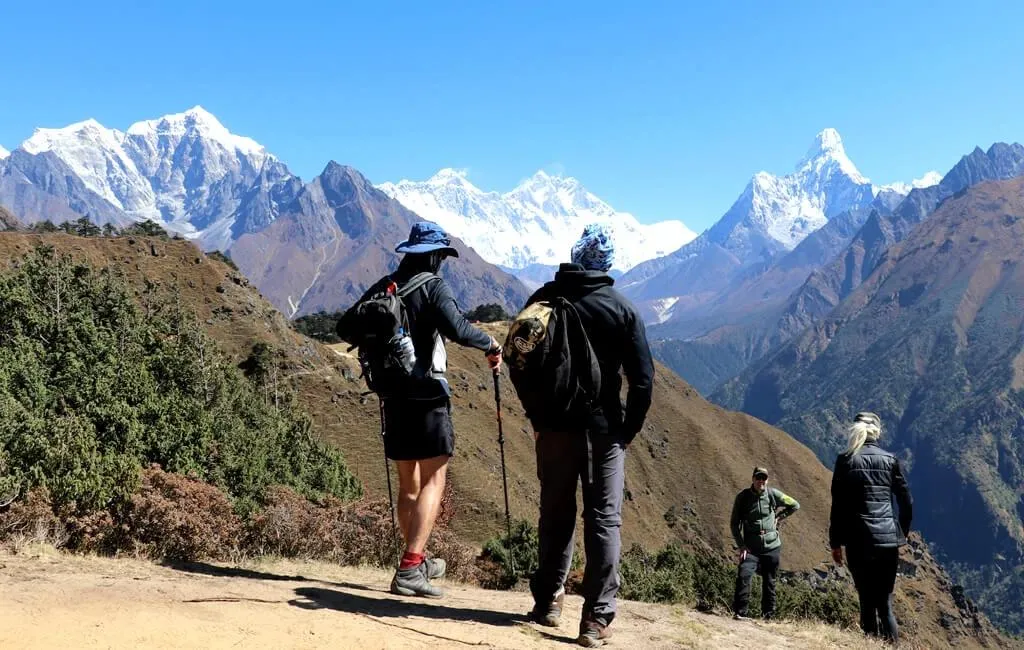
One of the main attractions is the opportunity to see Mount Everest from viewpoints around the Khumbu region. The Everest View Hotel area is particularly popular for its elevated mountain panoramas.
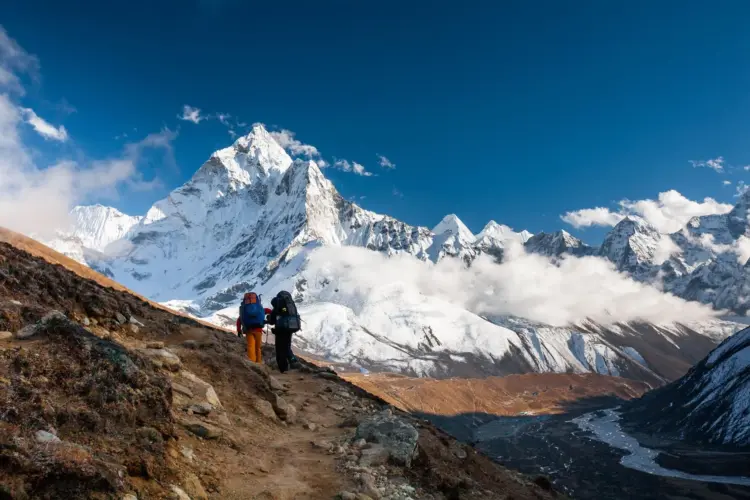
On clear days, the surrounding landscape may reveal Everest, Lhotse, Nuptse, Ama Dablam and other impressive peaks. Visibility varies with the weather, so mountain views cannot be guaranteed every day.
2. Explore Namche Bazaar
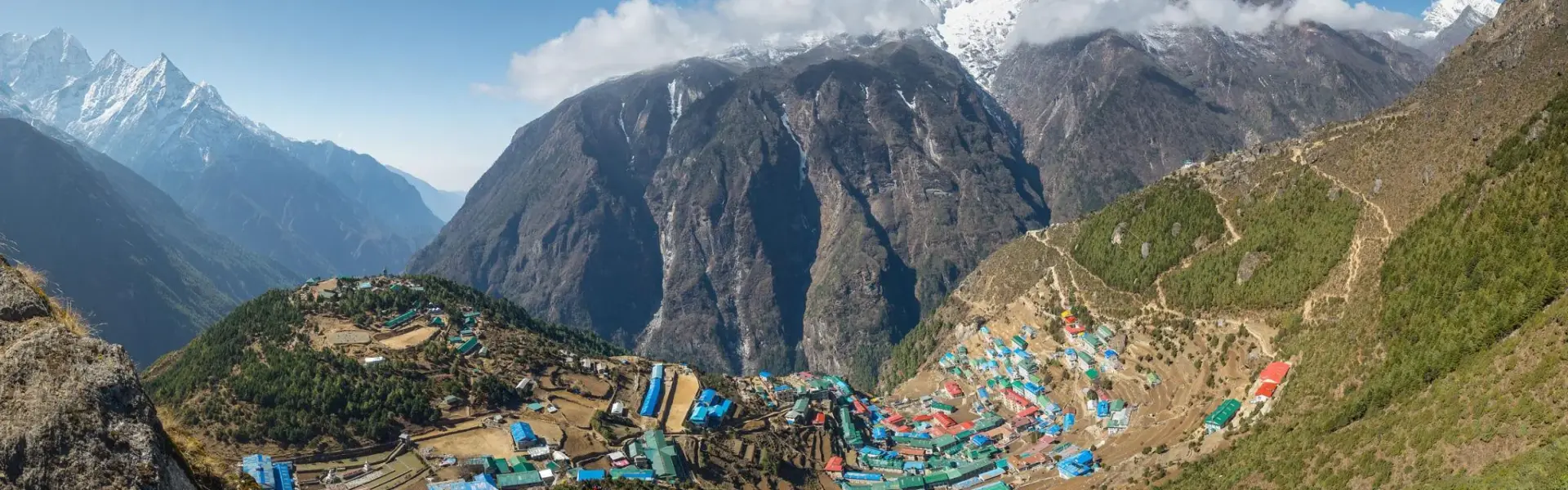
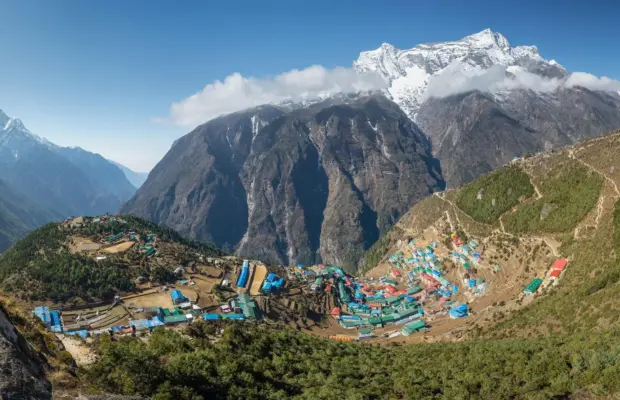
Namche Bazaar is one of the most recognisable settlements in the Everest region. Built along a mountainside, the town has shops, bakeries, cafés, lodges and a long history as a trading centre for communities in the Khumbu.
It is also an important stop for trekkers adjusting to the altitude before travelling farther into the mountains.
3. Visit Tengboche Monastery
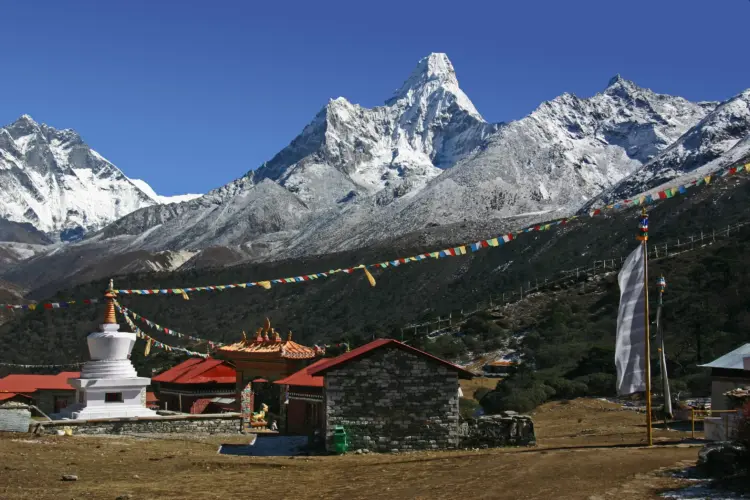
Tengboche Monastery is one of the best-known Buddhist monasteries in the Everest region. Its location, surrounded by forest and high mountain scenery, makes it a memorable stop on the trek.
Visitors may have an opportunity to observe the monastery’s peaceful atmosphere and learn about the Buddhist traditions that remain central to life in the region. Access to particular areas and ceremonies depends on local arrangements.
4. Experience Sherpa Culture
The route passes through settlements where mountain traditions, Buddhist practices and community life remain closely connected.
Walking through villages, seeing mani walls and prayer flags, and visiting local monasteries provides a glimpse into the cultural landscape of the Khumbu.
Trekkers should respect local customs, ask before photographing people and follow any instructions when visiting religious sites.
5. Complete a Himalayan Trek in One Week
The seven-day itinerary offers a practical option for travellers with limited time.
It combines a scenic mountain flight, several days of walking, an acclimatization day and visits to important viewpoints without extending all the way to Everest Base Camp.
However, a shorter itinerary still requires preparation. The walking involves uphill and downhill sections, and the altitude can make ordinary physical activity feel more demanding.
Detailed Everest Panorama Trek Itinerary – 7 Days
Day 1: Kathmandu to Lukla and Trek to Phakding
Altitude: Lukla 2,860 m; Phakding approximately 2,610 m
Flight duration: Approximately 30 minutes, subject to the confirmed flight
Walking time: Approximately 3 hours
Accommodation: Teahouse
Meals: Breakfast, lunch and dinner, according to the package arrangement
Your Everest Panorama Trek begins with a flight from Kathmandu to Lukla, the mountain town that serves as a major gateway to the Khumbu trekking region.
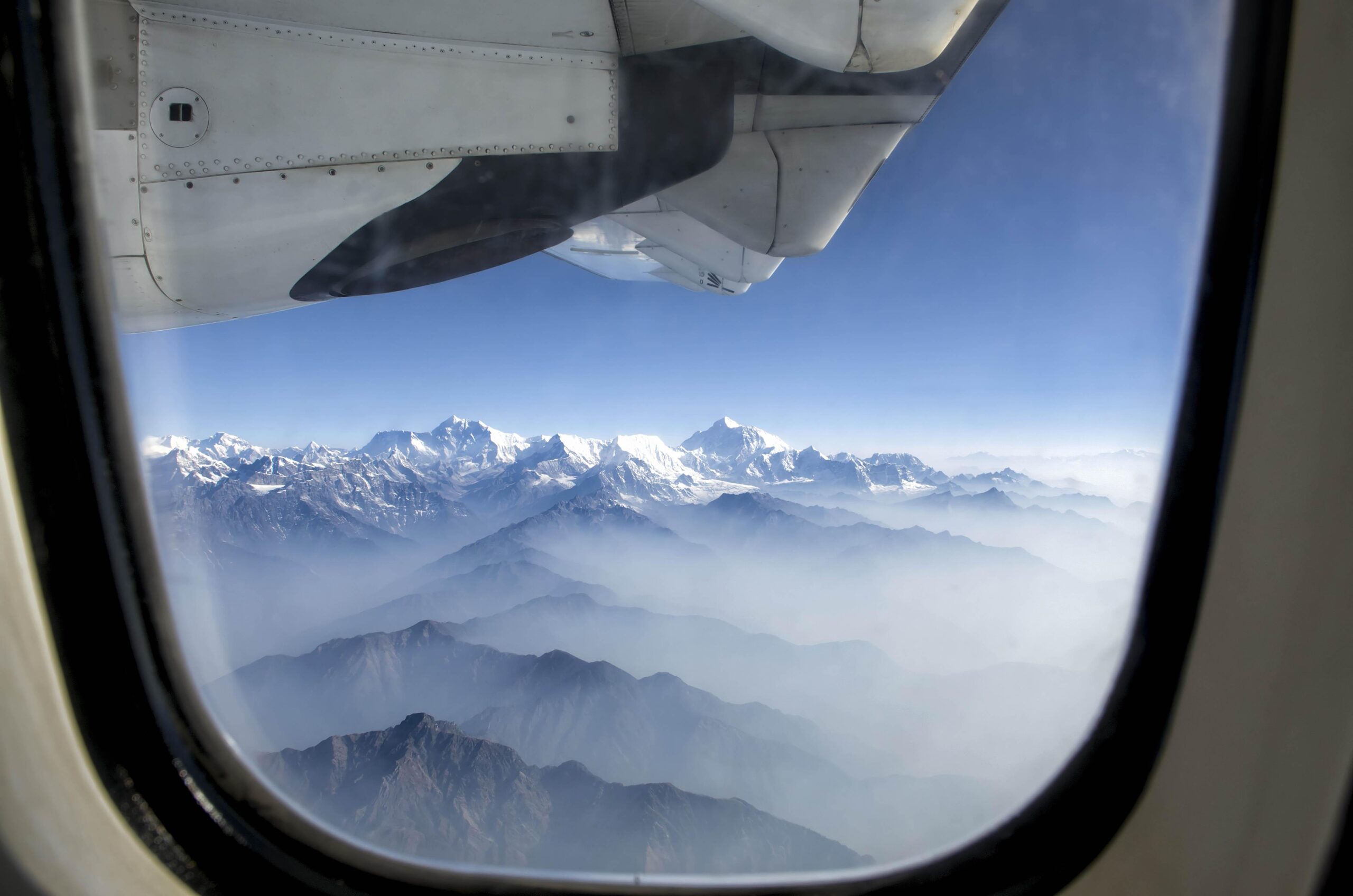
The flight offers aerial views of Nepal’s hills, valleys and Himalayan landscapes when weather conditions permit. Lukla’s mountain setting provides a memorable introduction to the journey ahead.
After landing, you meet your trekking guide, organise your equipment and begin walking towards Phakding.
The trail descends gradually through the Dudh Koshi valley, passing small settlements, forested slopes and suspension bridges decorated with colourful prayer flags. Stone houses, mani walls and the sound of the river create an atmosphere quite different from Kathmandu.
The first day’s walk is designed to be relatively gentle compared with the climb to Namche Bazaar on the following day.
Arriving in Phakding, you settle into a local teahouse, enjoy a warm meal and rest before continuing farther into the Everest region.
Day highlight: Your first walk through the Khumbu landscape, with riverside trails, mountain villages and suspension bridges.
Day 2: Trek from Phakding to Namche Bazaar
Altitude: Approximately 3,440 m
Walking time: Approximately 6–7 hours
Accommodation: Teahouse
Meals: Breakfast, lunch and dinner
After breakfast, the trail follows the Dudh Koshi River through small villages and wooded sections of the valley.
You cross several suspension bridges as the route gradually gains elevation. One of the notable crossings is the Hillary Suspension Bridge, which provides a dramatic perspective of the river valley below.
The route continues towards Monjo, where trekkers enter the Sagarmatha National Park area and complete the required permit checks.
Beyond Monjo, the trail becomes steeper as it climbs towards Namche Bazaar. This is one of the more physically demanding sections of the trek, so a steady pace and regular breaks are important.
As you gain height, the surrounding landscape begins to open up. Depending on visibility, you may catch your first distant views of the Himalayan peaks.
Namche Bazaar sits in a natural mountain amphitheatre and is one of the main centres of the Khumbu region. After arriving, you can explore the town, browse its shops or relax at a local café.
Day highlight: Crossing suspension bridges and reaching Namche Bazaar, the main gateway to the higher Everest region.
Day 3: Namche Bazaar to Everest View Hotel and Khumjung
Maximum altitude: Approximately 3,962 m at Everest View Hotel
Walking time: Approximately 4–6 hours, depending on the route and stops
Accommodation: Teahouse in the Namche area
Meals: Breakfast, lunch and dinner
Today is dedicated to acclimatization and exploration around Namche Bazaar.
Rather than spending the entire day resting indoors, you take a gradual hike towards the Everest View Hotel area. The trail climbs above Namche and passes through mountain scenery with views of the surrounding valleys.
The Everest View Hotel is a well-known viewpoint in the region. On clear days, the panorama may include Mount Everest, Ama Dablam, Lhotse and other Himalayan peaks.
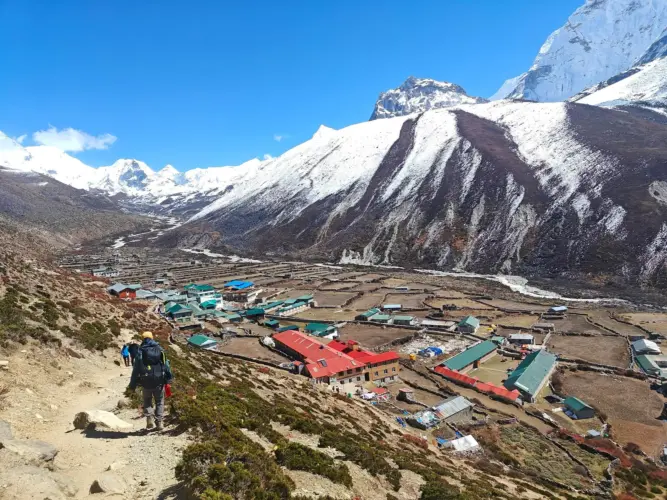
After spending time enjoying the scenery, the route continues towards Khumjung, a traditional Sherpa village surrounded by mountain slopes and open fields.
Khumjung provides an opportunity to learn more about village life in the Khumbu. Depending on opening arrangements and your guide’s advice, you may explore the village and learn about local institutions such as the Khumjung school and monastery.
Later, you return towards Namche Bazaar for another night at altitude.
This day is important because it allows you to explore the surrounding area while giving your body additional time to adjust before continuing to Tengboche.
Day highlight: Panoramic mountain views from the Everest View Hotel area and an introduction to traditional Sherpa village life.
Day 4: Trek from Namche Bazaar to Tengboche
Altitude: Approximately 3,860 m
Walking time: Approximately 5–6 hours
Accommodation: Teahouse
Meals: Breakfast, lunch and dinner
After breakfast, you leave Namche Bazaar and follow a scenic trail above the Dudh Koshi valley.
The route includes a mixture of relatively gentle traverses, descents and uphill sections. Forests of pine and, in suitable seasons, rhododendron add variety to the landscape.
Along the way, mountain views appear between the trees and across the valley. The scenery changes as the trail descends towards the river before climbing again towards Tengboche.
The final ascent requires patience, especially because you are walking at altitude. Taking breaks and maintaining a comfortable pace can help make the day more manageable.
Tengboche is famous for its monastery and its setting amid the mountains. The monastery is an important spiritual centre for the local Buddhist community and a significant cultural landmark for trekkers visiting the Everest region.
If access and local conditions allow, you can visit the monastery grounds and appreciate the quiet atmosphere.
The surrounding scenery is particularly impressive when the weather is clear, with forested hills and high Himalayan peaks creating a dramatic backdrop.
Day highlight: Reaching Tengboche Monastery and experiencing one of the most memorable cultural and mountain settings in the Khumbu.
Day 5: Trek from Tengboche to Namche Bazaar and Monjo
Altitude: Namche Bazaar approximately 3,440 m; Monjo approximately 2,835 m
Walking time: Approximately 6–8 hours
Accommodation: Teahouse
Meals: Breakfast, lunch and dinner
After breakfast, you begin descending from Tengboche towards Namche Bazaar.
The trail passes through forested sections and follows familiar paths through the Khumbu landscape. Descending provides a different perspective of the valley, and the walk offers opportunities to appreciate details that may have been less noticeable while climbing.
After reaching Namche Bazaar, you can take a break and enjoy lunch before continuing downhill.
The route then follows the trail towards the Dudh Koshi valley, passing suspension bridges and settlements on the way to Monjo.
Monjo is close to the Sagarmatha National Park entrance area, where trekking permits may be checked.
Although the overall direction is downhill, the route still includes uneven surfaces, steps and occasional uphill sections. Trekking poles can be useful, particularly for travellers who find long descents tiring.
After arriving in Monjo, you settle into your teahouse and enjoy a well-earned rest.
Day highlight: Retracing the trail through Namche Bazaar and descending towards the quieter riverside settlements.
Day 6: Trek from Monjo to Lukla
Altitude: Approximately 2,860 m
Walking time: Approximately 4–5 hours
Accommodation: Teahouse
Meals: Breakfast, lunch and dinner
Today is the final full day of trekking.
After breakfast, you follow the trail from Monjo through villages, forested hillsides and sections of the Dudh Koshi valley.
The route includes a mixture of descents, flatter stretches and uphill sections. Although you are returning towards Lukla, the trail is not continuously downhill.
Along the way, you pass settlements and familiar suspension bridges, with opportunities to enjoy the landscape at a relaxed pace.
As you approach Lukla, the journey begins to feel complete. The town is a gathering point for trekkers and guides returning from the Everest region, and its lodges provide a place to rest before the flight back to Kathmandu.
After reaching Lukla, you can relax, organise your belongings and reflect on the mountain scenery and cultural experiences of the previous days.
Day highlight: Completing the trekking section and returning to Lukla with memories of the Everest region.
Day 7: Flight from Lukla to Kathmandu
Flight duration: Approximately 30 minutes, subject to the flight schedule and operating conditions
Accommodation: Kathmandu hotel, if included in the package
Meals: Breakfast
After breakfast, you prepare for the return flight from Lukla to Kathmandu.
When weather and operational conditions permit, the flight offers another opportunity to enjoy Nepal’s hills, valleys and mountain scenery from above.
Mountain flights are weather-dependent, and schedules can change. It is important to maintain flexibility and avoid arranging an international departure with insufficient time after the planned Lukla flight.
On arrival in Kathmandu, you can transfer to your hotel if this service is included in your package.
Your seven-day Everest Panorama Trek concludes with a collection of experiences that combine mountain trails, Sherpa settlements, Buddhist heritage and Himalayan viewpoints.
Day highlight: Returning to Kathmandu after a week exploring the Everest region.
Everest Panorama Trek Route and Altitude Profile
The trek begins with a flight from Kathmandu to Lukla before following the trail towards Phakding and Namche Bazaar.
The itinerary then gains elevation towards the Everest View Hotel area, before reaching Tengboche. The return route descends through Namche Bazaar and Monjo before finishing in Lukla.

| Location | Approximate elevation |
|---|---|
| Kathmandu | Approximately 1,400 m |
| Lukla | 2,860 m |
| Phakding | 2,610 m |
| Namche Bazaar | 3,440 m |
| Everest View Hotel | 3,962 m |
| Khumjung | Approximately 3,790 m |
| Tengboche | 3,860 m |
| Monjo | Approximately 2,835 m |
Elevations are approximate and may vary slightly between maps and accommodation locations.
Important: The highest point reached during this itinerary is approximately 3,962 metres at the Everest View Hotel area. This is not an Everest Base Camp trek, and the itinerary does not reach Everest Base Camp.
Difficulty of the Everest Panorama Trek
The Everest Panorama Trek is generally considered a moderate-to-challenging trek because of its elevation, uneven mountain trails and the significant climb between Phakding and Namche Bazaar.
You do not need technical mountaineering skills for the standard route, but you should be comfortable walking for several hours on consecutive days.
Physical Preparation
Regular walking, stair climbing and aerobic exercise in the weeks before departure can help prepare you for the trail.
It is also useful to practise walking on uneven surfaces and carrying a light daypack.
Altitude Considerations
Namche Bazaar, Everest View Hotel and Tengboche are all at elevations where some trekkers may experience symptoms of altitude illness.
The itinerary includes an acclimatization day around Namche Bazaar, but individual responses to altitude vary. Acclimatization cannot eliminate all risks.
Walk at a comfortable pace, stay hydrated and tell your guide immediately if you develop symptoms such as a headache, nausea, dizziness or unusual fatigue.
Severe or worsening symptoms require prompt medical assessment and may require descending to a lower elevation. Do not continue ascending when experiencing possible altitude illness.
Travellers with relevant medical conditions should seek professional advice before undertaking a high-altitude trek.
Best Time for the Everest Panorama Trek
Spring and autumn are popular seasons for trekking in the Everest region, although each season has different conditions.
Spring: March to May
Spring brings milder daytime temperatures at lower elevations and the possibility of rhododendron blooms along parts of the trail.
Clear mornings can provide excellent mountain views, although clouds may develop later in the day. Higher elevations remain cold, particularly at night.
Autumn: September to November
Autumn is one of Nepal’s busiest trekking seasons.
As monsoon conditions retreat, visibility can improve, offering attractive views of the surrounding mountains. October and November are especially popular with international visitors.
Accommodation and flights can be in higher demand during this period, so advance planning is recommended.
Winter: December to February
Winter offers quieter trails in some periods, but temperatures can fall considerably, particularly at night and at higher elevations.
Snow, ice and cold conditions may affect trail accessibility and walking times. Appropriate clothing and a flexible itinerary are important.
Monsoon: June to August
The monsoon season brings increased rainfall, cloud cover and potentially slippery trails.
Flight disruptions may also occur because of weather. Trekkers travelling during this period should be prepared for changing conditions and possible itinerary adjustments.
What Is the Best Month?
For many trekkers, October, November, March and April are useful months to consider.
However, no month guarantees clear mountain views or uninterrupted flights. Actual conditions depend on the weather during your trip.
Everest Panorama Trek Group Price
Ambition Himalaya’s supplied group pricing is shown below. These rates are listed in US dollars per person and vary according to group size.
| Group Size | Price Per Person |
|---|---|
| 1 person | US$1,050 |
| 2 people | US$950 |
| 3–5 people | US$900 |
| 6–9 people | US$820 |
| 10–15 people | US$750 |
| 16 or more people | US$700 |
Private Group Discounts
Travelling with friends, family or a private group can reduce the per-person price.
For example, the supplied rate for a group of 2 is US$950 per person, while groups of 10–15 are listed at US$750 per person. Groups of 16 or more are listed at US$700 per person.
The prices above are based on the information provided for this package. Before publishing them as a live offer, confirm the current rates, inclusions, exclusions and any seasonal adjustments with Ambition Himalaya.
The final price may depend on the confirmed services, flight arrangements, accommodation and other package conditions.
What Is Included in the Everest Panorama Trek?
The supplied itinerary lists meals and teahouse accommodation during the trekking days, together with flights between Kathmandu and Lukla.
However, the complete inclusion list was not provided with the itinerary. Confirm the following details with Ambition Himalaya before publishing or booking:
- Kathmandu–Lukla and Lukla–Kathmandu flights
- Trekking guide and porter arrangements
- Teahouse accommodation
- Meals during the trek
- Sagarmatha National Park permit and other applicable permits
- Kathmandu hotel accommodation and airport transfers
- Guide and porter insurance
- Emergency support arrangements
- Any applicable taxes and service charges
Only mark a service as included after confirming that it forms part of the current package.
What Is Not Included?
The exclusions should be confirmed against the actual package terms. Common items that may be charged separately include:
- International flights to and from Nepal
- Nepal entry visa fees
- Travel insurance, including appropriate high-altitude trekking coverage
- Personal trekking equipment and clothing
- Drinks, snacks and personal purchases
- Hot showers, device charging and Wi-Fi where charged separately
- Tips for guides and porters
- Additional hotel nights caused by delays or itinerary changes
- Personal expenses and services not specified in the confirmed inclusions
These are typical items to check, not a verified list of exclusions for this particular package.
Accommodation and Meals During the Trek
Accommodation is generally provided in local teahouses along the route.
Teahouses offer a practical way to experience mountain hospitality while travelling through the Everest region. Room facilities vary by location, and private bathrooms, hot showers, charging and internet access may not always be available or included.
The supplied itinerary lists breakfast, lunch and dinner for Days 1–6, with breakfast on Day 7.
Confirm the final meal plan with Ambition Himalaya, particularly whether meals are included during the Kathmandu stay and what arrangements apply if flight delays extend the itinerary.
If you have dietary requirements, inform your operator before departure so suitable arrangements can be discussed.
What Should You Pack?
Packing appropriately helps you remain comfortable as temperatures and weather change along the trail.
Consider bringing:
- Comfortable trekking boots with good grip
- Moisture-wicking base layers
- Warm insulating layers
- A waterproof jacket and trousers
- Gloves, a warm hat and sun protection
- Sunglasses and sunscreen
- A reusable water bottle
- A small daypack
- Trekking poles, if you find them helpful
- Personal medication and a basic first-aid kit
- A headlamp
- Identification, permits and travel documents
- A sleeping bag if recommended by your operator
Temperatures can vary considerably between Kathmandu, the lower valleys and the higher villages. Your packing list should reflect the season and the latest guidance from your trekking operator.
Responsible Trekking in the Everest Region
The Everest region is not just a mountain destination. It is also home to communities whose traditions, livelihoods and religious practices are closely connected to the landscape.
A few simple habits help make your visit more respectful.
- Follow your guide’s advice on local customs and religious sites.
- Ask permission before photographing people.
- Walk carefully around mani walls, chortens and prayer wheels.
- Carry reusable water bottles where practical.
- Avoid leaving litter on the trail.
- Use established paths and respect local wildlife.
- Treat porters, guides and lodge staff with consideration.
- Follow the rules and instructions of Sagarmatha National Park.
Responsible trekking helps preserve the landscape and supports a better experience for both visitors and local communities.
Why Book Your Everest Panorama Trek With Ambition Himalaya?
Planning a short Himalayan trek involves more than choosing a route. Flights, accommodation, meals, permits, guide arrangements and altitude considerations all need to fit together.
Ambition Himalaya helps travellers explore trekking experiences in Nepal and organise their journeys around their available time and interests.
The Everest Panorama Trek is an option for those who want to experience the Khumbu region without undertaking the full Everest Base Camp itinerary.
Before confirming your booking, ask for the final itinerary, a written list of inclusions and exclusions, current group prices, flight arrangements and cancellation conditions.
To enquire about this seven-day trek, visit the official website:
Ambition Himalaya – Official Website
Contact the team with your preferred travel dates, group size and any special requirements so the arrangements can be checked before booking.
Frequently Asked Questions About the Everest Panorama Trek
1. How many days does the Everest Panorama Trek take?
This itinerary is planned for seven days, beginning with a flight from Kathmandu to Lukla and ending with a return flight to Kathmandu.
2. How high does the Everest Panorama Trek go?
The highest planned point is approximately 3,962 metres at the Everest View Hotel area.
3. Can I see Mount Everest on this trek?
Mount Everest may be visible from suitable viewpoints around the Everest View Hotel area and other parts of the route when weather conditions permit. Visibility is never guaranteed.
4. Does the Everest Panorama Trek reach Everest Base Camp?
No. This is a shorter trekking route around Namche Bazaar, Khumjung and Tengboche. It does not reach Everest Base Camp.
5. Is the Everest Panorama Trek suitable for beginners?
It may suit beginners who have a reasonable level of fitness and are prepared for several hours of walking at altitude. Previous trekking experience is helpful but is not necessarily essential.
6. Is there an acclimatization day?
Yes. Day 3 is planned as an acclimatization and exploration day around Namche Bazaar, including the Everest View Hotel area and Khumjung.
7. What is the best season for the Everest Panorama Trek?
Spring and autumn are popular choices. October, November, March and April are often considered when planning a trip, although conditions vary.
8. How much does the Everest Panorama Trek cost?
The supplied prices range from US$700 to US$1,050 per person, depending on group size. Confirm current prices and package inclusions directly with Ambition Himalaya before booking.
9. What accommodation is available during the trek?
The itinerary specifies teahouse accommodation during the trekking days. Facilities vary between villages and lodges.
10. Are meals included?
The supplied itinerary lists breakfast, lunch and dinner during Days 1–6 and breakfast on Day 7. Confirm the final meal arrangements and any exceptions with your operator.
11. Are Kathmandu–Lukla flights included?
The supplied itinerary includes flights between Kathmandu and Lukla, but the final package inclusions should be confirmed in writing before payment.
12. What happens if the Lukla flight is delayed?
Flights may be affected by weather and operational conditions. Delays can change the itinerary, so allow flexibility and ask about the operator’s arrangements for additional accommodation and rescheduling.
13. Do I need travel insurance?
Appropriate travel insurance is strongly recommended. Check that it covers trekking at your planned altitude and the relevant emergency evacuation arrangements.
14. What should I bring for the trek?
Bring suitable trekking footwear, layered clothing, rain protection, sun protection, personal medication and other essentials appropriate to the season.
15. How can I book the Everest Panorama Trek?
Visit Ambition Himalaya to enquire about available departures, private group arrangements and the current package price.
Start Planning Your Everest Panorama Trek
Seven days in the Everest region can introduce you to a remarkable mix of mountain scenery, Sherpa villages, suspension bridges and Buddhist heritage.
From the riverside trail to Phakding to the viewpoints above Namche Bazaar and the peaceful surroundings of Tengboche Monastery, this journey offers a different perspective on the Himalayas without extending all the way to Everest Base Camp.
The key to enjoying the trek is to prepare for the altitude, walk at a comfortable pace and remain flexible when mountain weather affects travel arrangements.
If this sounds like the right trip for you, explore the available options with Ambition Himalaya and start planning your seven-day Himalayan adventure.
Website: https://ambitionhimalaya.com/