
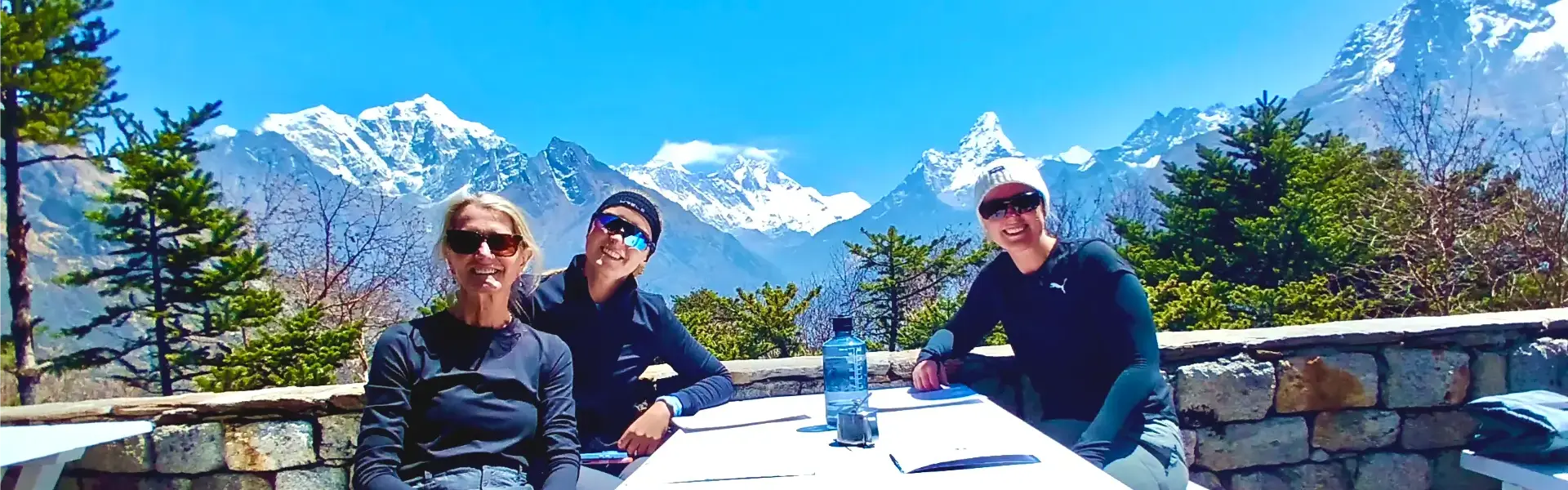
Everest Panorama Trek – 7 days


 Trip Duration
 Group Size
 Max. Altitude
 Difficulty
 Meals
Meals
- 7 Breakfast
- 6 Lunch
- 6 Dinner
 Accommodation
- 6 Nights Lodge
 Activities
- Trekking
- Hiking
 Best Season
- Sep – Dec
- Feb – April
- May – June
$ 700USD
- No. of Pax Per person
-
1 person
US$ 1050
-
2 -
2 people
US$ 950
-
3 -
5 people
US$ 900
-
6 -
9 people
US$ 820
-
10 -
15 people
US$ 750
-
16 + people
9999
US$ 700
Total Cost:
US$ 1050
- Private trip departures everyday
- No hidden cost
- Local based company
- We can help for big group
- Over 17 years of experience
- According to your needs, we can Customize the itinerary.

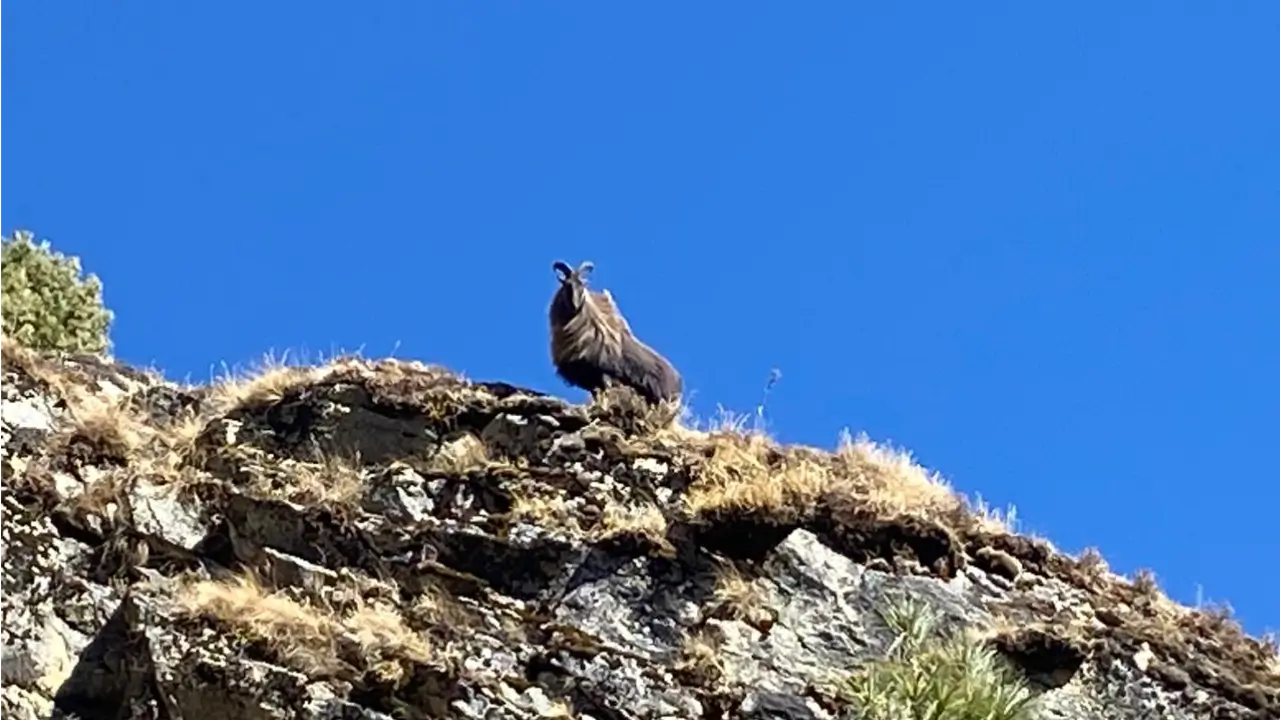
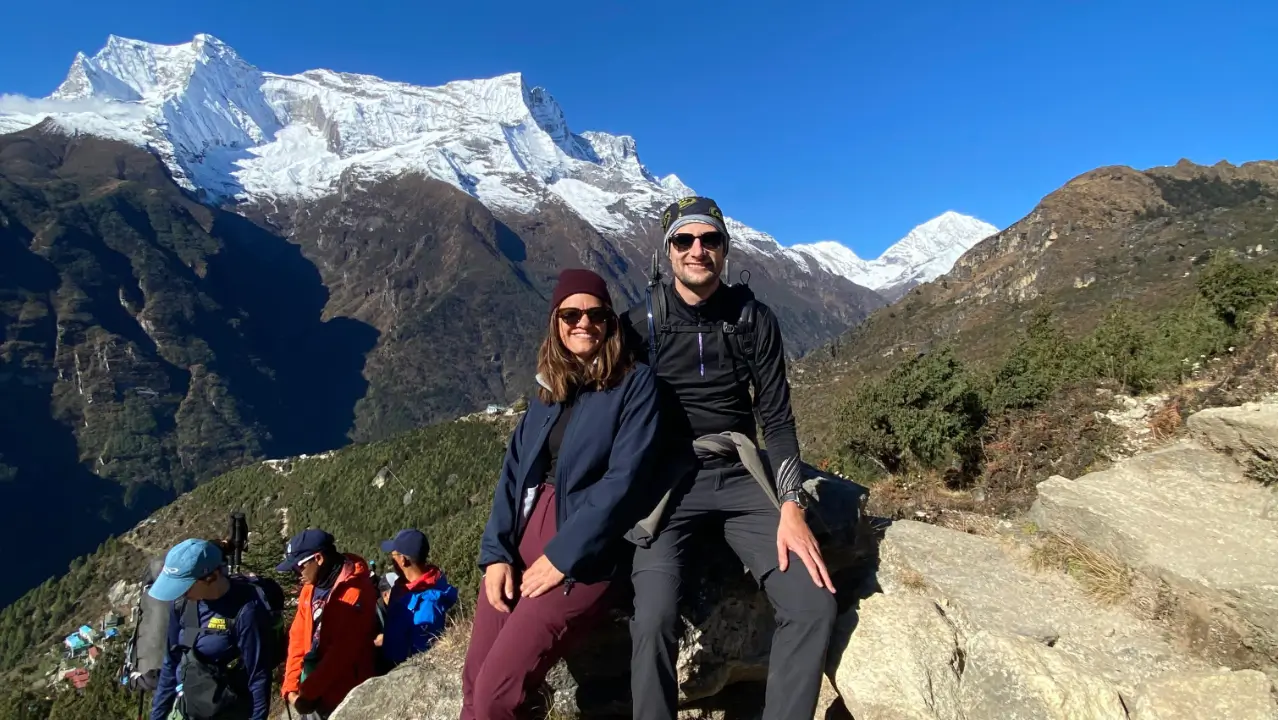
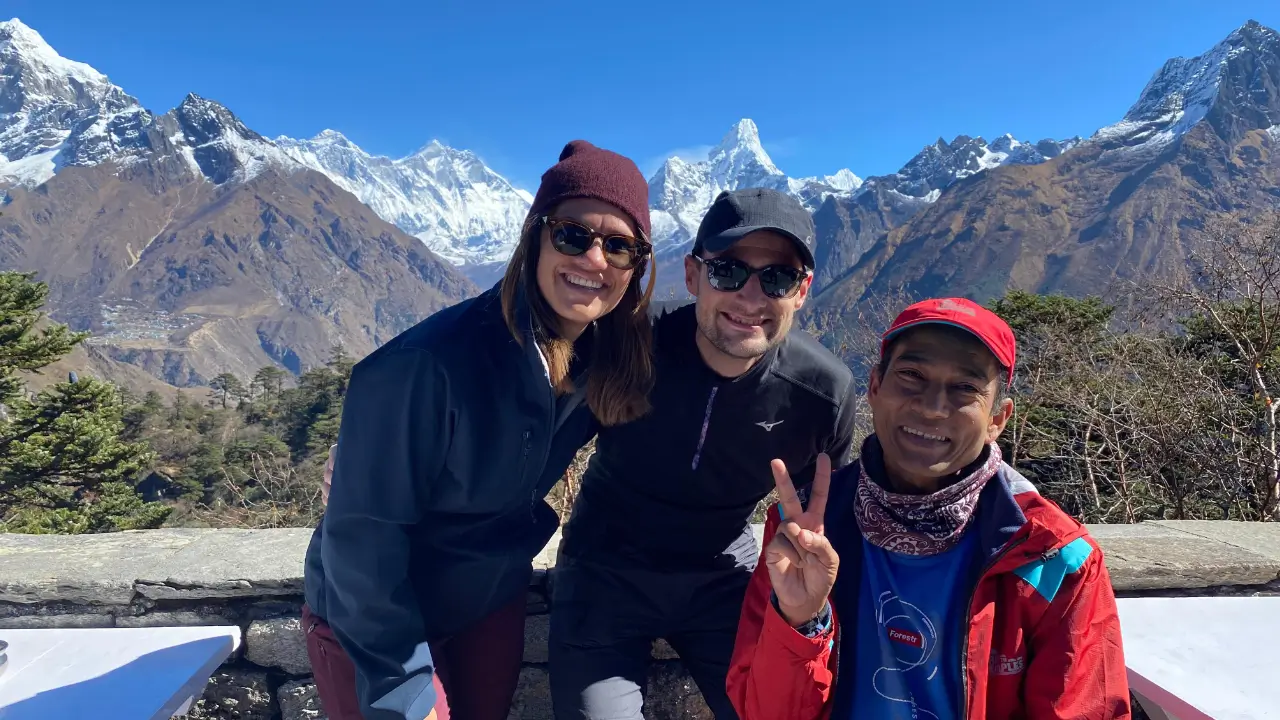
Everest Panorama Trek – 7 days Photo Gallery
Itinerary of Everest Panorama Trek – 7 days
| Day | Mode | Route Itinerary | Elev.(m) | Duration | Overnight | Included |
|---|---|---|---|---|---|---|
| 01 | Flight/trek | Kathmandu - Lukla - Phakding ( 8 km) | 2,860/2,610 | 30/3 hrs | Lodge | Breakfast-Lunch-Dinner |
| 02 | Trek | Phakding - Namche (12 km) | 3,440 | 6/7 hrs | Lodge | Breakfast-Lunch-Dinner |
| 03 | Day/hike | Namche - Everest view Hotel (6 km) | 3,962 | 4/5 hrs | Lodge | Breakfast-Lunch-Dinner |
| 04 | Trek | Namche Bazar - Tengboche (11 km) | 3,860 | 5/6 hrs | Lodge | Breakfast-Lunch-Dinner |
| 05 | Trek | Tengboche - Namche - Monju (19 km) | 2,840 | 6/7 hrs | Lodge | Breakfast-Lunch-Dinner |
| 06 | Trek | Monju - Lukla (12 km) | 2,860 | 4/5 hrs | Lodge | Breakfast-Lunch-Dinner |
| 07 | Flight | Lukla - Kathmandu | 1,300 | 30 m | ----- | Breakfast |
Includes/Excludes
What's included
- The flight between Kathmandu and Lukla: round-trip airfare
- All domestic airfare taxes.
- Trekking permits and TIMS (Trekkers Securities)
- Sagarmatha National Park Entry Permit
- Meals during the trek (3 meals a day: breakfast, lunch, and dinner)
- Seasonal fruits after a night meal trekking
- Accommodation in a lodge during trekking
- English-speaking experienced guide with all expenses and insurance
- We provide an assistance guide (over 6 people in the group), all his expenses, and insurance.
- A sleeping bag and down jacket are used in trekking
- Duffle bag to use in trekking
- Free Ambition Himalaya T-shirt
- Trekking Map and Achievement Certificate
- Normal first aid kit with guide
- Taxes, paperwork, necessary documentation, and a company fee.
- Pre-trip meeting in Kathmandu before the trek
- Worst-case rescue and medical evacuation arrangements
Optional Addons
(Available addons on extra cost)
- Hotel in Kathmandu
- Luxury lodge for Trekking
- Any activities in Kathmandu
What is excluded
- Any activities in Kathmandu
- Travel and Rescue Insurance, Emergency Evacuation
- Extra food, bar, and beverage, telephone bills, dessert, tea-coffee
- Laundry charges and shower fees
- Wi-Fi and battery charging bills during the trek
- Cost of porter. (If you require it, we can arrange it at an additional cost.)
- Hotel in Kathmandu
- Lunch and dinner in Kathmandu
- Costs arising from natural calamities, mishaps, or anything beyond our control (costs are not refundable or transferable in any way if you leave the trek voluntarily and want to return from the trek)
- Tips, gifts, or gratitude to guide
- Things not mentioned in the ‘cost includes” section
Special Note for Trekkers:
During peak season, the Civil Aviation Authority of Nepal may operate flights from Ramechhap to Lukla and vice versa, aiming to ease congestion at Kathmandu’s Tribhuvan International Airport. In the event of affected departures, you will need to rise early on day 2 and embark on a scenic 135-kilometer drive from Kathmandu to Ramechhap airport, with private transfers offered at no extra expense. We strive to keep you fully informed with the latest flight information, ensuring your journey proceeds as smoothly as possible.
Important Note:
The flight from Kathmandu to Lukla is usually reliable, but bad weather can cause delays or cancellations. Additional fees for a hired helicopter may apply, ranging from $300 to $600. Itineraries may or may not include an extra day as a buffer for delays, so we suggest adding a few days to the end of your trip in case of any delays. Extra days should be added after the journey, not at the beginning.
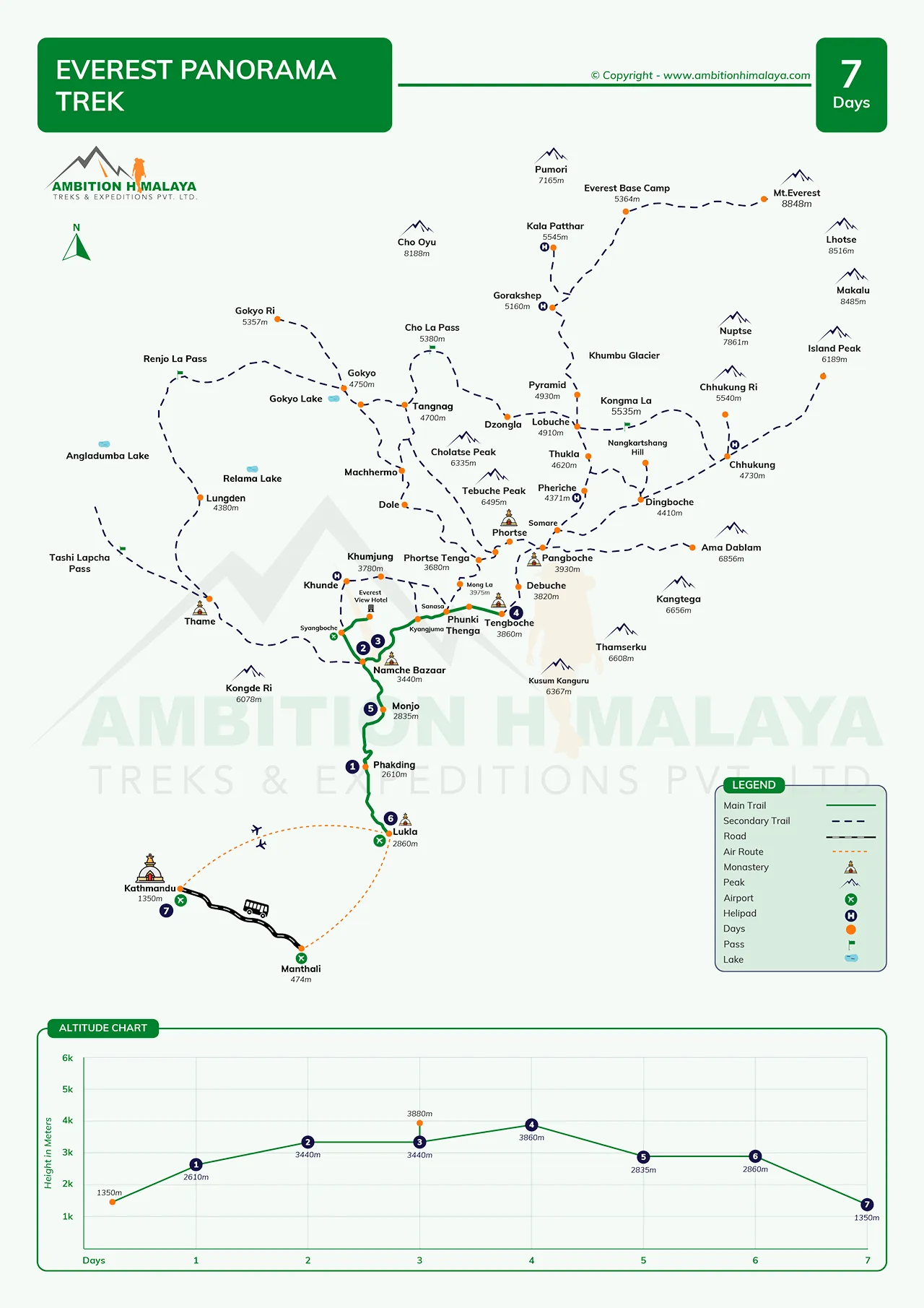
Route Map & Altitude Chart
Private Group Discounts Available
| No. of People | Price Per Person |
| 1 Pax | US$ 1050 |
| 2 Pax | US$ 950 |
| 3-5 Pax | US$ 900 |
| 6-9 Pax | US$ 820 |
| 10-15 Pax | US$ 750 |
| 16 Over | US$ 700 |
Trip Information
Trek Difficulty and Who This Trek Is For
The Everest Panorama Trek is considered an easy to moderate level. It is ideal for beginners and family members, and people in good health who are looking to walk in the Himalayas without straining.
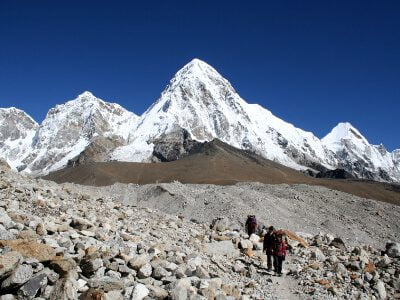
The trekkers are provided with ample time to take photographs and enjoy the landscape, with hours of daily walking hours between 4 and 6 hours. The gentle rises and falls on clearly defined pathways can be easily handled by any tourist, regardless of their fitness levels.
Lodging is done mostly in comfortable lodges with the maximum sleeping altitude being 3,962 m (13,000 ft). This will enable trekkers to have a chance to enjoy breathtaking Himalayan views without exploring extreme extremes. The itinerary is safety and comfort-focused and focuses on acclimatizing, which minimizes the possibility of altitude sickness and makes it an adventure that fits the entire family.
The trek is arranged by Ambition Himalaya, and it comprises adventure and accessibility. Families, older travelers, and first-time trekkers can easily follow the trail and experience Sherpa hospitality and a local culture and mountain scenery. There is moderate demand for the trek, coupled with the maximum scenic beauty, which makes the trek a very satisfying Himalayan encounter.
Weather and Best Season
Everest Panorama Trek is best done in the Autumn (September-November) and Spring (March-May). These seasons offer the most suitable conditions with clear skies and stable weather conditions.
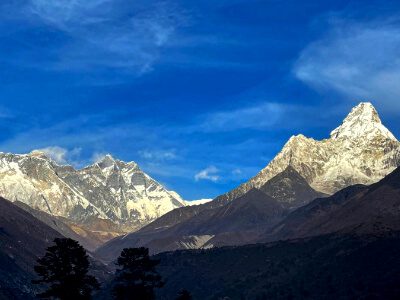
Autumn comes with some of the most picturesque Himalayan sceneries of the year, and the trekkers can fully enjoy the mountain scenery of the Everest, Ama Dablam, and other mountains that are around the region. Autumn is also accompanied by cultural festivals, which are a source of colorful local experiences on the trek.
The spring gives afternoons of a warmer temperature, trekking is pleasant, and the bloom of the rhododendrons is offered with color that fills the trail and is a favorite season amongst nature lovers and photography fans.
The winter (December-February) is colder, particularly in higher altitudes, and the temperature at night gets to the level of below -10 °C inside villages, such as Tengboche or Namche. There are high chances of heavy snowfall, and thus good preparation and layering are needed.
The Everest Panorama Trek is not recommended during June-August. Because of the rains, wet trails, muddy laps, and frequent cancellation of flights in Lukla due to poor visibility.
Clothing is an important part of the trek. Dressing in layers is essential: thermal underclothes, a warm-up jacket, a windbreaker with waterproof capability, a down jacket, gloves, a warm hat, and sun protection all can be suggested.
Strong trekking shoes, sunglasses, and a water bottle are also necessary. Trekking through the Everest Panorama Trek, one can experience all the features of the Everest area, including gorgeous valleys, mountain scenes, etc, in comfort and security during the best seasons of the year.
Food & Drink on the Trek
During the Everest Panorama Trek, food has been a major element of the experience because it gives power to walk throughout each day and a sense of the local culture. Lodges usually serve breakfast, which consists of porridge, eggs, or pancakes, or toast, or tea, and provides trekkers with a warm beginning of the day.
Lunches and dinners are usually served with a good, hearty Nepali meal with dal bhat (lentils and rice). Most meals are accompanied by vegetable curries, potatoes, and seasonal greens. The number of vegetarian alternatives is quite numerous, so all the dietary choices are represented.
Water safety is important at high altitudes. It is not advised to use tap water because it causes stomach problems. They should use boiled, filtered, or treated water. A lot of lodges have clean water, and trekkers are also encouraged to bring along a refillable bottle and water purification tablets or powder as a precaution.
Snacks like energy bars, nuts, dried fruit, or biscuits are strongly recommended to keep the stamina, in particular to have on longer walking days. Hot beverages such as coffee or tea are very common, and they assist in keeping the trekkers warm in cold mornings and evenings.
The local taste and healthy foods all make eating in the Everest Panorama Trek a fun and convenient experience. Proper meals, snacks, and drinking water are enough to make the trekkers feel energetic and comfortable during the trip.
In general, food and beverages in the Everest Panorama Trek help not only in health but also to have fun and enjoy the whole experience of the trekking process.
Altitude Sickness & Acclimatization
Everest Panorama Trek’s highest point is approximately 3,962 m / 12,999 ft at the Everest View Hotel. It is important to comprehend the significance of altitude sickness and acclimatizationto ensure that a person treks safely. Acute Mountain Sickness (AMS) is a condition that develops when the body fails to adapt to reduced levels of oxygen at a high altitude.
There are signs such as headache, nausea, fatigue, dizziness, shortness of breath, and loss of appetite. Although these symptoms tend to be mild, they may turn out to be severe when neglected, and thus it is important to recognize them at an early stage.
Altitude sickness prevention is considered in terms of gradual mountain ascent, hydration, and nutrition. The amount of time spent walking a day is moderate, and it includes rest periods and days of acclimatization in Namche Bazaar, so that the body can acclimatize to higher altitudes.
The recommendations for trekkers include at least three liters of water per day and a balanced diet while avoiding alcohol. Minimizing the AMS risk should also involve slow-paced walking and listening to the body.
Also, safety is a priority during the Everest Panorama Trek organized by Ambition Himalaya. Guides are oriented to the signs of AMS early occurrence and are careful to carry oxygen and medical supplies.
Helicopter evacuation is offered in case the symptoms become worse in an emergency. One can also see a doctor before traveling and discuss preventive medicine such as Diamox (acetazolamide).
With such precautions, the majority of trekkers have fewer or no problems directly associated with altitude. All these factors would contribute to the safety, moderate-paced, high-quality support that helps to make the Everest Panorama Trek safe, enjoyable, and accessible. This trek includes stunning Himalayan sights and a journey that will be remembered forever.
Preparation and Fitness Requirement
Everest Panorama Trek can also be done by beginners, but the right preparation makes the experience a safer and more enjoyable one. It is advisable to do a few months of moderate workouts before the trek. Sports such as hiking, jogging, bicycling, or swimming aid in creating stamina and improving heart fitness.
Hiking with a lightweight backpack, preferably in mountainous areas, will train the legs and body during time spent in the forests. Squats, lunges, and stair climbing are strength exercises that may enhance endurance and decrease fatigue on day-to-day tasks.
The packing necessities are effective in comforting and safety. Proper clothing is necessary, including thermal base layers, warm-up jackets, waterproof jackets, and down jackets.
A hat, gloves, sunglasses, and hard trekking boots are all necessary in the unpredictable weather of the mountain. Sleeping bag that is classified to be used in cold weather, water bottles, trekking poles, and a personal first-aid kit are also suggested.
The fitness requirements of the trek are moderate. The daily walks are between 4 and 6 hours, with slight rises and falls. It is a slow process, requiring giving enough space to relax and acclimate. Trekkers carry light daypacks, whereas the porters and guides carry bigger packs.
It is possible to follow a training plan and pack wisely so that trekkers can go through the trails without any issues. Proper preparation will cover the hiking energy, the ability to admire beautiful scenery, and the time to explore the Sherpa culture throughout the journey.
Visa and Trekking Permits
In the case of the Everest Panorama Trek, every foreigner is required to have a Nepal Tourist Visa. Nepal Tourist Visa can be obtained at Tribhuvan International Airport in Kathmandu or at the land borders.
You should have a valid passport that has at least six months’ duration and two passport-sized photos for the visa. The visa charges are different according to the period, usually around US30 in 15 days and US50 in 30 days, and are payable in cash.
There are also permits needed for trekking in the Everest region. Sagarmatha National Park also requires compulsory entry, and every trekker must carry a TIMS (Trekker Information Management System) card. These permits guarantee security, safeguard the environment, and ensure reasonable registration within the park.
All the trekking permits and registrations are handled by Ambition Himalaya on your behalf. This encompasses the fee of Sagarmatha National Park and the TIMS card, which enables the trekkers to enjoy the journey fully without having to bother with the paperwork. The trail will have rangers to check permits in the trail at Monjo and other checkpoints.
Having the visas and permits will enable the trekkers to fully experience the Everest Panorama Trek without apprehension about legal and other regulatory provisions. With appropriate documentation, accessibility to the park is easy and, therefore, a safe, organised, and uninterrupted trekking experience within the stunning Everest area.
Health & Safety on the Trek
Health and safety are concerns in the Everest Panorama Trek. Before travelling, trekkers need to make sure that they are up-to-date on their routine vaccinations. Vaccines that are recommended are Hepatitis A, Typhoid, and Tetanus.
Malaria does not pose a threat at High altitude, but at Kathmandu and the lower altitudes, still using mosquito repellent is recommended. It is necessary to carry first-aid equipment, bandages, pain killers, anti-diarrhoea pills, and rehydration salts in order to treat small illnesses.
Hygiene is also critical. It is advised to drink boiled, filtered, or treated water, and consumption of raw or uncooked foodstuffs and alcohol should be avoided. Wet wipes and hand sanitizer come in handy to keep the place clean, particularly in lodges that share facilities. Numerous lodges are coming with hot showers and good sanitation, but fire, heaters, and electricity should be taken into consideration.
Ambition Himalaya supports the trekkers during the journey. Guides are equipped with knowledge on mountain safety and wilderness medicine, thus enabling them to attend to the health aspect, accident prevention, and any complications that may emerge.
Emergency evacuation is provided in the case of severe illness, trauma, or altitude sickness, including a helicopter rescue. Safety measures are also implemented by the guides, who make sure that trekkers adhere to the safe trekking process and schedules of acclimatization.
With the help of medical recommendations and proper hygiene, the trekkers would be able to fully enjoy the magnificent views and Sherpa culture.
Transportation and flights to Lukla
The Everest Panorama Trek starts with a scenic flight from Kathmandu to Lukla. This 30-minute flight offers an excellent vista of the Himalayan foothills. The approach to Lukla by air gives the trek an exciting beginning, as it has panoramic views of snow-capped mountains and deep river gorges.
Flight to Lukla is weather-dependent; the mountain terrain makes the landing experience a unique and memorable one.
Ambition Himalaya secures a backup plan in case of bad weather, where it uses Ramechhap Airport. If flights from Kathmandu are canceled, the trekker takes a 4–5-hour drive to
Ramechhap and a short flight to Lukla, making sure that the itinerary is not disturbed.
Such an emergency strategy will give flexibility in case of high season or even unforeseen weather conditions.
Transportation on all ground, such as airport pickups, jeep transfers, and transfers to the shuttle, is done by Ambition Himalaya.
Once the trek is complete, you board a flight back to Kathmandu, and this ends the journey, which is followed by being transferred to the hotel.
There are flights, reserve scenarios, and ground transportation that are professionally done so that the trekkers can concentrate on the scenery and culture of the Everest region. With proper transportation planning, the start and finish of the Everest Panorama Trek are expected to go smoothly and without stress.
Travel Insurance Requirement
Everest Panorama Trek requires that all members trekking in the Everest have travel insurance. Due to the remote locations and high-altitude conditions, the insurance should include trekking to at least 4,000 meters and have emergency helicopter evacuation. It can be a costly rescue because of cases of medical emergencies, altitude sickness, or injury; hence, adequate coverage is necessary to secure safety and a hassle-free time.
Other than providing medical cover, the travelers must make sure that their policy has trip cancellation cover. Itinerary change may be of the order due to the unexpected occurrences like illness, injury, or impromptu natural upheavals. Cancellation coverage helps protect your investment so that you can have refunds or allow rescheduling without any financial loss.
In the selection of the policy, ensure that it clearly addresses the areas of high-altitude trekking, flight delays, and emergency evacuation services. Bring a hardcopy and a softcopy version of the insurance, emergency contact numbers with you during the trek.
Through taking out all-encompassing travel insurance, trekkers need not worry about the adventure because Ambition Himalaya has taken care of the possibilities, and that there will be professional hands on guiding them in case of any difficulties.
The adequate coverage of the Everest Panorama Trek would make the trek a safe, secure, and exciting Himalayan adventure throughout.
Alternative Routes and Extensions
If you want more of an adventure, the Everest Panorama Trek can be added with some exciting activities. Upgrading to the traditional Everest Base Camp is a popular option. This will be approximately 7-8 days, wherein it will take the trekkers through Namche Bazaar to Tengboche, Dingboche, and Lobuche.
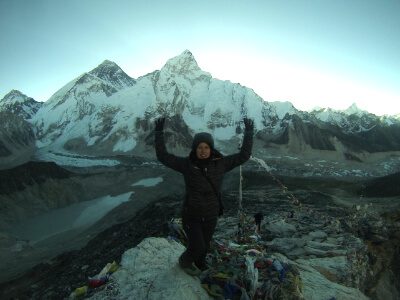
The final destination of the trekkers will be at the base camp of Everest (5,364 m / 17,598 ft) and Kala Patthar (5,545 m / 18,192 ft), where trekkers will have clear sights of the highest mountains on earth.
The extra walking is more strenuous yet very fulfilling to those who want to combine both easy panoramic trekking with a complete experience of Everest.
Sightseeing of culture can also be arranged before or after the trek. A lot of tourists visit the UNESCO World Heritage sites in Kathmandu, such as Durbar Square, Boudhanath, and Pashupatinath.
The other destination is Pokhara with its serene lakeside scenery and Annapurna views available, and is a popular one with hiking, boating, and rest. Chitwan National Park offers the experience of jungle safaris, wildlife viewing, and village tours.
These extensions can be easily facilitated by Ambition Himalaya, which can also tailor them to provide a unique itinerary together with the Everest Panorama Trek. If you want to keep on trekking and reach Everest Base Camp, see the cultural feast of Nepal, or enjoy Pokhara and Chitwan, we will manage the logistics, permits, and accommodation hassles easily.
These other paths add value to the Everest Panorama Trek, as they will give visitors the opportunity to have a small trek combined with a cultural experience. Each extension provides a lifetime Himalayan adventure, which is full of adventure, safe, and enriching, under the guidance of the professionals of Ambition Himalaya.
Additional Costs & Budgeting
Although the Everest Panorama Trek includes lodging, meals, permits, guides, and domestic flights, they are expected to incur extra costs. Tipping is expected, and the guides will normally be given between 5 and 10 dollars a day, and the porters will be given between 3 and 5 dollars a day.
There are snacks and bottled water, and energy drinks along the trail, which tend to be about one or three dollars each.
The Wi-Fi is offered by numerous lodges at a low cost (2-3 dollars per hour) and device charging at 1-2 dollars per session. The other souvenirs that the travelers must consider include prayer flags, handicrafts, or local art, and they are usually between 5 and 20 dollars.
Cash in Nepalese Rupees can be used to purchase items during the trek. Everest is a trek that can involve extra expenses such as tips, snacks, internet, a charge, and even souvenirs.
Language & Communication
Communication at the Everest Panorama Trek is not a problem since the majority of guides and lodge employees understand and speak English. Sherpa and Tibetan dialects are popular in places like Namche Bazaar, Khumjung, and Tengboche, and this enhances the cultural value of the trip.
Although English covers basic needs, it will be pleasant to learn some of the Nepali vocabulary or Sherpa phrases to enhance interactions. Even basic greetings such as the Namaste greeting are used to mean hello or dhanyabad, meaning thank you, and are welcomed. Respect demands taking photos only with permission, particularly in monasteries or within a personal home.
Basic phrases can also be understood, and this will assist in directions, food ordering, or purchasing. The communication language is easy to understand as it is composed of English and native terms, and the tourists are brought closer to the Sherpa population. An open, friendly, and patient spirit makes the Everest Panorama Trek an experience worth being in.
Mobile Network, Internet, and Charging
The connectivity via mobile is mostly fine along the Everest Panorama Trek. The best network offered by Nepal Telecom (NTC) is the one that is targeted at Lukla, Namche, Tengboche, and some parts of neighboring villages. Ncell has another operation in the lower areas, such as Lukla and Namche Bazaar. In Namche, there is a weak signal above that can sometimes be accessed.
It is possible to buy a Nepali SIM card in Kathmandu or Namche Bazaar. The charges are between $10-20 and usually entail data packs of 3G/4G applications in towns. Most lodges have Wi-Fi, which is normally charged at between 2 and 3 per hour.
The cost will be charged on a per-night basis each evening, meaning through generators or solar panels, with minimal charges of approximately a dollar or two per device. The power sockets are 220 V European sockets. Therefore, it is advisable to have a universal adapter.
A power bank could also be a good idea because there might be a power cut, and it is unreliable.
Wi-Fi, charging, and SIM cards are also well-thought-out so that trekkers are connected as they savor the distant scenery of the Everest Panorama Trek.
Trip Extension After the Trek
Once the Everest Panorama Trek is over, the tourists can decide to continue with their vacation in Nepal with various experiences. The programme of Kathmandu tours enables one to visit the UNESCO World Heritage sites, including Durbar Square, Boudhanath, and Pashupatinath, giving one an insight into the history and culture of Nepal.
To give the special touch, Ambition Himalaya can organize a scenic helicopter tour of the Himalayas with a landing on the Kala Patthar. It provides you with a 360-degree view of Everest and the other mountain ranges. This is a half-day excursion that is perfect for photography and panoramic views without further walking.
Other trekking activities can be used by people with time and vitality. The Everest Panorama Trek can be extended to Poon Hill in the Annapurna region or Langtang Ganjala Pass, which are shorter journeys. Under the guidance of Ambition Himalaya, all extensions are smooth, secure, and coordinated.
Travel Tips for Nepal as a First-Time Visitor
The priority of a first-time visitor is to prepare well to have a good and easy Everest Panorama Trek. Bring a lot of cash in Nepalese Rupees because only Kathmandu and Namche Bazaar have ATMs, and small bills are handy when it comes to getting tea house food and covering the smallest expenses.
Proper gear is essential. Comfortable hiking shoes, worn out, hiking jackets, thick clothing, a waterproof coat, and a warm sleeping bag make the trek more comfortable. Trekking poles and simple medicines against altitude or stomach problems should be used.
Have a gradual approach along the path. It is better to walk gradually and take frequent rests, and educate yourself to be gradual in acclimatising rather than running. Hydrate the body and listen to it wherever you go on the trek.
Adhere to local culture and traditions. Take off shoes at lodges and monasteries, shake hands before taking photos, be polite, and smile with Namaste at the locals.
It is normal and welcome to tip. Guides normally earn $5-10 per day, and porters earn $3-5 per day. Bring along some additional money to express thanks for their help. By observing these few and easy guidelines, one will have a safe, comfortable, and culturally enriching experience during the Everest Panorama Trek.

Good to know, before you travel
Want to learn more about this journey in-depth? Essential Trip Information includes a thorough itinerary, information for visa processing, Accommodations, Food , Acclimatization’s and pretty much anything else you could possibly need to know about this tour. Read more inside.
Frequently Asked Question
Breakfasts, lunches, and dinners are all kept. Look forward to Nepali hearty foods such as dal bhat (lentils and rice), soups, noodles, vegetables, and eggs.
A 7-day guided trek with grand Himalayan scenery and Sherpa culture. It is a quick, unchallenging adventure that centers on some awesome views of the Everest.
It can be used by any fit traveler, family, or beginner. Previous mountain experience is not required in this easy-to-moderate Everest trek.
We fly briefly in the morning to Kathmandu to Lukla (some 30 minutes). In the case the plane is not allowed to fly due to weather, we will drive (~4-5h) to Ramechhap and take a flight there.
Clothing to deal with warm days and cool nights: a waterproof jacket, warm-up fleece, hiking boots, gloves, and a hat, packed up. It includes taking a warm sleeping bag and a water bottle as well.
Others use hot showers that are solar-heated (fee $1-2). Otherwise, there is nothing better to do than take cold showers. Carry soap and a towel.
The currency of Nepal is Nepalese Rupees (NPR). In Kathmandu and Namche are ATMs. Take a little cash (1000 NPR or 10-20 USD) on the trip.
Tipping is customary. An average amount will be around US$5-10/day per guide and 3-5/day per porter (per head).
Yes. SIM cards of the Nepalese network (NTC / Ncell) cover as far as Namche and higher. Most lodges have paid Wi-Fi. A local SIM and charger will ensure that you are not out of touch.
Field trips are performed in guided tours. Solo trekking is not allowed in the area. A licensed guide guarantees your route, licenses, and your safety.
Yes. You may go as far as the base camp of Everest. Ambition Himalaya will be able to add time of about 7-8 days, and you will have to keep on trekking till EBC and Kala Patthar.
Travel insurance is necessary. Guides carry first-aid kits. In case you get ill, guides assist in coming out. Medical prices and cancellation of a trip are insured.
The Western-style or squat toilets (shared sometimes) are found in most of the teahouses. You may have to pay a small fee. You must always have toilet paper and a hand sanitizer.
Yes, kids and adolescents may participate, provided that they are in shape. The speed is average, and the accommodations are not tight; hence, the trek is family-friendly.
On most days, there are 4-6 hours of walking, which depends on the route and the pace of walking. Breaks, acclimatization, and photos will have ample time.
Kathmandu is approximately 30 minutes away. The air tour is not very long, yet the views of the Himalayas are spectacular. It is weather-based based hence delays might be experienced.
On a normal day, Everest is seen from various viewpoints, such as the Everest View Hotel (3,962m) at Namche. There will also be Ama Dablam, Lhotse, Nuptse, and other significant mountains.
Correct acclimatization is associated with a low risk of altitude sickness. We have a rest day in Namche (3,440m). Also, eat as much water as possible, go up gradually, and report to your guide whether you’re sick or otherwise.
Quick Inquiry Form
 Read all reviews in Tripadvisor


$ 700USD
- No. of Pax Per person
-
1 person
US$ 1050
-
2 -
2 people
US$ 950
-
3 -
5 people
US$ 900
-
6 -
9 people
US$ 820
-
10 -
15 people
US$ 750
-
16 + people
9999
US$ 700
Total Cost:
US$ 1050
- Private trip departures everyday
- No hidden cost
- Local based company
- Over 17 years of experience
- Trip Customization