
Everest Base Camp Trek – 14 Days to the Foot of Mount Everest
 The Everest Base Camp Trek is one of those journeys that stays with you long after you return home. The trail begins in the green hills of the Khumbu and gradually climbs into a landscape of glaciers, high mountain passes, ancient monasteries and enormous Himalayan peaks. Along the way, the villages become smaller, the air becomes thinner, and the mountains begin to dominate every view.
This 14-day Everest Base Camp Trek itinerary is designed around a steady ascent, with dedicated acclimatization days in Namche Bazaar and Dingboche. The route takes you through Lukla, Phakding, Namche Bazaar, Tengboche, Dingboche and Lobuche before reaching Gorakshep and Everest Base Camp at 5,364 metres. You will also climb Kala Patthar for one of the finest sunrise viewpoints in the Khumbu region.
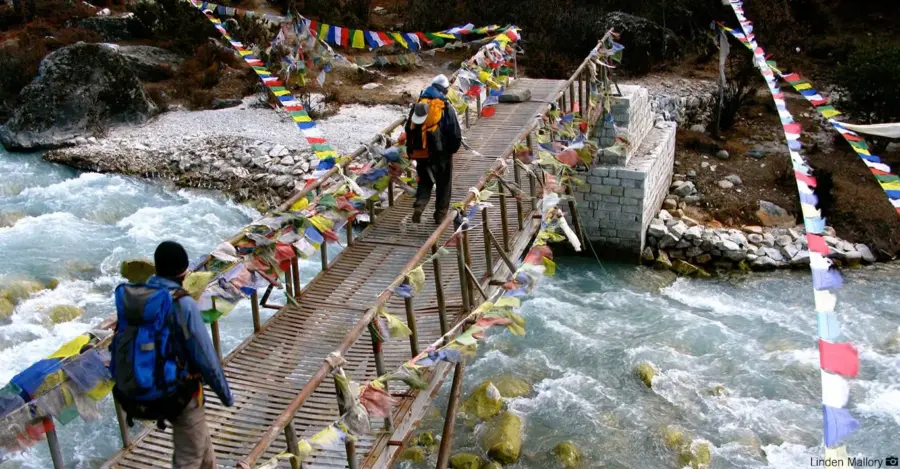
The trek is not simply about reaching Everest Base Camp. It is also about walking through Sherpa villages, crossing suspension bridges over mountain rivers, visiting Buddhist monasteries and experiencing the everyday life of the people who call the Everest region home.
Whether you are travelling with friends, family or a private group, this Everest Base Camp Trek in Nepal offers a memorable combination of adventure, Himalayan scenery and local culture.
Everest Base Camp Trek Highlights
- Scenic flight to Lukla and back to Kathmandu
- Trek through the heart of the Khumbu region
- Explore the famous mountain town of Namche Bazaar
- Acclimatization walks with spectacular Himalayan views
- Visit Tengboche Monastery
- Walk through traditional Sherpa settlements
- Views of Everest, Lhotse, Nuptse, Ama Dablam and Thamserku
- Trek through the Khumbu Glacier region
- Reach Everest Base Camp
- Sunrise from Kala Patthar
- Experience Sagarmatha National Park
- Cross traditional suspension bridges
- Private group options and group discounts available
- 14-day carefully paced itinerary
Everest Base Camp Trek at a Glance
| Trek Details | Information |
|---|---|
| Trek Duration | 14 Days |
| Destination | Everest Base Camp, Nepal |
| Maximum Altitude | 5,545 m / 18,192 ft |
| Starting Point | Lukla |
| Ending Point | Lukla |
| Highest Trekking Point | Kala Patthar |
| Base Camp Elevation | Approx. 5,364 m / 17,598 ft |
| Trek Region | Khumbu / Everest Region |
| Difficulty | Challenging |
| Accommodation | Hotels in Kathmandu, mountain lodges during trek |
| Meals | Breakfast, Lunch & Dinner during trekking days |
| Best Seasons | Spring and Autumn |
| Trekking Style | Guided Trek |
| Group Type | Private / Group |
Why Trek to Everest Base Camp?
There are many high-altitude treks around the world, but the Everest Base Camp Trek has a character of its own.
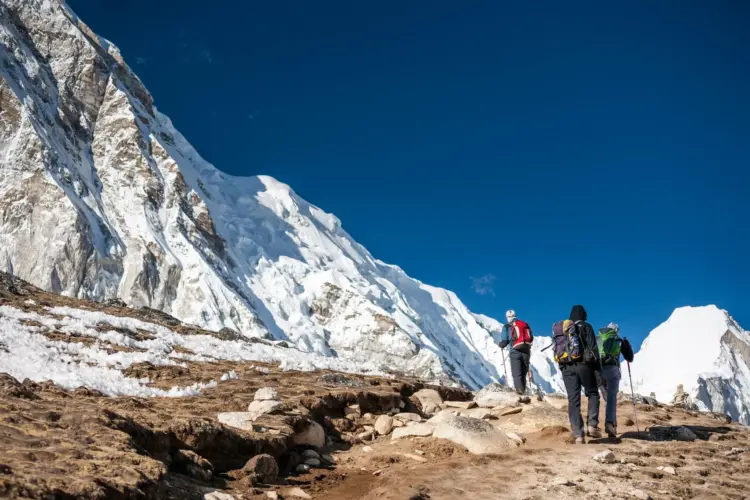
The route follows trails that have been used for generations by Sherpa communities, mountaineers, porters and travellers heading deeper into the Everest region. The scenery changes dramatically as you climb. Green forests around the lower Khumbu gradually give way to alpine meadows, rocky valleys and glacial landscapes.
Namche Bazaar introduces you to the mountain culture of the region. Tengboche brings you closer to its Buddhist heritage. Dingboche and Lobuche show how life adapts to extreme altitude. Finally, Gorakshep and Everest Base Camp place you among some of the most impressive mountains on Earth.
The journey is physically demanding, but it is the gradual transformation of the landscape that makes the experience so special.
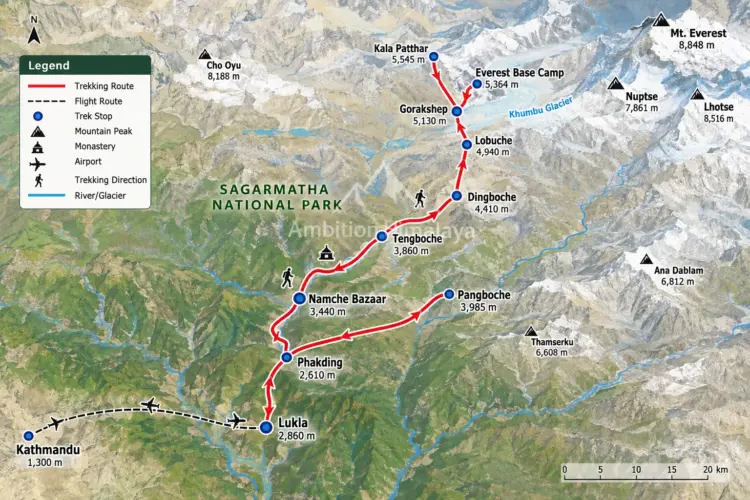
Everest Base Camp Trek Route
The classic Everest Base Camp Trek route follows a well-established trail through the Khumbu Valley.
After arriving in Kathmandu, you travel towards Lukla and begin trekking towards Phakding. From there, the trail follows the Dudh Koshi River towards Namche Bazaar.
The route then continues through:
Lukla → Phakding → Namche Bazaar → Tengboche → Dingboche → Lobuche → Gorakshep → Everest Base Camp → Kala Patthar → Pangboche → Namche Bazaar → Lukla
The return journey follows a lower route through the Khumbu villages before reaching Lukla for the flight back to Kathmandu.
14-Day Everest Base Camp Trek Itinerary
Day 1: Arrival in Kathmandu – Welcome to Nepal
Altitude: 1,300 m / 4,265 ft
Accommodation: 3-Star Hotel
Meals: Welcome Dinner
Transport: Private vehicle, approximately 30 minutes
Your Everest Base Camp Trek begins in Kathmandu, the vibrant capital of Nepal.
After landing at Tribhuvan International Airport, our representative will meet you outside the arrival area and transfer you to your hotel. Once you have checked in, you can take some time to rest after your journey.
If your energy allows, a short walk around the surrounding streets is a pleasant way to get your first impression of Kathmandu.
Later in the evening, your trekking guide will meet you at the hotel and explain the upcoming journey, including the route, altitude, daily walking schedule and important trekking information.
The day ends with a traditional welcome dinner where you can enjoy some local Nepali cuisine before getting an early night’s rest.
Tomorrow, the mountains begin.
Day 2: Fly to Lukla and Trek to Phakding
Lukla: 2,860 m / 9,383 ft
Phakding: 2,610 m / 8,562 ft
Flight: Approximately 30 minutes
Walking: 3–4 hours
Accommodation: Mountain Lodge
Meals: Breakfast, Lunch & Dinner
An early start takes you towards the airport for your flight to Lukla, the gateway to the Everest region.
During the busiest trekking periods, flights may operate from Ramechhap Airport depending on aviation schedules and operating conditions. If required, you will travel by private vehicle to Ramechhap before continuing by air to Lukla.
The short flight is an exciting introduction to the Himalayas. As the aircraft approaches Lukla, the surrounding hills and mountains gradually replace the city landscape.
After arriving in Lukla, you will have breakfast and prepare for your first walk.
The trail descends gradually through small mountain settlements before reaching Cheplung and continuing towards Ghat. From Ghat, the trail follows the Dudh Koshi River towards Phakding.
This first trekking day is relatively short, allowing your body to begin adjusting to the altitude.
Overnight in Phakding.
Day 3: Phakding to Namche Bazaar
Altitude: 3,440 m / 11,286 ft
Walking: 6–7 hours
Accommodation: Mountain Lodge
Meals: Breakfast, Lunch & Dinner
Today the trail enters deeper into the Everest region.
After breakfast, you follow the Dudh Koshi River through forests and small settlements. The route passes through Benkar before reaching the entrance of Sagarmatha National Park.
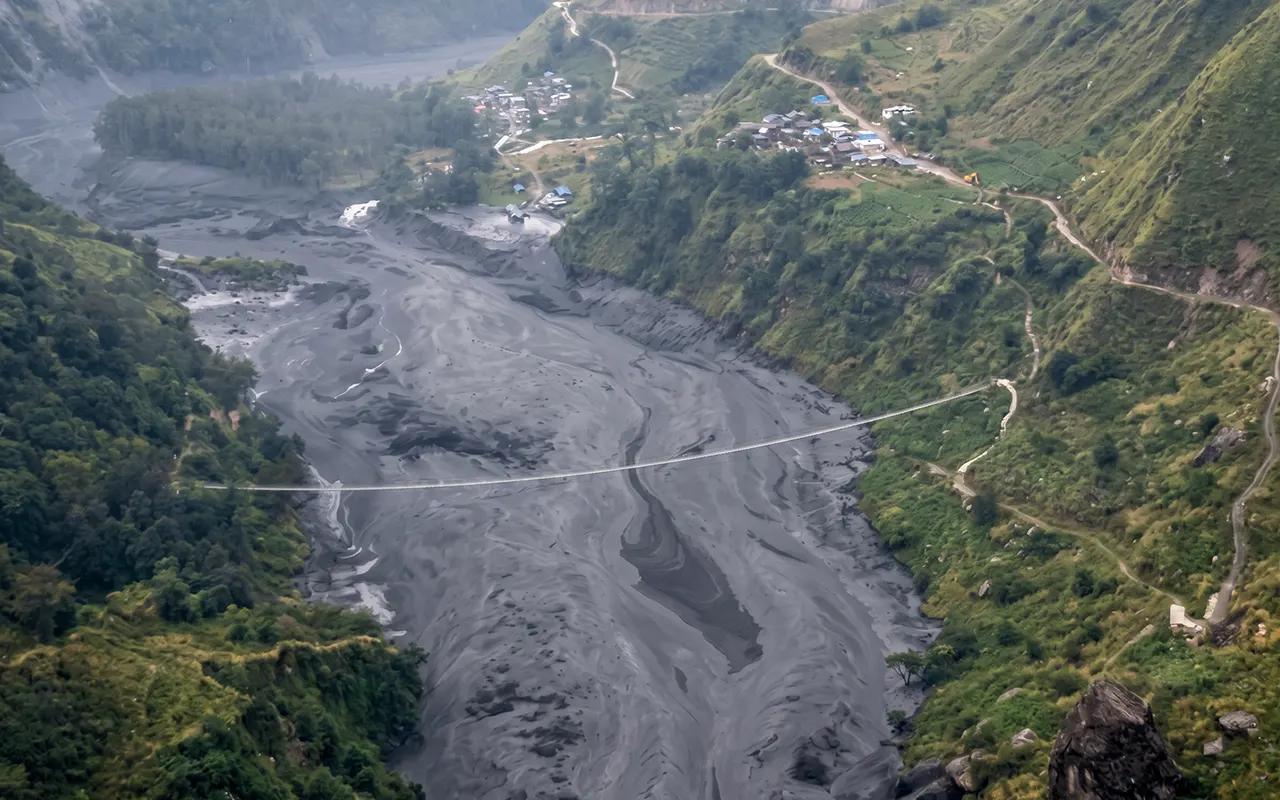
Several suspension bridges add an adventurous element to the journey as the trail continues towards Jorsalle.
From here, the route begins climbing more steadily towards Namche Bazaar.
Along the way, you may catch your first distant glimpse of Mount Everest, depending on weather and visibility.
The final climb to Namche is demanding, but arriving in the famous Sherpa town is rewarding. Built into the mountainside, Namche is the commercial and cultural centre of the Khumbu region.
After checking into your lodge, you can relax and enjoy the atmosphere of this remarkable mountain settlement.
Day 4: Acclimatization Day in Namche Bazaar
Altitude: 3,440 m / 11,286 ft
Accommodation: Mountain Lodge
Meals: Breakfast, Lunch & Dinner
Today is an important part of the Everest Base Camp Trek itinerary.
Rather than climbing higher immediately, you spend the day allowing your body to adapt to the increasing altitude.
After breakfast, you can take a gradual hike towards the Everest View area. From the higher viewpoint, the panorama can include Mount Everest, Ama Dablam, Lhotse, Nuptse, Thamserku and other Himalayan peaks.
The area around Namche also provides an opportunity to learn more about Sherpa culture and the history of mountaineering in the Everest region.
You can explore the local market, visit the Sagarmatha National Park Museum or simply spend time enjoying the mountain views.
The purpose of the day is not to remain completely inactive. A short acclimatization hike followed by rest helps prepare you for the higher elevations ahead.
Overnight in Namche Bazaar.
Day 5: Namche Bazaar to Tengboche
Altitude: 3,860 m / 12,664 ft
Walking: 5–6 hours
Distance: Approximately 10 km
Accommodation: Mountain Lodge
Meals: Breakfast, Lunch & Dinner
The trail leaves Namche behind and follows a beautiful mountain route with expansive views across the Khumbu.
After an initial climb, the trail gradually descends towards the Imja Khola before reaching Phungithanga.
From here, the route climbs through forests of rhododendron and other Himalayan vegetation.
The change in scenery is noticeable as the trail moves deeper into the mountains.
Eventually, the forest opens to reveal Tengboche, home to one of the most important Buddhist monasteries in the Everest region.
The panoramic setting is extraordinary, with peaks such as Ama Dablam, Everest, Lhotse, Nuptse and Thamserku visible from the area.
If conditions and monastery schedules permit, you can explore the monastery and experience the peaceful atmosphere of this important spiritual centre.
Overnight in Tengboche.
Day 6: Tengboche to Dingboche
Altitude: 4,410 m / 14,468 ft
Walking: 5–6 hours
Distance: Approximately 8 km
Accommodation: Mountain Lodge
Meals: Breakfast, Lunch & Dinner
The landscape becomes increasingly alpine today.
Leaving Tengboche, the trail descends towards Deboche before crossing the river and continuing towards Pangboche.
Along the route, you will encounter mani walls and traditional Buddhist features that reflect the deep cultural roots of the Khumbu.
The trail gradually climbs towards Dingboche, one of the most important settlements on the higher section of the Everest Base Camp route.
Dingboche is surrounded by impressive Himalayan peaks. Ama Dablam dominates the landscape, while Lhotse and Island Peak can also be seen from different points around the village.
At more than 4,400 metres, the change in altitude is significant, so the evening is best spent resting and preparing for the acclimatization day ahead.
Day 7: Acclimatization Day in Dingboche
Altitude: 4,410 m / 14,468 ft
Accommodation: Mountain Lodge
Meals: Breakfast, Lunch & Dinner
Another acclimatization day gives your body valuable time to adjust before climbing higher.
A common option is a gradual hike towards Nangkartshang Hill. The climb provides wide views across the surrounding valleys and mountains, including dramatic Himalayan peaks such as Makalu and Amphu Lapcha.
The goal is not to rush to the highest point. Walking slowly, spending time at altitude and returning to Dingboche for rest are all part of responsible acclimatization.
The afternoon can be spent relaxing at the lodge or exploring the village.
With the highest part of the trek approaching, this rest day becomes an important milestone in the journey.
Day 8: Dingboche to Lobuche
Altitude: 4,940 m / 16,207 ft
Walking: 4–5 hours
Distance: Approximately 10 km
Accommodation: Mountain Lodge
Meals: Breakfast, Lunch & Dinner
The trail now enters the high Himalayan landscape.
Leaving Dingboche, you follow a scenic route overlooking the Khumbu Valley. The mountains feel much closer here, and the vegetation becomes increasingly sparse.
The route continues towards Dughla before climbing towards the Thukla Pass.
This section of the trail carries a strong emotional significance. Memorials honour climbers and mountaineers who lost their lives in the Himalayas.
After spending some time here, the trail continues through rocky terrain towards Lobuche.
At nearly 5,000 metres, the environment is noticeably different from the lower valleys. Temperatures can drop quickly after sunset, so a warm layer and good sleeping equipment become especially important.
Overnight in Lobuche.
Day 9: Lobuche to Gorakshep and Everest Base Camp
Gorakshep: 5,130 m / 16,830 ft
Everest Base Camp: approximately 5,364 m / 17,598 ft
Walking: 8–9 hours
Accommodation: Mountain Lodge
Meals: Breakfast, Lunch & Dinner
This is one of the most anticipated days of the Everest Base Camp Trek.
The morning begins with a steady walk from Lobuche towards Gorakshep.
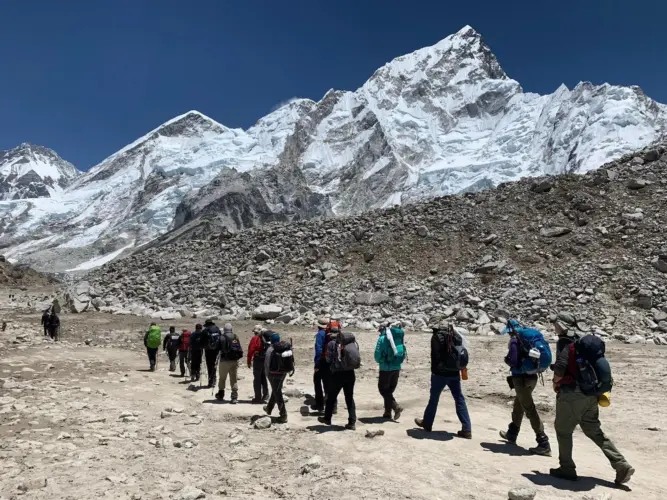
The trail becomes increasingly rugged as you move across the high-altitude terrain. Progress is deliberately slow because of the elevation.
Gorakshep is the last major settlement before Everest Base Camp.
After a short break, the journey continues towards Base Camp.
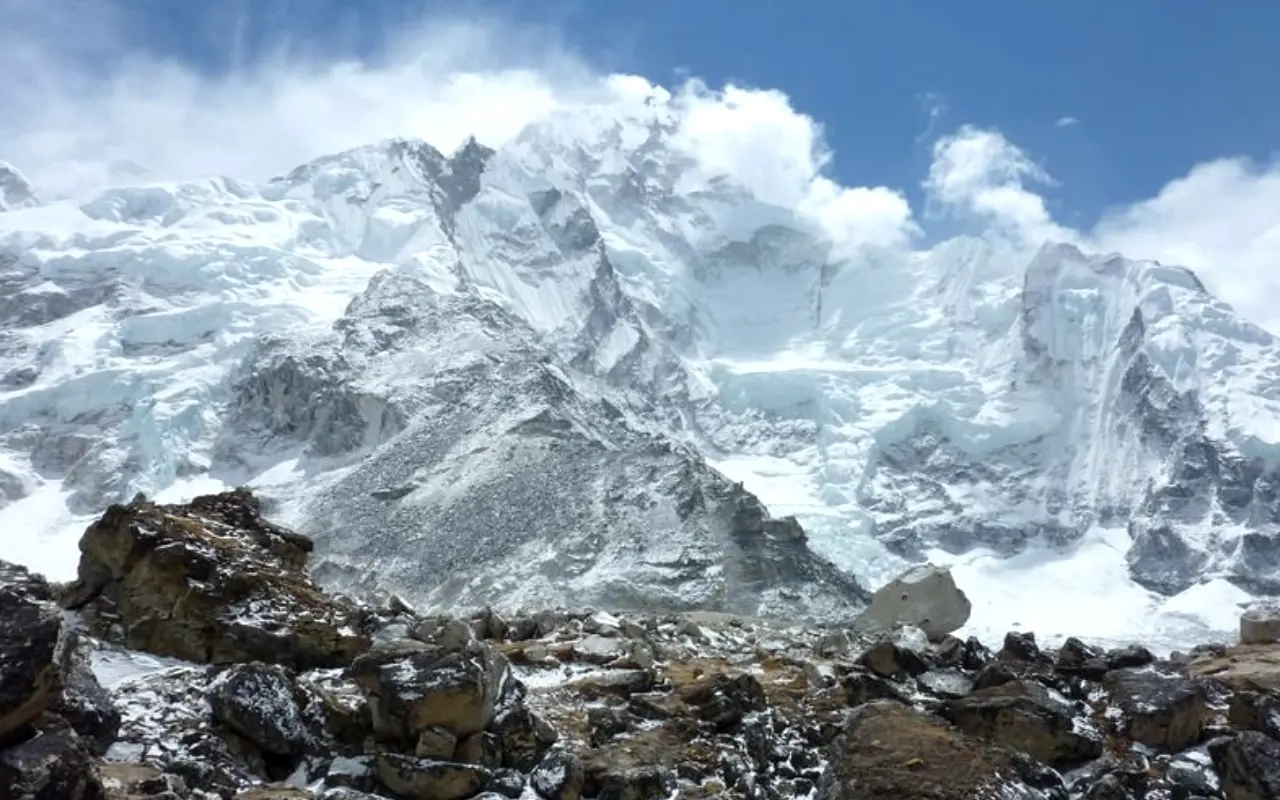
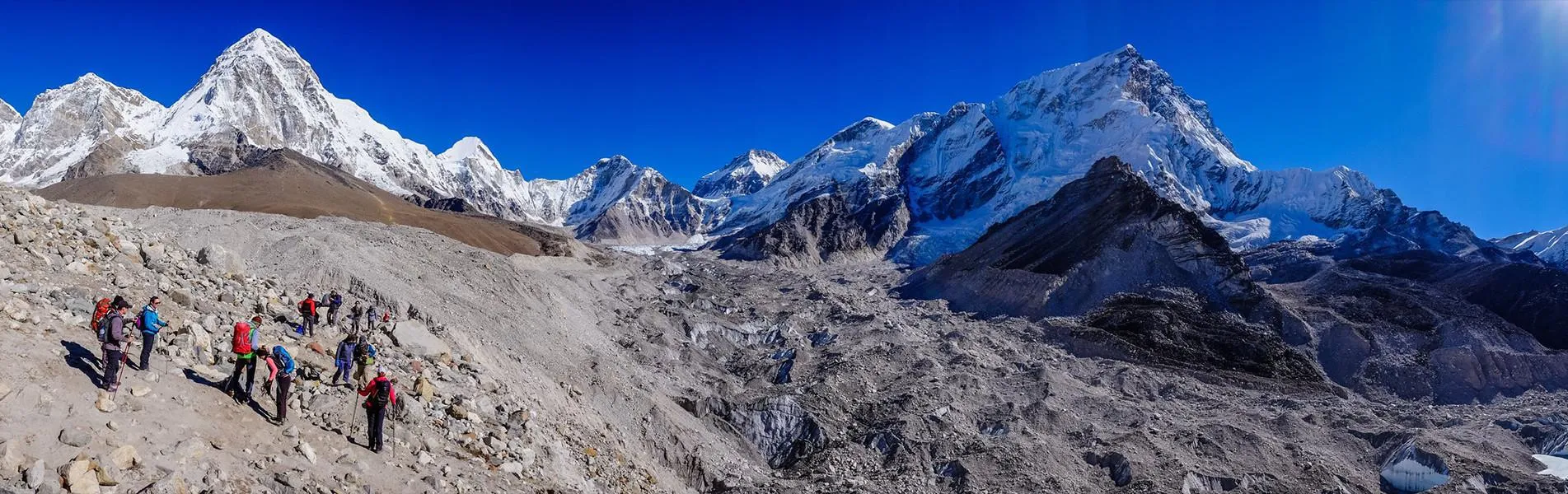
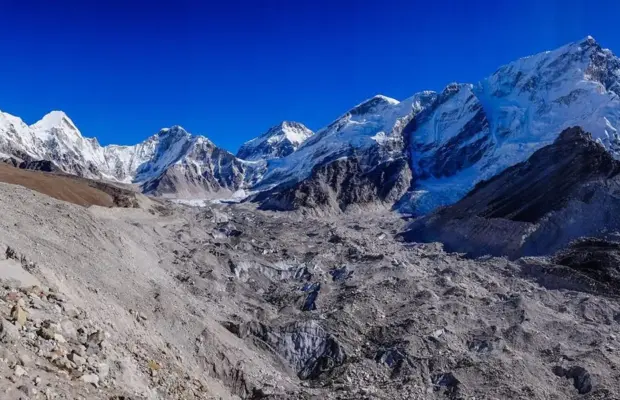
As the trail approaches the destination, the surrounding glacier landscape becomes increasingly dramatic. The Khumbu Icefall, Nuptse, Pumori and Khumbutse create an extraordinary Himalayan backdrop.
Standing at Everest Base Camp is a moment many trekkers remember for the rest of their lives.
There is no road leading here and no easy shortcut. Every step has been earned.
After spending time at Base Camp and taking photographs, you retrace the trail towards Gorakshep.
The evening is kept relaxed because another early start awaits the following morning.
Day 10: Kala Patthar Sunrise and Trek to Pangboche
Kala Patthar: 5,545 m / 18,192 ft
Pangboche: 3,985 m / 13,074 ft
Walking: 9–10 hours
Accommodation: Mountain Lodge
Meals: Breakfast, Lunch & Dinner
An early morning start takes you towards Kala Patthar.
For many trekkers, this is the visual highlight of the entire Everest Base Camp Trek.
The climb takes around two to three hours, depending on pace and conditions. As the sky begins to brighten, the silhouettes of the Himalayan giants slowly become visible.
From Kala Patthar, the panorama can include Mount Everest, Nuptse, Pumori and Ama Dablam.
The early morning light changes the character of the mountains minute by minute.
After enjoying the sunrise, you descend towards Gorakshep for breakfast before beginning the longer descent through the Khumbu.
The trail continues towards Pangboche, where the lower altitude provides a welcome change after spending the previous night above 5,000 metres.
After a long day on the trail, you can finally relax and enjoy a warmer, more comfortable evening.
Day 11: Pangboche to Namche Bazaar
Altitude: 3,440 m / 11,286 ft
Walking: 6–7 hours
Accommodation: Mountain Lodge
Meals: Breakfast, Lunch & Dinner
The return journey feels different.
The same mountains that looked imposing during the ascent now feel familiar. The trail descends through the villages and forests of the Khumbu, passing areas around Tengboche before continuing towards Namche.
As you lose altitude, vegetation gradually becomes thicker.
The walking is generally easier than the high-altitude sections, although the long downhill stretches can still be tiring.
By the time you arrive in Namche Bazaar, you will have completed the most demanding part of the trek.
A warm meal, comfortable lodge and familiar surroundings make this evening especially enjoyable.
Day 12: Namche Bazaar to Lukla
Altitude: 2,860 m / 9,383 ft
Walking: 6–7 hours
Distance: Approximately 20 km
Accommodation: Mountain Lodge
Meals: Breakfast, Lunch & Dinner
Your final trekking day follows the trail back towards Lukla.
You descend through the forests and settlements that you passed during the first part of the journey.
The trail crosses the Dudh Koshi and Bhote Koshi river systems before reaching Phakding, where you can stop for lunch.
From Phakding, the route continues towards Lukla.
Although the path is familiar, the feeling is different. You are no longer wondering what lies around the next corner; instead, you can look back on the journey you have just completed.
Once in Lukla, you can relax, explore the town and perhaps pick up a small souvenir to remember your time in the Everest region.
Day 13: Fly from Lukla to Kathmandu
Flight: Approximately 30 minutes
Accommodation: 3-Star Hotel
Meals: Breakfast
After breakfast, you head towards Lukla Airport for your return flight to Kathmandu.
The short flight offers another opportunity to see the mountain landscape from above before returning to the Kathmandu Valley.
Once you arrive in Kathmandu, you can check into your hotel and enjoy a hot shower and some well-earned rest.
After nearly two weeks in the mountains, the comforts of the city can feel surprisingly luxurious.
The rest of the day is free for relaxation, shopping or exploring Kathmandu depending on your energy and schedule.
Day 14: Final Departure from Nepal
Transport: Private vehicle
Meals: Breakfast
Your 14-day Everest Base Camp Trek comes to an end today.
After breakfast, our representative will transfer you to Tribhuvan International Airport for your onward flight.
If you have additional time in Nepal, your journey does not have to end here.
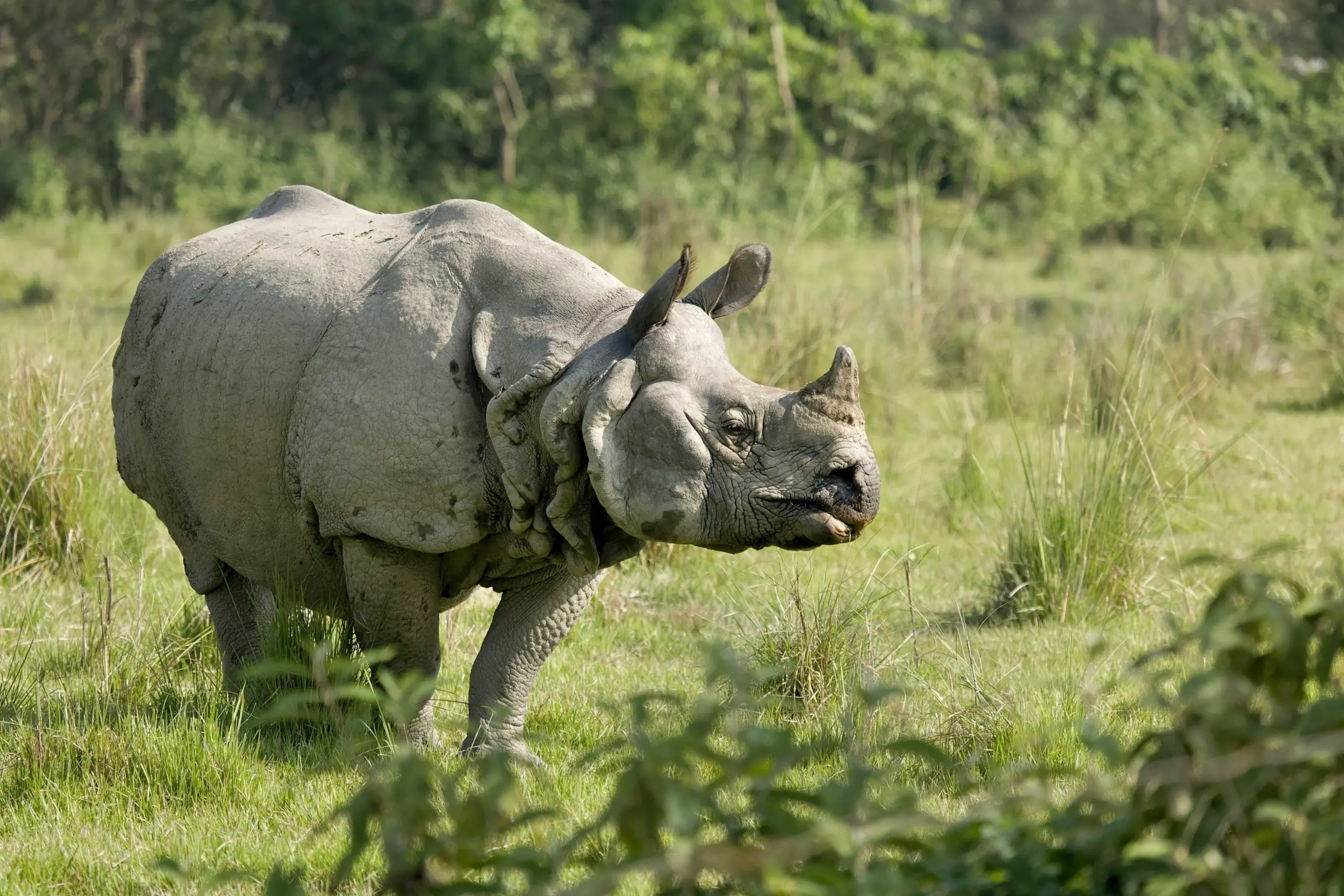
Nepal offers many other experiences, including wildlife safaris, cultural tours, scenic mountain journeys, rafting adventures and other Himalayan trekking routes.
Until the next journey, the memories of the Everest region, Sherpa villages, suspension bridges, monasteries and Himalayan sunrise remain with you.
Everest Base Camp Trek Difficulty
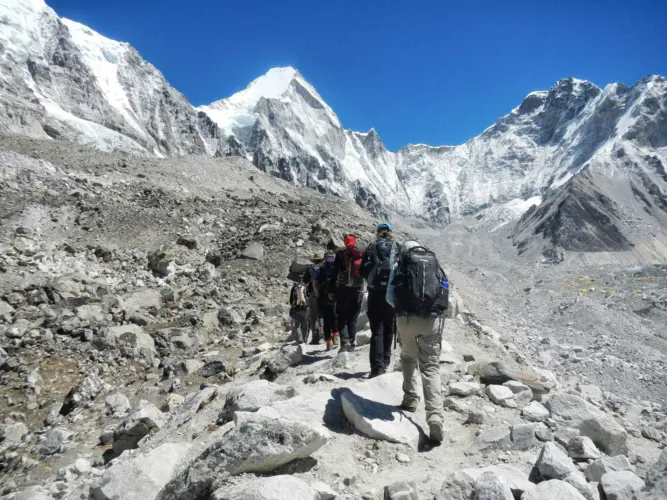
The Everest Base Camp Trek is considered a challenging high-altitude trek.
You do not need to be an elite athlete, but you should be comfortable walking for several hours on consecutive days. The biggest challenge is not simply the distance. Altitude, uneven terrain, changing weather and long ascents all contribute to the difficulty.
Some trekking days can involve 6–9 hours of walking, while the Everest Base Camp and Kala Patthar sections can feel particularly demanding.
Regular cardiovascular exercise, hill walking, stair climbing and long-distance walking before the trek can help you prepare.
Most importantly, the itinerary allows acclimatization days in Namche Bazaar and Dingboche.
Best Time for the Everest Base Camp Trek
The main trekking seasons are spring and autumn.
Spring – March to May
Spring brings generally stable trekking conditions, clear mountain views and pleasant daytime temperatures. The rhododendron forests can also add colour to the lower sections of the trail.
Autumn – September to November
Autumn is another popular period for the Everest Base Camp Trek. The monsoon season has usually passed, leaving clearer skies and excellent visibility.
Winter – December to February
Winter brings colder temperatures and more challenging conditions at higher elevations. Snow and freezing temperatures can make the trek considerably harder.
Monsoon – June to August
The monsoon season brings more rain to lower areas and can affect mountain flights and trail conditions.
Weather in the Himalayas can change quickly regardless of season, so trekking plans should always allow some flexibility.
Everest Base Camp Trek Cost and Private Group Discounts
The cost of an Everest Base Camp Trek depends on the trekking style, accommodation, meals, guide and porter arrangements, permits, transportation and group size.
Private groups can also receive different per-person rates depending on the number of travellers.
Private Group Discount
| No. of People | Price Per Person |
|---|---|
| 1 Pax | US$1,450 |
| 2 Pax | US$1,320 |
| 3–5 Pax | US$1,280 |
| 6–9 Pax | US$1,230 |
| 10–15 Pax | US$1,180 |
| 16+ Pax | US$1,130 |
Private group discounts are available for larger groups.
For groups travelling together, the per-person cost can become more economical as the group size increases. Final pricing may depend on travel dates, flight arrangements, accommodation and selected services.
What Makes This Everest Base Camp Trek Different?
A trek to Everest is not measured only by the final destination.
The journey begins among the streets of Kathmandu and slowly moves into a completely different world. Lukla introduces the mountains. Namche introduces Sherpa culture. Tengboche introduces the spiritual side of the Khumbu. Dingboche marks the transition into a harsher alpine environment.
By the time you reach Everest Base Camp, you have already travelled through several distinct landscapes.
That progression is what makes the Everest Base Camp Trek in Nepal such a rewarding experience.
Accommodation During the Trek
Accommodation during the trekking portion is generally provided in mountain lodges and teahouses.
Rooms are usually simple and comfortable, with the emphasis being on warmth, rest and a good night’s sleep rather than luxury.
Kathmandu accommodation is provided in a comfortable hotel, while mountain lodges offer a more authentic experience of life in the Khumbu.
At higher elevations, facilities become more basic, which is part of the character of trekking in the Everest region.
Meals During the Everest Base Camp Trek
Meals during the trek are designed to provide enough energy for long days of walking.
Typical menus can include:
- Dal Bhat
- Rice and vegetable dishes
- Noodles
- Pasta
- Soups
- Potatoes
- Eggs
- Tibetan-style bread
- Momos
- Porridge
- Tea and coffee
Dal Bhat remains one of the most popular trekking meals in Nepal because it is filling and provides a useful combination of carbohydrates and protein.
What Should You Pack for Everest Base Camp?
Packing correctly can make a major difference during a high-altitude trek.
Essential items generally include:
- Waterproof trekking boots
- Warm down jacket
- Thermal base layers
- Fleece jacket
- Waterproof jacket and trousers
- Trekking trousers
- Warm gloves
- Wool or thermal socks
- Sun hat
- Warm hat
- Sunglasses
- Sunscreen
- Reusable water bottle
- Headlamp
- Trekking poles
- Sleeping bag suitable for cold conditions
- Personal first-aid supplies
- Backpack and daypack
- Power bank
- Basic toiletries
Avoid carrying unnecessary weight. A lighter backpack makes long trekking days considerably more comfortable.
Is Everest Base Camp Safe?
The Everest Base Camp route is a well-established trekking trail, but it is still a high-altitude mountain environment.
Weather can change rapidly, flights may be delayed, and altitude can affect trekkers differently.
Following the guide’s instructions, maintaining a sensible walking pace, staying hydrated and taking acclimatization seriously are important parts of a safe trek.
If you develop symptoms that may indicate altitude illness, inform your guide immediately rather than trying to push through them.
Mountain safety should always take priority over maintaining a fixed schedule.
Frequently Asked Questions
How many days does the Everest Base Camp Trek take?
This itinerary takes 14 days, including arrival and departure days in Kathmandu, the trek to Everest Base Camp, Kala Patthar and the return to Lukla.
What is the highest point of the trek?
The highest point on this itinerary is Kala Patthar at approximately 5,545 metres (18,192 ft).
How high is Everest Base Camp?
Everest Base Camp on the Nepal side is approximately 5,364 metres (17,598 ft) above sea level.
Is the Everest Base Camp Trek difficult?
Yes. It is a challenging high-altitude trek requiring good physical preparation and proper acclimatization. However, you do not need technical mountaineering experience to complete the standard trekking route.
Do I need previous trekking experience?
Previous trekking experience is useful but not essential. Being physically prepared for long walking days is more important.
Can I do the Everest Base Camp Trek privately?
Yes. A private Everest Base Camp Trek can be arranged for individuals, couples, families and groups.
Are group discounts available?
Yes. Private group pricing is available, with the per-person rate generally decreasing as the group size increases.
What is the best season for Everest Base Camp?
Spring and autumn are generally considered the main trekking seasons because of favourable conditions and mountain visibility.
Where does the Everest Base Camp Trek start?
The classic route begins with a flight to Lukla, followed by trekking through Phakding, Namche Bazaar, Tengboche, Dingboche and Lobuche.
Can flights to Lukla be delayed?
Yes. Mountain weather can affect flight operations. It is sensible to keep some flexibility in your travel schedule when planning an Everest Base Camp journey.
Your Everest Journey Starts Here
The Everest Base Camp Trek is more than a walk towards the world’s highest mountain.
It is the sound of prayer flags moving in the mountain wind, the first glimpse of Ama Dablam rising above the valley, the rhythm of footsteps across suspension bridges, and the simple warmth of a cup of tea after a long day on the trail.
It is the peaceful surroundings of Tengboche, the stone-built villages of Dingboche, the memorials at Thukla and the growing excitement as Everest Base Camp comes closer.
Then comes Kala Patthar — standing high above the Khumbu, watching the first light of morning touch Everest and the surrounding Himalayan peaks.
For 14 days, the mountains become your surroundings, the trail becomes your routine, and every village, viewpoint and mountain pass becomes part of a journey you will remember for years.
Plan Your Everest Base Camp Trek with Ambition Himalaya
Whether you are travelling solo, as a couple, with friends or as a private group, Ambition Himalaya can help you plan your Everest Base Camp journey with experienced local guides, carefully arranged logistics and a thoughtfully planned trekking itinerary.
Get in touch with us to discuss your trekking dates, group size and travel requirements.
Email: [email protected]
Phone: +977 1 4518413
Mobile / WhatsApp: +977 9851148898
Office: Thamel-26, Kathmandu, Nepal
Website: ambitionhimalaya.com
Ambition Himalaya
Ready to Plan Your Trekking? Contact us
More Blog Posts