
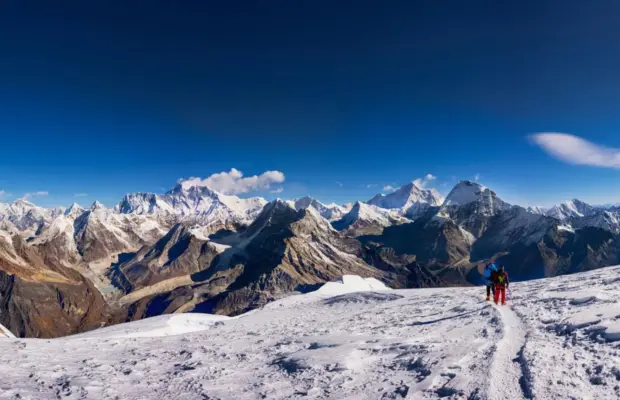
Mera Peak Climbing 17 Days: Complete Itinerary & Summit Guide
 Mera Peak Climbing – 17 Days: A Complete Journey to Nepal’s High Himalayan Summit
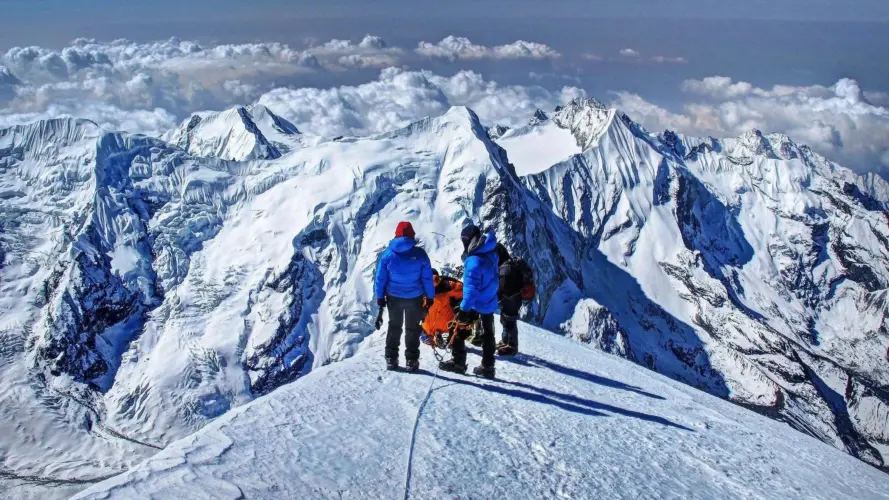
Standing at 6,476 metres (21,246 ft), Mera Peak is one of the most rewarding high-altitude climbing adventures in Nepal. The journey combines remote Himalayan trails, quiet mountain villages, long trekking days and a genuine summit experience in the high mountains.
The 17-day Mera Peak Climbing itinerary by Ambition Himalaya is designed for travellers who want more than a conventional trek. The route begins in Kathmandu, flies towards Lukla and gradually enters the remote Hinku Valley before reaching Khare and Mera High Camp. The summit attempt is made early in the morning, followed by the return journey through the mountain trails to Lukla and finally Kathmandu.
Mera Peak is part of Nepal’s trekking-peak climbing environment, where appropriate climbing skills, equipment, permits and experienced mountain support are important. Nepal Tourism Board notes that Nepal’s trekking peaks require climbing skills and proper climbing equipment and should not be underestimated simply because they are classified as trekking peaks.
For travellers looking for a challenging but achievable Himalayan climbing experience, Mera Peak Climbing offers an impressive combination of adventure, altitude, mountain scenery and cultural experience.
Mera Peak Climbing at a Glance
| Trip Detail | Information |
|---|---|
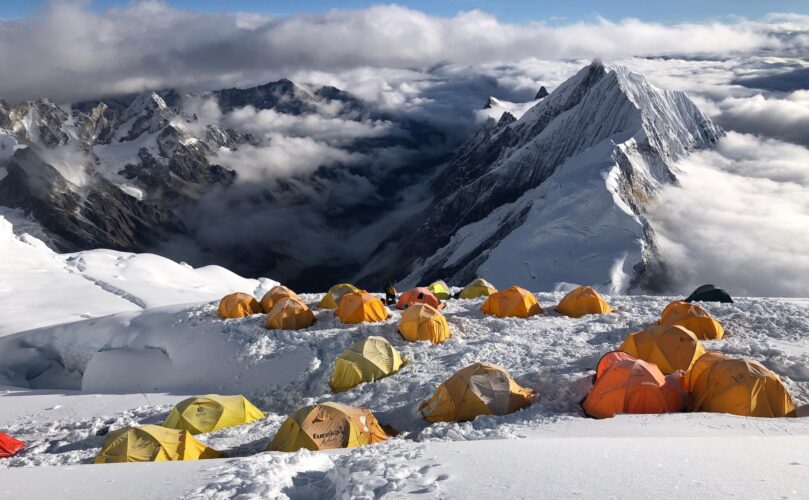
| Trip Name | Mera Peak Climbing |
| Duration | 17 Days |
| Maximum Elevation | 6,476m / 21,246ft |
| Starting Point | Kathmandu |
| Trekking Start | Lukla |
| Summit | Mera Peak |
| Main Valley | Hinku Valley |
| Highest Camp | Mera High Camp |
| Summit Day | Day 10 |
| Difficulty | Challenging high-altitude climb |
| Accommodation | Hotels and mountain lodges/teahouses |
| Best Seasons | Spring and autumn are generally preferred |
| Company | Ambition Himalaya |
Official trip page: Mera Peak Climbing – Ambition Himalaya
Why Choose Mera Peak Climbing?
Mera Peak offers a very different experience from simply trekking to a Himalayan viewpoint. You spend several days walking through changing landscapes before entering the higher alpine environment, where the character of the journey changes completely.
The lower part of the route takes you through forests and traditional mountain trails. As you gain altitude, the vegetation becomes thinner, the landscape becomes more rugged and the surrounding mountains become increasingly dominant.
Eventually, the trail reaches Khare, where the focus shifts from trekking to climbing preparation.
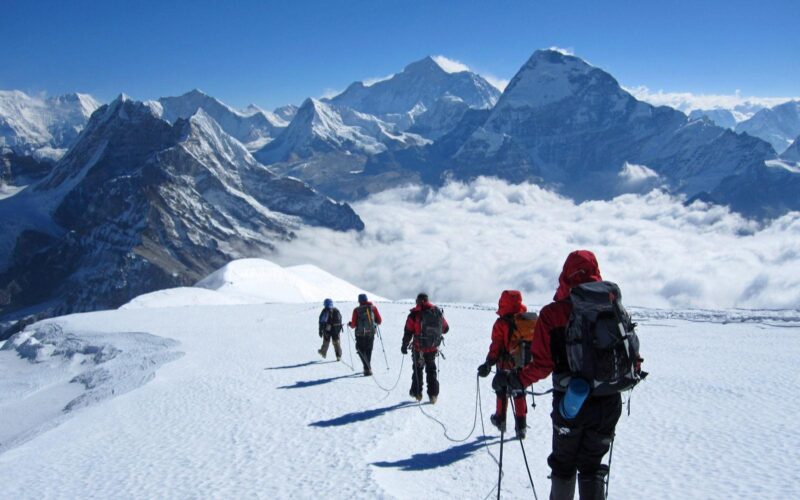
The summit day is the defining moment of the journey. An early start allows climbers to make progress during the colder and generally more stable morning hours before returning to lower elevations.
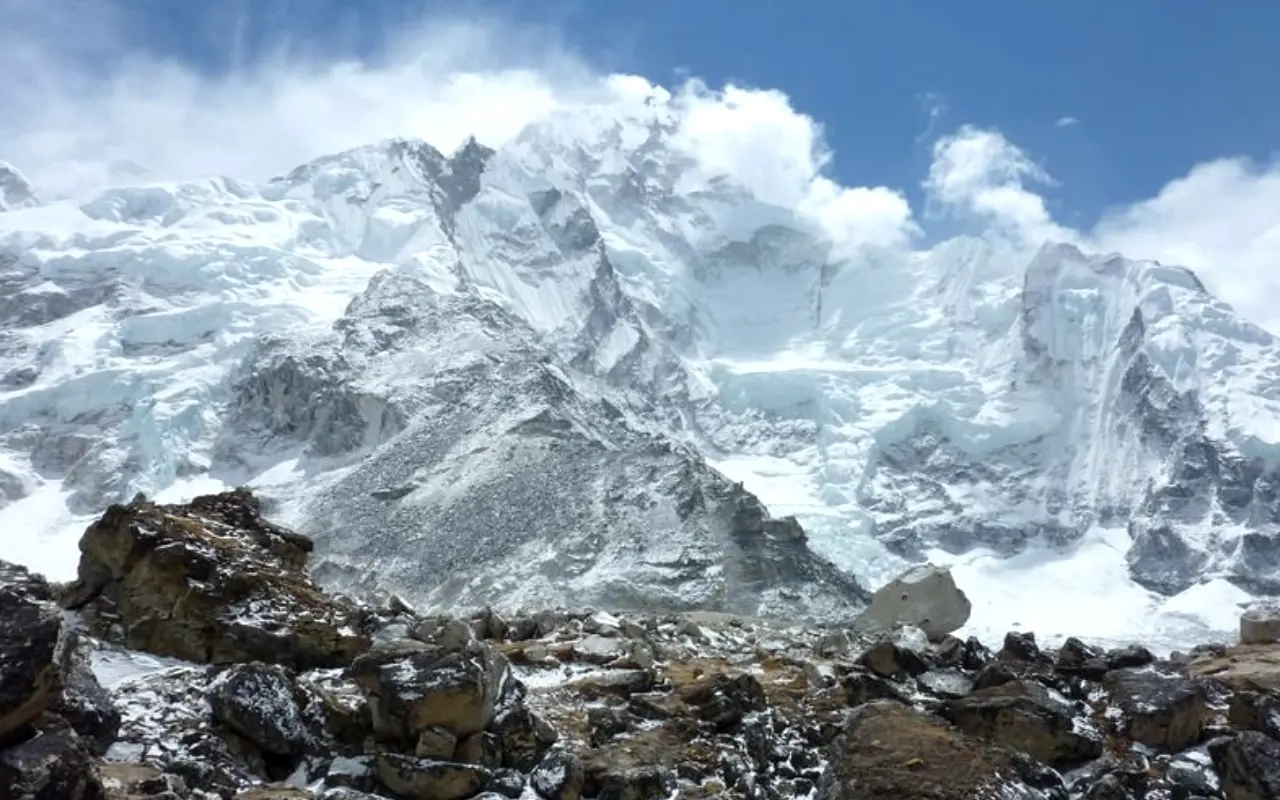
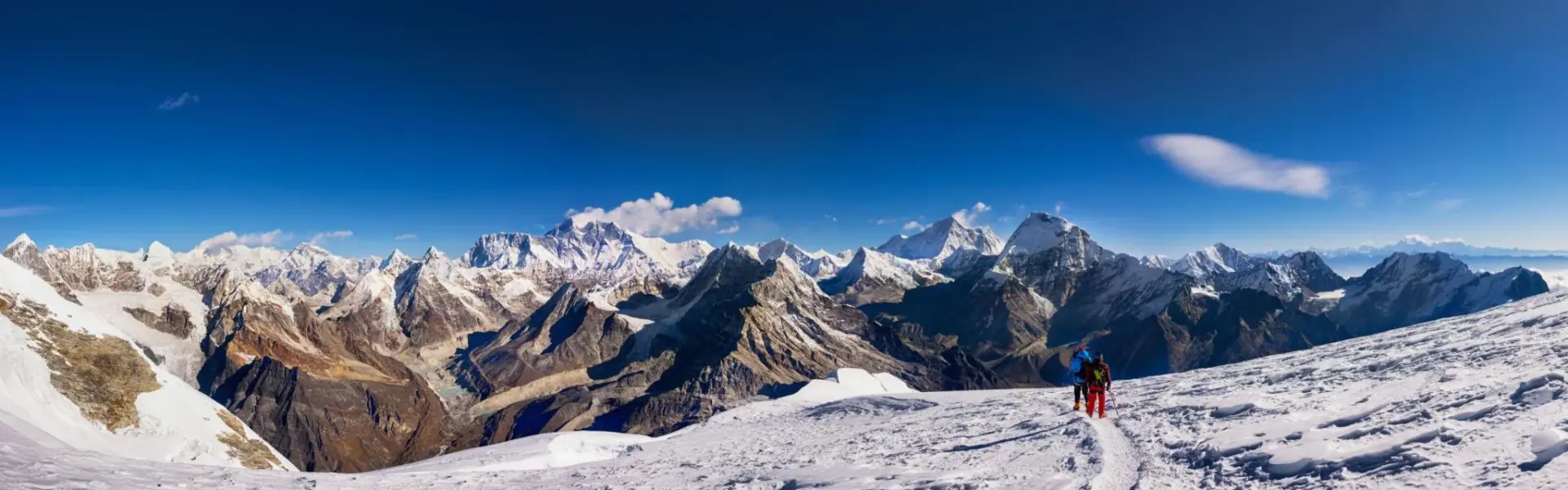
From the summit, the Himalayan panorama is one of the great rewards of the climb, with views across the high peaks of the Khumbu and surrounding Himalayan ranges.
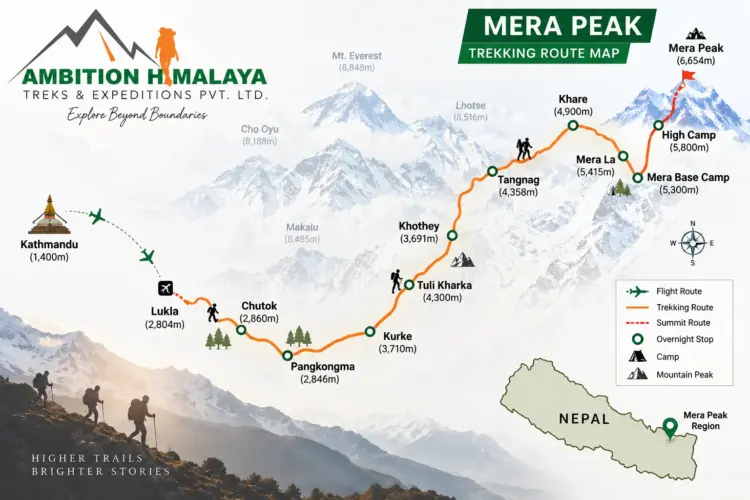
Mera Peak Climbing 17 Days – Complete Day-to-Day Itinerary
Day 1: Arrival in Kathmandu – Transfer to Hotel
Your Mera Peak adventure begins with your arrival in Kathmandu, Nepal’s vibrant capital city.
After completing the airport formalities, you will be transferred to your hotel. This first day is intentionally kept relaxed, allowing you to recover from your journey and settle into the Himalayan atmosphere.
Kathmandu is a fascinating mixture of ancient culture and modern city life. Depending on your arrival time, you may have an opportunity to explore the surrounding streets, enjoy traditional Nepali food or simply rest before the trekking and climbing journey begins.
Overnight: Kathmandu
Altitude: 1,300m
Day 2: Kathmandu – Trek and Climb Preparation
Day two is dedicated to preparation.
There is time to review your trekking and climbing equipment, organize your bags and complete the necessary preparations for the journey into the Everest region.
This is also an important opportunity to make sure that your clothing, footwear, climbing equipment and personal essentials are suitable for the changing conditions you will encounter.
For a high-altitude trip like Mera Peak, preparation is not something to leave until the last moment. Your guide and climbing team can help identify equipment requirements and make sure everything needed for the higher sections of the route is ready.
You may also have free time to explore Kathmandu or purchase any last-minute trekking supplies.
Overnight: Kathmandu
Day 3: Fly from Kathmandu to Lukla and Trek to Chhutanga
The adventure properly begins with an early flight towards Lukla.
The flight takes approximately 30 minutes, followed by the beginning of the trek towards Chhutanga.
Nepal Tourism Board describes Lukla as one of the main gateways to the Everest region and notes that the flight from Kathmandu is approximately 30 minutes.
The first walking section introduces you to the Himalayan trail. After leaving Lukla, the surroundings gradually become quieter as you move away from the airport and settlements.
The walk to Chhutanga takes approximately 3–4 hours, depending on trail conditions and the pace of the group.
Walking: 3–4 hours
Flight: Approximately 30 minutes
Destination: Chhutanga
Day 4: Chhutanga to Tuli Kharka
Today the trail becomes more demanding.
The route from Chhutanga to Tuli Kharka, at approximately 4,100m, involves a substantial increase in elevation. This section of the journey is important because the body begins adjusting to the higher Himalayan environment.
The trail passes through mountain terrain with changing vegetation and impressive views as you gradually move deeper into the remote landscape.
The walking time is approximately 5–6 hours.
A steady pace is more valuable than trying to walk quickly. At this stage of the itinerary, conserving energy and allowing your body to adapt to altitude are important parts of the climb.
Trek: Chhutanga → Tuli Kharka
Altitude: Approximately 4,100m
Walking: 5–6 hours
Day 5: Tuli Kharka to Kothe
The journey continues towards Kothe.
Today’s trail takes approximately 6–7 hours, passing through the rugged landscape of the Hinku Valley region.
The scenery gradually changes as the route moves further into the mountains. The trail feels increasingly remote, and the surrounding peaks become a constant presence.
Kothe is an important stop on the Mera Peak route because it provides a chance to rest before the itinerary continues towards Thangnak and eventually Khare.
Trek: Tuli Kharka → Kothe
Altitude: Approximately 4,182m
Walking: 6–7 hours
Day 6: Kothe to Thangnak
After breakfast, the trek continues towards Thangnak, located at approximately 4,350m.
Compared with the previous day, the walking distance is shorter, with around 4–5 hours on the trail.
This is a beautiful section of the journey, with the surrounding mountain landscape becoming more dramatic as you gain altitude.
The slower pace is intentional. At these elevations, every additional metre of altitude has an effect on the body, and gradual acclimatization becomes increasingly important.
Trek: Kothe → Thangnak
Altitude: 4,350m
Walking: 4–5 hours
Day 7: Thangnak to Khare
Today’s destination is Khare, situated at approximately 5,045m.
The trek takes around 4–5 hours, but the altitude makes this section considerably more demanding than the number of walking hours might suggest.
Khare is an important location in the Mera Peak climbing itinerary because the journey now moves firmly into the high-altitude climbing phase.
The surrounding environment becomes increasingly alpine, with fewer trees and a much more exposed mountain landscape.
Once you reach Khare, rest becomes particularly important.
Trek: Thangnak → Khare
Altitude: 5,045m
Walking: 4–5 hours
Day 8: Rest Day at Khare – Climbing Training and Preparation
Day eight is one of the most important days of the entire itinerary.
Rather than continuing higher immediately, you spend the day at Khare.
This provides valuable time for acclimatization while also allowing the climbing team to prepare for the summit section.
Depending on the conditions and the needs of the group, the day can include:
- Climbing technique practice
- Equipment checks
- Harness and climbing gear preparation
- Crampon familiarization
- Rope-system briefing
- Summit-day planning
- Weather discussion
- Rest and acclimatization
The goal is not simply to stay busy. A successful high-altitude climb requires energy, preparation and patience.
The Nepal Tourism Board specifically emphasizes that trekking peaks require climbing skills and proper climbing equipment.
Overnight: Khare
Altitude: Approximately 5,045m
Purpose: Acclimatization and climbing preparation
Day 9: Khare to Mera High Camp
The next stage takes you from Khare towards Mera High Camp, at approximately 5,780m.
This is a relatively short day in terms of hours, with approximately 4–5 hours of walking, but the altitude makes it physically demanding.
As you move towards High Camp, the surroundings become increasingly stark and exposed. The mountain environment feels very different from the lower trekking sections.
The goal is to reach High Camp with enough time to eat, organize climbing equipment and rest before the summit attempt.
Tomorrow will be the biggest day of the expedition.
Trek: Khare → Mera High Camp
Altitude: 5,780m
Walking: 4–5 hours
Day 10: Mera Peak Summit and Return to Khare
The Summit Day
This is the most important day of the Mera Peak Climbing 17-day itinerary.
The summit attempt begins very early, usually before sunrise, depending on weather, route conditions and the climbing team’s plan.
From High Camp, climbers begin their ascent towards the summit of Mera Peak.
The higher you climb, the more demanding the environment becomes. Cold temperatures, reduced oxygen and the physical effort of climbing require concentration and a controlled pace.
The summit elevation is approximately:
Mera Peak – 6,476m / 21,246ft
Reaching the summit is a major achievement.
From the top, climbers can experience expansive Himalayan views across the surrounding high peaks. The summit experience is not simply about reaching a number on an altitude chart; it represents the result of many days of walking, acclimatization, preparation and determination.
After spending appropriate time at the summit, the team begins the descent towards Khare.
The complete summit day is approximately 8–9 hours, depending on weather, route conditions, group pace and time spent on the mountain.
Summit: Mera Peak
Elevation: 6,476m / 21,246ft
Total walking/climbing: Approximately 8–9 hours
Overnight: Khare
Day 11: Reserve Day for Mera Peak Climbing
Mountain weather does not follow a fixed timetable.
For that reason, a reserve day is included in the itinerary.
If poor weather, snowfall, wind or other mountain conditions prevent the summit attempt on the planned day, this reserve day can be used to provide another opportunity.
Having a contingency day is an important part of a responsible Himalayan climbing itinerary. It avoids forcing a summit attempt simply because of a fixed calendar.
The final decision regarding the summit attempt should always be based on mountain conditions and the judgment of the climbing team.
Purpose: Weather contingency / additional summit opportunity
Day 12: Khare to Kothe
After completing the climbing section, the return journey begins.
The route descends from Khare towards Kothe, following the mountain trails back into the Hinku Valley.
The approximately 5–6 hour walk provides a noticeable change in atmosphere. As you lose altitude, breathing becomes easier and the landscape gradually becomes greener.
The descent can still be physically demanding because tired legs and accumulated fatigue from summit day remain factors.
Trek: Khare → Kothe
Altitude: Approximately 4,182m
Walking: 5–6 hours
Day 13: Kothe to Chhatrebu
The journey continues towards Chhatrebu.
This section takes approximately 5–6 hours and continues the gradual descent through the Himalayan landscape.
After the demanding climbing section, the rhythm of the trek changes. There is no longer a summit to chase, allowing you to enjoy the surrounding scenery and reflect on the achievement of the previous days.
Trek: Kothe → Chhatrebu
Walking: 5–6 hours
Trail names can be written slightly differently on maps and local itineraries, so you may also see variations such as Chhtrebu or Chhatrebu.
Day 14: Chhatrebu to Lukla
The final trekking section takes you back towards Lukla.
The walk takes approximately 5–6 hours.
Reaching Lukla marks the end of the main trekking and climbing section of the adventure. After several days in remote mountain terrain, returning to the town provides an opportunity to rest before the flight back to Kathmandu.
Trek: Chhatrebu → Lukla
Walking: 5–6 hours
Destination: Lukla
Day 15: Fly from Lukla to Kathmandu
An early morning flight takes you from Lukla back to Kathmandu.
The flight takes approximately 30 minutes, subject to weather and operational conditions.
Flying back after completing the Mera Peak climb can feel surprisingly emotional. The landscape that took days to cross on foot disappears beneath the aircraft as you return towards Kathmandu.
Once in Kathmandu, the remainder of the day can be used for rest.
Flight: Lukla → Kathmandu
Duration: Approximately 30 minutes
Nepal Tourism Board confirms that the Everest region is accessible by air, with Lukla serving as a major air gateway.
Day 16: Free Day in Kathmandu
After the physical demands of the expedition, Day 16 is intentionally relaxed.
You can use this day to explore Kathmandu, purchase souvenirs or simply rest.
Depending on your interests, possible activities include:
- Shopping for traditional Nepali products
- Exploring local markets
- Visiting historic temples and monuments
- Enjoying Nepali cuisine
- Relaxing at your hotel
- Exploring the streets of Kathmandu
This free day also provides some flexibility in case the Lukla flight schedule has been affected by mountain weather.
Day 17: Departure from Kathmandu
Your 17-day Mera Peak Climbing adventure comes to an end.
Depending on your flight schedule, you will be transferred to the airport for your onward journey.
You leave Nepal carrying more than photographs. The experience includes days of trekking through remote Himalayan trails, acclimatization at high altitude, climbing preparation and the achievement of standing on a Himalayan summit.
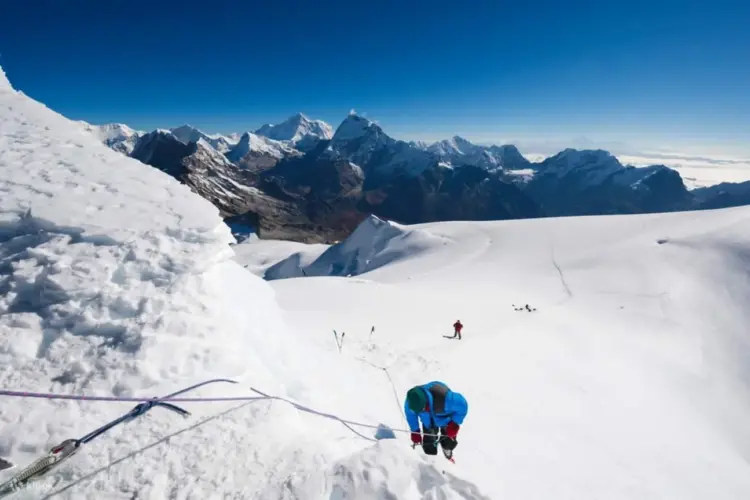
Mera Peak Climbing Difficulty
Mera Peak should not be treated as an ordinary trekking destination.
Although it is classified within Nepal’s trekking-peak environment, the climb reaches 6,476m, where altitude, cold, weather and physical exertion can become serious challenges.
Nepal Tourism Board describes trekking peaks as mountains that require climbing skills and climbing equipment and specifically warns that they should not be taken lightly.
The difficulty is influenced by several factors:
Altitude
The biggest challenge for many climbers is altitude. The itinerary gradually moves from Kathmandu at around 1,300m to more than 5,000m before the summit.
Long Trekking Days
Several days involve approximately 5–7 hours of walking, while summit day can take around 8–9 hours.
Cold and Weather
Temperatures can fall significantly at higher elevations, particularly during the early-morning summit push.
Physical Endurance
You need enough stamina to walk for several consecutive days and still have the energy required for summit day.
Basic Mountaineering Skills
Climbers should understand the correct use of climbing equipment and follow the instructions of their climbing guide.
Best Time for Mera Peak Climbing
The main seasons generally considered favourable for high-altitude climbing in Nepal are spring and autumn.
Nepal Tourism Board identifies March–May and October–November among the favourable periods for the Everest region, while winter brings colder conditions and the summer/monsoon period can bring rain and more difficult mountain conditions.
Spring – March to May
Spring brings improving mountain conditions and is one of Nepal’s major mountaineering seasons.
The landscape can also be particularly attractive as vegetation at lower elevations begins to develop.
Autumn – September to November
Autumn generally offers excellent visibility and is another major period for Himalayan trekking and climbing.
For a high-altitude climb such as Mera Peak, the exact weather conditions should always be checked before departure.
Mera Peak Climbing Permits and Regulations
Climbing a Himalayan peak in Nepal involves more than simply booking a trekking package.
Mera Peak falls within Nepal’s trekking-peak system, and the relevant permits and regulations need to be handled through the appropriate authorities.
Nepal Tourism Board states that permits for smaller trekking peaks are issued through the Nepal Mountaineering Association (NMA), while larger expedition mountains fall under the relevant government authority.
The Nepal Tourism Board also identifies Mera Peak Trek among the Everest-region routes where trekkers are required to be accompanied by a licensed trekking guide and carry an agency-issued TIMS card under the revised TIMS provisions.
For protected areas, an appropriate entry permit is also required. The official Nepal Tourism Board information lists Sagarmatha National Park among Nepal’s protected areas and provides the applicable entrance-fee information.
Useful Official Government Resources
Nepal Tourism Board – Everest Region:
Official Everest Region information – Nepal Tourism Board
Nepal Tourism Board – Mountaineering:
Official Mountaineering information – Nepal Tourism Board
Nepal Tourism Board – TIMS Card:
Official TIMS information – Nepal Tourism Board
Nepal Tourism Board – Park Entry Fees:
Official National Park entry-fee information
Nepal Tourism Board – Mountaineering information:
Mountaineering in Nepal – Official Nepal Tourism Board
For the latest permit requirements and fees, it is better to verify the current official information before each departure because regulations and fees can change.
What Makes the 17-Day Mera Peak Route Special?
One of the strongest features of this itinerary is the gradual transition from city to mountain.
You don’t simply arrive at a high camp and start climbing.
Instead, the journey develops naturally:
Kathmandu → Lukla → Chhutanga → Tuli Kharka → Kothe → Thangnak → Khare → High Camp → Mera Peak Summit → Khare → Kothe → Chhatrebu → Lukla → Kathmandu
Each stage prepares you for the next.
The early trekking days allow you to settle into the rhythm of walking. The middle section takes you deeper into the Hinku Valley and higher into the mountains. Khare becomes the transition point between trekking and climbing, while High Camp prepares you for the summit attempt.
This gradual progression is one of the reasons the journey feels like a complete Himalayan expedition rather than simply a summit day.
Mera Peak Climbing Preparation
Good preparation can make a significant difference to your experience.
Physical Preparation
Before arriving in Nepal, focus on endurance rather than only maximum strength.
Useful preparation can include:
- Long-distance walking
- Hiking on uneven terrain
- Stair climbing
- Cardiovascular training
- Leg-strength exercises
- Core training
- Carrying a moderate backpack during training hikes
The objective is to become comfortable moving for several hours at a time.
Mental Preparation
High-altitude climbing is also a mental challenge.
Some days may feel slow. Weather can change. The summit may take longer than expected. Being patient and following the advice of your guide is essential.
Equipment Preparation
Your final equipment list should be confirmed with Ambition Himalaya before departure because requirements can vary according to season and climbing conditions.
Typical high-altitude equipment can include:
- Mountaineering boots
- Crampons
- Harness
- Helmet
- Ice axe
- Climbing rope equipment as required
- Down jacket
- Thermal layers
- Gloves
- Warm hat
- Sunglasses/goggles
- Headlamp
- Trekking poles
- Sleeping bag suitable for high altitude
- Water bottles or hydration system
- Sun protection
- Personal medication and first-aid essentials
Altitude Awareness During Mera Peak Climbing
Altitude is one of the most important considerations on this journey.
The itinerary moves from approximately 1,300m in Kathmandu to 6,476m at the Mera Peak summit.
Because of this significant elevation gain, climbers should pay attention to how they feel throughout the journey.
Common altitude-related symptoms can include:
- Headache
- Reduced appetite
- Tiredness
- Difficulty sleeping
- Shortness of breath
- Nausea
Any concerning symptoms should be reported to the guide immediately. The appropriate response to serious altitude illness can include stopping the ascent and descending.
The mountain should never be treated as a race.
Mera Peak Summit Experience
There is a special feeling to reaching the summit after days of walking.
The early start, darkness, cold air and long climb eventually give way to the first light of the morning.
As the sun rises over the Himalayas, the landscape begins to reveal itself.
At approximately 6,476m, Mera Peak provides an extraordinary Himalayan viewpoint. The surrounding mountains stretch across the horizon, creating one of the most memorable moments of the entire expedition.
For many climbers, the summit is not just about the photograph.
It is the result of preparation, patience, physical effort and teamwork.
Responsible Travel in the Himalayas
A Mera Peak expedition takes place in a fragile mountain environment.
Travellers should make every effort to reduce their impact.
Simple practices include:
- Carrying waste back where appropriate
- Avoiding unnecessary plastic
- Respecting local communities
- Following designated trails
- Respecting Buddhist cultural sites
- Using water responsibly
- Listening to local guides
- Avoiding unnecessary disturbance to wildlife
Sagarmatha National Park is a protected Himalayan environment and is recognized by Nepal Tourism Board for its exceptional natural and cultural character.
Responsible travel helps ensure that the same mountain environment remains available to future trekkers and climbers.
Why Climb Mera Peak with Ambition Himalaya?
Ambition Himalaya focuses on Himalayan trekking and climbing experiences designed around the realities of travelling in Nepal’s mountain regions.
For a peak like Mera, good organization matters. The journey involves domestic flights, trekking logistics, acclimatization, climbing preparation, high-altitude support and a contingency plan for changing mountain conditions.
The 17-day itinerary gives travellers enough time to experience the route progressively instead of rushing directly towards the summit.
If you are planning your first Himalayan climbing experience or looking for a new challenge after completing high-altitude treks, Mera Peak can be a memorable next step.
Frequently Asked Questions About Mera Peak Climbing
How high is Mera Peak?
Mera Peak is approximately 6,476 metres (21,246 feet) high according to the elevation used for this itinerary.
How many days does Mera Peak Climbing take?
This Ambition Himalaya itinerary takes 17 days, including arrival and departure days, trekking, acclimatization, summit attempt and a reserve day.
Is Mera Peak suitable for beginners?
Mera Peak is not a normal beginner’s trek. It is a high-altitude climbing objective and requires appropriate preparation, equipment and professional mountain support. Previous high-altitude trekking experience is beneficial.
What is the highest point of the trip?
The highest point is the Mera Peak summit at approximately 6,476m / 21,246ft.
How long is summit day?
The itinerary estimates approximately 8–9 hours for the summit attempt and return to Khare, although actual timing depends on weather, route conditions, group pace and mountain conditions.
Is there a reserve day?
Yes. Day 11 is kept as a reserve day in case weather or other mountain conditions affect the planned summit attempt.
What is the best season for Mera Peak?
Spring and autumn are generally considered the preferred periods for Himalayan climbing. Nepal Tourism Board identifies March–May and October–November as favourable periods for the Everest region.
Do I need a climbing permit?
Yes. Mera Peak is part of Nepal’s trekking-peak climbing system, and the relevant climbing and trekking permissions must be arranged according to current Nepalese regulations. Nepal Tourism Board states that smaller trekking peaks are handled through the Nepal Mountaineering Association.
Do I need a guide?
For the Mera Peak route, current Nepal Tourism Board TIMS information lists Mera Peak Trek among Everest-region routes requiring a licensed trekking guide and agency-issued TIMS card.
Start Your Mera Peak Adventure with Ambition Himalaya
Mera Peak is more than a mountain summit. It is a journey through the quieter side of the Everest region, from the streets of Kathmandu to the airstrip at Lukla, through forested trails and remote valleys, towards the high alpine landscape surrounding Khare and Mera High Camp.
The 17-day Mera Peak Climbing itinerary provides a structured route with acclimatization, climbing preparation, a dedicated summit attempt and a reserve day for changing mountain conditions.
If you are ready to experience one of Nepal’s most memorable high-altitude climbing adventures, explore the full itinerary and contact Ambition Himalaya for current availability, inclusions, equipment requirements and booking information.
Plan Your Mera Peak Climbing Adventure
View the Mera Peak Climbing itinerary – Ambition Himalaya
Ready to Plan Your Trekking? Contact us
More Blog Posts