
Manaslu Circuit Trek – 16 Days: A Journey Through Nepal’s Quiet Himalayan Wilderness
 There are some Himalayan journeys where the mountains are the main attraction, and then there are journeys where the entire trail becomes part of the experience. The Manaslu Circuit Trek belongs to the second category.
Over 16 days, the route moves from the busy streets of Kathmandu into increasingly remote valleys, following the Budhi Gandaki River through forests, waterfalls, traditional villages, Buddhist settlements and high mountain terrain before reaching the dramatic Larkya La Pass at 5,106 metres. The landscape changes almost every day, and so does the character of the trek.
For travellers who want something more intimate than Nepal’s busiest trekking routes, the Manaslu Circuit offers a compelling combination of mountain scenery, local culture and genuine Himalayan adventure. Mount Manaslu itself rises to 8,163 metres, making it the eighth-highest mountain in the world, and the circuit brings trekkers remarkably close to its surrounding peaks and valleys.
The 16-day itinerary offered by Ambition Himalaya is designed to combine the major highlights of the circuit with a sensible acclimatization day in Samagaon. The trip is available as either a private journey or a group departure, with group pricing becoming more attractive as the number of travellers increases.
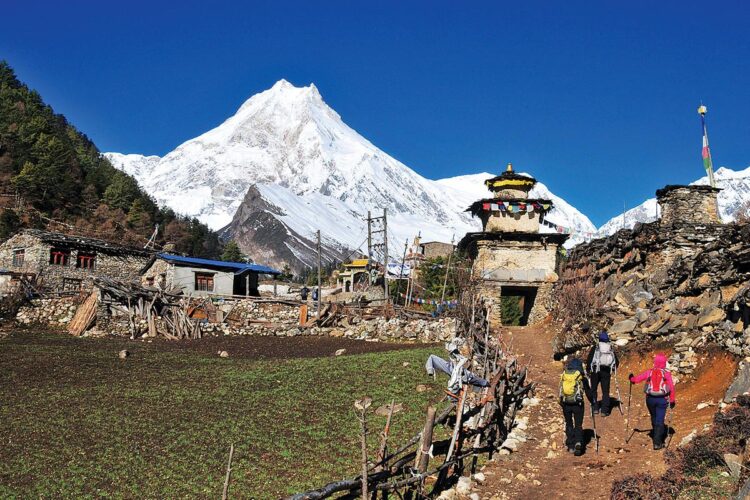
Why the Manaslu Circuit Feels Different
The first thing many trekkers notice about Manaslu is how quickly the environment changes.
The journey does not begin among snow-covered peaks. It starts in Kathmandu and then heads towards Machha Khola, where the trail begins following the Budhi Gandaki River. From there, the valley gradually becomes narrower and more dramatic.
Villages such as Jagat, Deng, Namrung and Lho introduce trekkers to the everyday life of the mountain communities. Higher up, the architecture, landscape and atmosphere begin to show stronger Tibetan Buddhist influences. By the time the trail reaches Samagaon and Samdo, the feeling is completely different from the Nepal travellers experience in the lower valleys.
That gradual transition is one of the strongest aspects of the circuit. Instead of being surrounded by high mountains from the first morning, trekkers watch the Himalayas slowly become part of their everyday view.
The Nepal Tourism Board describes the Manaslu Conservation Area as a trekking destination where ancient trails, traditional culture and Himalayan scenery remain closely connected. The conservation area is also home to a wide range of wildlife and vegetation, including species such as snow leopard, musk deer and Himalayan tahr.
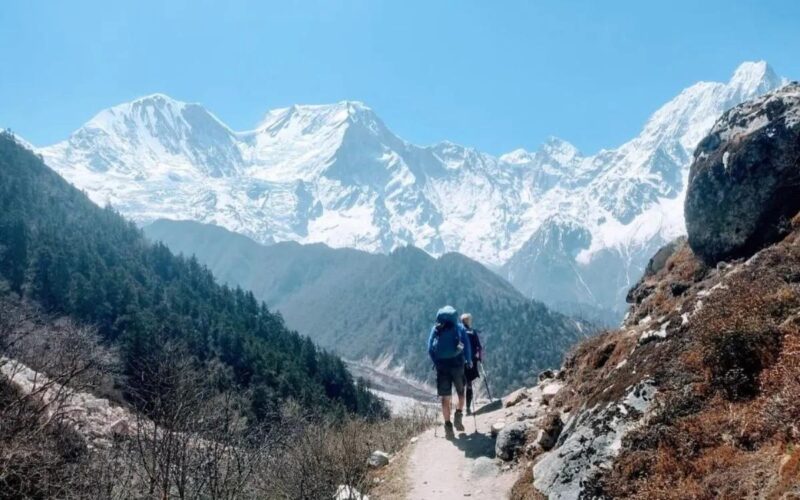
A 16-Day Route That Builds Naturally
One reason the 16-day itinerary works well is the way the altitude increases gradually before the highest point of the trek.
Day 1 – Arrival in Kathmandu
The journey begins in Kathmandu at approximately 1,300 metres. After airport arrival, travellers are transferred to their hotel, generally giving them time to rest after the flight.
The evening can be kept relaxed. A walk around Thamel, a Nepali dinner or simply preparing for the days ahead is enough.
Day 2 – Kathmandu: Preparation and Free Day
The second day provides time to organize trekking equipment, meet the trekking team and make sure everything is ready before leaving Kathmandu.
It is also a useful opportunity to explore a little of the city. Travellers who have not previously visited Kathmandu can use the day to see some of its historic surroundings before beginning the trek.
Day 3 – Kathmandu to Machha Khola
The road journey towards Machha Khola marks the real beginning of the adventure.
The route passes through Arughat before reaching the Budhi Gandaki River and eventually Machha Khola at around 930 metres. It is a long driving day, but the scenery becomes increasingly rural as Kathmandu disappears behind you.
From this point onward, the character of the journey changes from road travel to trekking.
Day 4 – Machha Khola to Jagat
The trail follows the Budhi Gandaki River through forests and settlements.
The route passes Khorlabesi and the Tatopani area before continuing towards Jagat. Along the way, trekkers encounter suspension bridges, changing vegetation and the sound of the river cutting through the valley.
Jagat is an important settlement on the Manaslu trail and provides the first real sense that the trek is moving deeper into the mountains.
Day 5 – Jagat to Deng
The landscape becomes more rugged as the trail continues north.
After passing Philim, the route moves through forests, waterfalls and terraced agricultural areas. The trail eventually reaches Deng, where the surroundings begin to feel noticeably more alpine.
This is also where the influence of the local mountain communities becomes increasingly visible.
Day 6 – Deng to Namrung
The trek continues through Prok and other traditional settlements before reaching Namrung at approximately 2,900 metres.
The mountain scenery becomes more impressive here, with views opening towards peaks including Manaslu, Ganesh Himal and Annapurna II.
The change in elevation is noticeable, but the relatively gradual progression makes this section an important part of the acclimatization process.
Day 7 – Namrung to Lho Gham
This is a shorter trekking day compared with some of the later sections.
The trail climbs through pine forest and mountain settlements towards Lho Gham at approximately 3,180 metres. Lho is particularly memorable for its mountain views and Buddhist monastery.
From here, Mount Manaslu begins to feel much closer.
Day 8 – Lho Gham to Samagaon
The trail continues towards one of the most important villages on the circuit: Samagaon.
At around 3,550 metres, Samagaon sits in a spectacular mountain setting. The surrounding landscape includes views towards Manaslu, Himalchuli and other major peaks, while nearby Buddhist monasteries provide a glimpse into the spiritual traditions of the region.
The route also passes through settlements such as Shyala and Sama before reaching Samagaon.
Day 9 – Acclimatization in Samagaon
This is one of the most important days of the itinerary.
Rather than continuing directly to higher elevations, the schedule allows trekkers to spend a full day in Samagaon. The day can be used to explore the village and surrounding area, with options including a hike towards Pung Yen Monastery.
A proper acclimatization day is particularly valuable because the route becomes considerably higher after Samagaon.
Some trekkers may also be interested in a longer excursion towards Manaslu Base Camp, depending on conditions and the group’s schedule.
Day 10 – Samagaon to Samdo
The landscape becomes more open and increasingly barren as the trail climbs towards Samdo at approximately 3,690 metres.
The route follows the Budhi Gandaki and passes through high-altitude grazing areas. The surrounding terrain is very different from the green forests encountered during the first half of the trek.
Samdo is also close to the Tibetan border region and has a distinctive high-Himalayan atmosphere.
Day 11 – Samdo to Dharamsala
The distance is relatively short, but the altitude makes this section more demanding.
The trail passes through Larkya Bazaar and continues towards Dharamsala at around 4,450 metres. The surrounding landscape becomes increasingly stark, with glaciers, rocky slopes and high mountain terrain dominating the scenery.
Dharamsala is the final overnight stop before the biggest challenge of the circuit.
Day 12 – Crossing Larkya La Pass
This is the day many trekkers remember long after returning home.
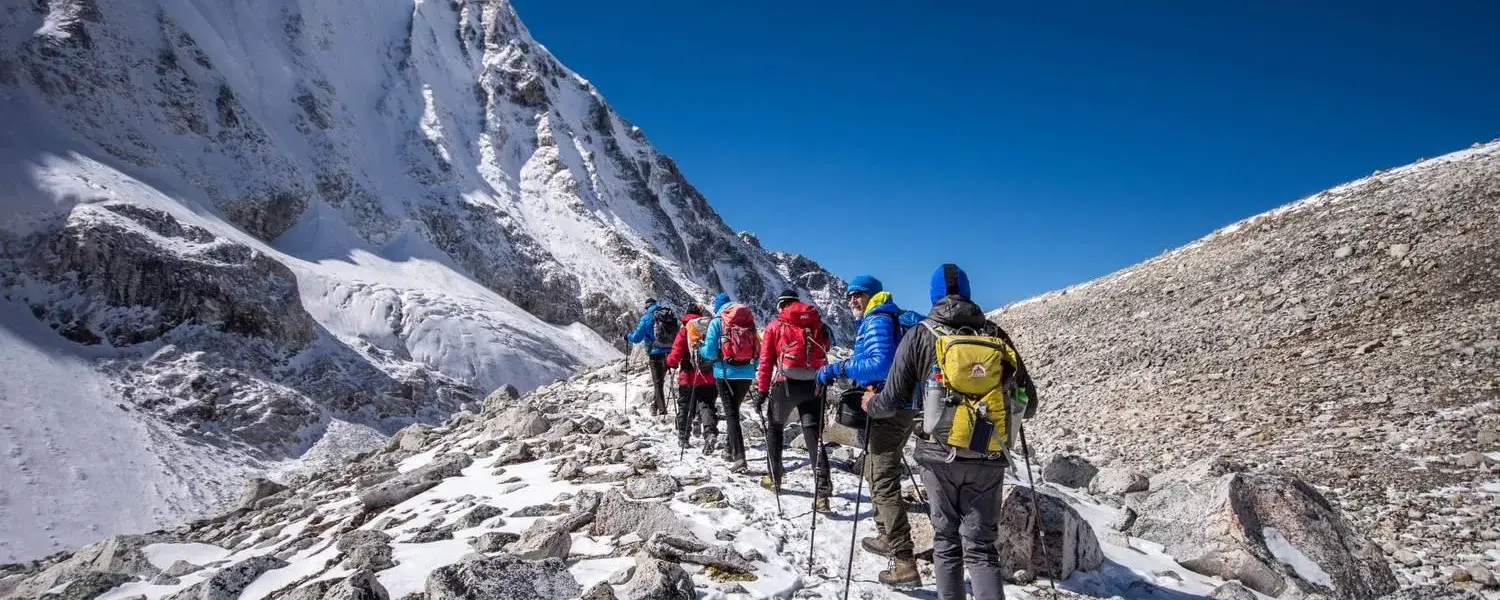
The trail leaves Dharamsala early and climbs towards Larkya La Pass at 5,106 metres. It is the highest point of Ambition Himalaya’s 16-day Manaslu Circuit itinerary and the most physically demanding section of the trek.
The climb takes trekkers across high-altitude terrain before reaching the pass, where the surrounding Himalayan panorama opens dramatically.
After crossing Larkya La, the route descends towards Bhimtang at approximately 3,595 metres.
It is a long day, but it is also the defining moment of the entire circuit.
Day 13 – Bhimtang to Tilje
The landscape begins to transform again.
After the high-altitude environment around Larkya La, the trail gradually descends through forests and greener terrain. Rhododendron forests become more prominent, and the route passes grazing areas and traditional settlements before reaching Tilje.
The contrast between the previous day’s high pass and the lower, greener landscape is striking.
Day 14 – Tilje to Chyamje
The journey continues towards the lower valleys, passing through Dharapani and joining areas connected with the Annapurna region.
The trail follows the Marsyangdi River system and gradually loses altitude. Forests, villages and cultivated land replace the barren high-altitude landscape.
By the time trekkers reach Chyamje, the biggest mountain-pass challenge is behind them.
Day 15 – Chyamje to Besisahar and Kathmandu
The final road journey begins from Chyamje towards Besisahar and then Kathmandu.
The drive passes waterfalls, rivers and mountain villages before gradually returning to the more developed areas of Nepal.
After days in remote Himalayan valleys, arriving back in Kathmandu can feel surprisingly different.
Day 16 – Departure from Kathmandu
The final morning is reserved for departure.
Travellers can return home or choose to extend their Nepal stay with another destination, cultural experience or short adventure.
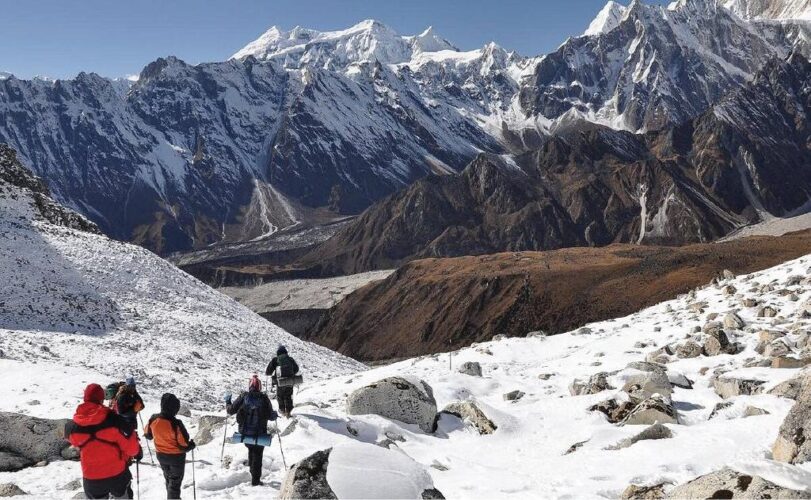
What Makes Larkya La Pass So Special?
Larkya La is not simply another viewpoint on the itinerary. It represents the transition between two very different sides of the Manaslu region.
The climb begins in the cold, dry landscape around Dharamsala and eventually reaches the pass at 5,106 metres. On a clear day, the surrounding mountain panorama is enormous, making the difficult climb feel worthwhile.
The important thing is not to treat Larkya La as a race.
The altitude, weather and terrain can change quickly, and the best approach is to maintain a steady pace, follow the guide’s advice and allow enough time for the crossing.
The 16-day Ambition Himalaya itinerary specifically places Dharamsala immediately before the pass and Bhimtang immediately after it, allowing the highest section of the trek to remain a dedicated part of the journey rather than being rushed into a longer sequence of unnecessary stops.
Culture Along the Manaslu Trail
The Manaslu Circuit is not only about mountains.
One of the most rewarding parts of the trek is seeing how life changes from village to village.
Lower sections of the trail feature Gurung communities, terraced fields, forests and traditional houses. Higher up, Buddhist monasteries, prayer flags, mani walls and Tibetan-influenced settlements become more common.
Samagaon and Samdo are particularly important cultural stops. The journey gives travellers the opportunity to experience mountain communities where tourism exists alongside traditional ways of life.
This is one reason having a knowledgeable local trekking team can add considerably to the experience. A mountain guide is not simply someone who walks ahead and points out the trail. A good guide can explain the meaning behind monasteries, local customs, village traditions and the changing landscape.
Permits and Responsible Trekking
The Manaslu region includes restricted areas, so travellers should make sure their permits and trekking arrangements are properly organized before starting the journey.
The Nepal Tourism Board states that the Manaslu Circuit is among the trekking routes where a licensed trekking guide and agency-issued TIMS card are required under the revised TIMS provisions.
The Nepal Tourism Board also lists the Gorkha Manaslu area as a restricted trekking area and provides the applicable restricted-area permit information.
For the most current permit rules, travellers should always check the official government sources before travelling because regulations and fees can change.
The Department of Immigration, Nepal currently publishes the trekking route and permit information for the Gorkha Manaslu area, including seasonal restricted-area permit rates.
When Is the Best Time for the Manaslu Circuit?
The two most popular trekking periods are generally spring and autumn.
Spring brings clearer mountain views, blooming rhododendrons and relatively stable trekking conditions. Autumn is popular for its clear skies, crisp mountain visibility and comfortable trekking conditions.
The Nepal Tourism Board lists March to May and September to November as the best seasons for the Manaslu Conservation Area.
Winter is much colder at high elevations, particularly around Dharamsala and Larkya La, while the monsoon season can bring rain, clouds and difficult trail conditions in lower sections.
That does not mean the mountains are completely off-limits outside the popular seasons, but the decision should be based on current weather, trail conditions and professional local advice.
How Much Does the Manaslu Circuit Trek Cost?
For travellers planning a private group, the group size can make a noticeable difference to the per-person price.
Ambition Himalaya currently lists the following group-discount structure for its 16-day Manaslu Circuit Trek:
| Group Size | Price Per Person |
|---|---|
| 1 person | US$1,450 |
| 2 people | US$1,150 |
| 3–5 people | US$1,100 |
| 6–9 people | US$1,050 |
| 10–15 people | US$1,000 |
| 16+ people | US$950 |
The package page currently lists the trip from US$950, with group or private travel available. It also lists hotel, lodge and homestay accommodation options, trekking and hiking activities, and meals as part of the package information.
For friends, couples, families or larger private groups, this pricing structure can make organizing the trek together particularly attractive.
What Kind of Traveller Is This Trek For?
The Manaslu Circuit is best suited to people who enjoy walking for several consecutive days and are comfortable with changing conditions.
It is officially presented as a strenuous trek, and the itinerary reaches 5,106 metres.
You do not need to be an elite mountaineer, but preparation matters.
Regular walking, uphill training, cardiovascular exercise and some longer hikes before arriving in Nepal can make the experience much more enjoyable.
The most important quality on this trek is often patience. The mountains decide the pace. Weather can change, the trail can become demanding and high altitude requires respect.
A More Meaningful Way to Experience Manaslu
There is a temptation with Himalayan trekking to focus only on reaching the highest point.
But the Manaslu Circuit is better understood as a journey of gradual change.
You begin in Kathmandu.
Then there are roads, rivers and subtropical landscapes.
Then forests.
Then Gurung villages.
Then Buddhist monasteries and high mountain settlements.
Then the stark landscape around Samdo and Dharamsala.
Then Larkya La.
And finally, the descent into greener valleys.
That progression is what gives the Manaslu Circuit its personality.
It is not simply a trek to a viewpoint. It is a journey through several different Himalayan environments, connected by one long trail around an extraordinary mountain.
Planning the Manaslu Circuit with Ambition Himalaya
For travellers looking for a structured 16-day journey, Ambition Himalaya offers the Manaslu Circuit as both a group-joining and private trip. The itinerary includes the important acclimatization stop at Samagaon and the Larkya La crossing before descending towards Bhimtang and returning to Kathmandu.
The current itinerary and booking information can be checked directly here:
Manaslu Circuit Trek – 16 Days:
View the Manaslu Circuit Trek itinerary on Ambition Himalaya
Before booking, travellers should confirm the latest departure dates, inclusions, transportation arrangements, permit requirements and weather-related policies directly with the trekking company.
Official Nepal Government & Tourism Resources
For travellers researching the Manaslu Circuit independently, these official resources are useful:
- Nepal Tourism Board – Trekking Permit Information
- Nepal Tourism Board – TIMS Card & Guide Requirements
- Department of Immigration Nepal – Trekking Permit
- Department of Immigration Nepal – Trekking Routes & Permit Fees
- Nepal Tourism Board – Manaslu Conservation Area
Before You Set Out for Manaslu
The Manaslu Circuit is the kind of trek that stays with you in small details — the first morning beside the Budhi Gandaki, the stone villages above the valley, the prayer flags around Samagaon, the cold morning at Dharamsala, and finally the long climb towards Larkya La.
The 16-day route brings all of these experiences together without making the journey feel like it is only about reaching a high point. There are quiet village evenings, changing landscapes, mountain culture and long walking days, followed by the very different scenery of Bhimtang and the lower valleys.
If you are planning the Manaslu Circuit Trek – 16 Days and want to know more about the itinerary, group discounts, available departures, permits, transportation or what to expect on the trail, the Ambition Himalaya team can help you plan the journey according to your travel dates and group size.
For Manaslu Circuit Trek bookings and enquiries:
WhatsApp / Phone: +977 9851148898
Email: [email protected]
Ambition Himalaya
Your Manaslu journey starts with the right plan.
Ready to Plan Your Trekking? Contact us
More Blog Posts
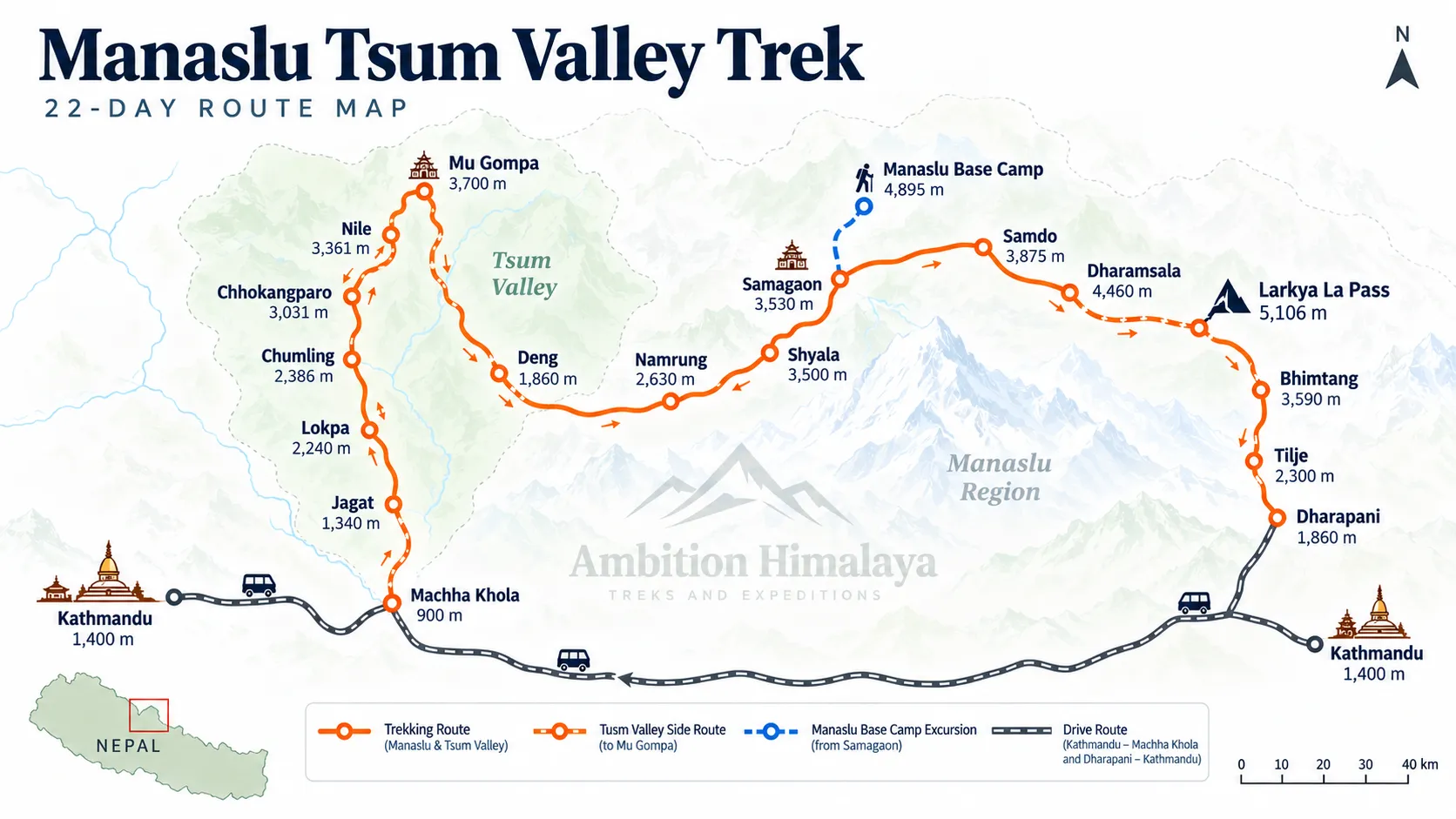
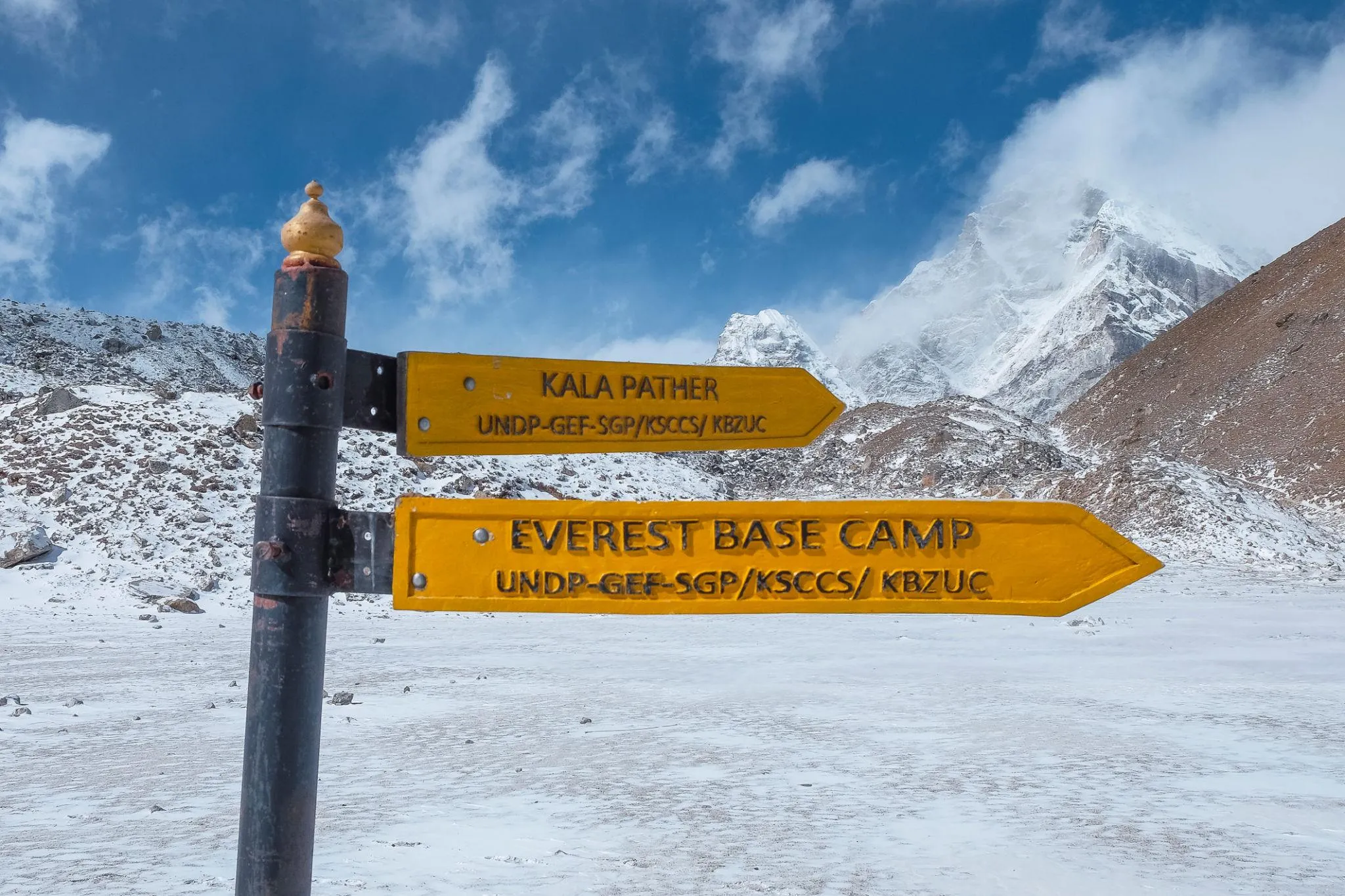
Everest Base Camp Trek – 14 Days to the Foot of Mount Everest