Jeep Car Hire in Nepal: Complete Guide to Routes, Costs, and Booking Tips
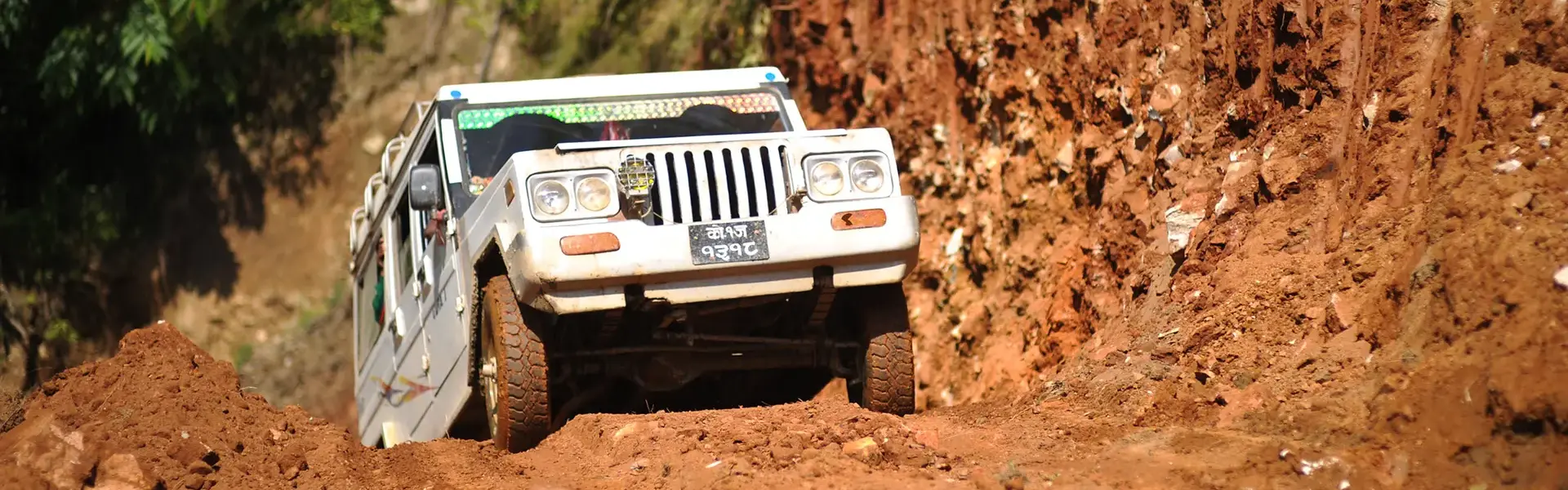
Planning a road trip in Nepal is very different from planning in many other countries. Even though highways connect major cities in Nepal, most of the trekking areas, mountain villages and remote places can only be reached via rugged and difficult roads. This is the reason why most of the travelers prefer jeep car hire in Nepal as opposed to using the public transport or a normal car. A four wheel drive jeep is better equipped, more adaptable and can access places that cannot be easily accessed by ordinary vehicles.
We have been providing trekkers, families, photographers and adventure travelers with private jeep transportation over Nepal at Ambition Himalaya Treks over many years. After making short trips between cities and long tours to the mountains, we know what vehicles can be most appropriate on various routes, what passengers should expect on the road, and how to organize the comfortable trip without any unnecessary surprises.
This guide is everything you need to know prior to booking a jeep. We will describe the prices of rental, the most appropriate routes, the various types of vehicles, booking hints, and useful tips of traveling in Nepal, to make your journey safe and secure in all parts.
What Makes Jeep Car Hire the Right Choice in Nepal
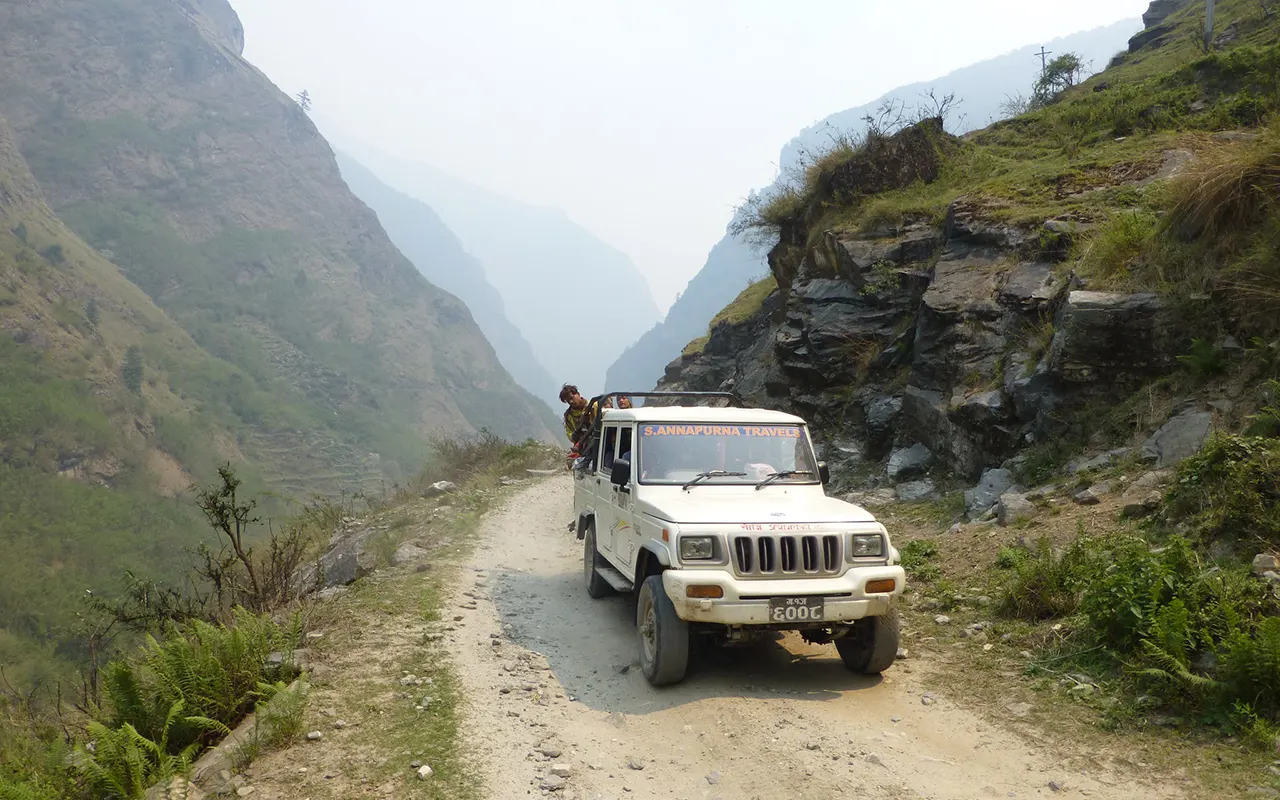
Nepal is not a country you can fully experience from a bus window. Yes, buses connect the major cities. Yes, there are flights to some regional airports. But if you want to reach the places that most people come to Nepal for, you often need a vehicle that can handle rough terrain and unpredictable road conditions. That is where jeep car hire in Nepal becomes the best option.
Public buses in Nepal follow fixed routes and fixed schedules. They stop frequently, they are often crowded, and they cannot take you to remote trailheads or small villages off the main highway. A private jeep gives you the freedom to go where you want, stop when you want, and travel at a pace that suits your group.
There is also a practical safety argument. Many mountain roads in Nepal have no barriers on the outer edge. They are often shared with trucks carrying supplies to villages that have no other access route. The combination of narrow roads, steep drops, and heavy traffic makes a capable four wheel drive vehicle far safer than an ordinary sedan. A proper jeep gives the driver better control, better braking, and better ground clearance when the road gets rough.
US$ 1300
Families and Groups
A family traveling with young children or older adults will appreciate the extra space and the ability to stop whenever needed. You are not tied to a bus schedule, so rest breaks happen when the family needs them rather than when the timetable allows. Groups of four to six people can also split the cost of a jeep very effectively, making it more affordable per person than buying multiple bus tickets in many cases.
Solo Travelers and Couples
Even for one or two people, jeep car hire in Nepal is worth considering. Some travelers book a jeep for the comfort and privacy it provides after a long international flight. Others prefer it because they want the flexibility to change plans along the way. We have also arranged shared jeeps for solo travelers who wanted to reduce costs by joining with other travelers heading to the same destination.
Photographers and Nature Lovers
For anyone who wants to stop at viewpoints, villages, or roadside scenes to take photographs, a private jeep is far more practical than public transport. Your driver will know the good spots and can pull over safely when you want to capture something. Buses do not stop for photos.
Jeep Models Available for Hire in Nepal
Not every jeep in Nepal is the same, and the right vehicle depends on where you are going and how many people are in your group. Here is a straightforward overview of the vehicles we most commonly use and recommend.
Mahindra Scorpio
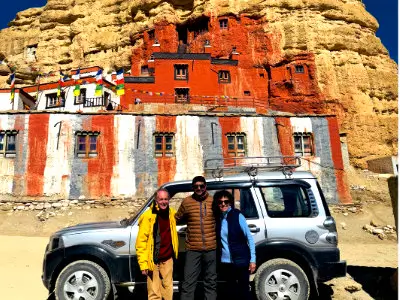
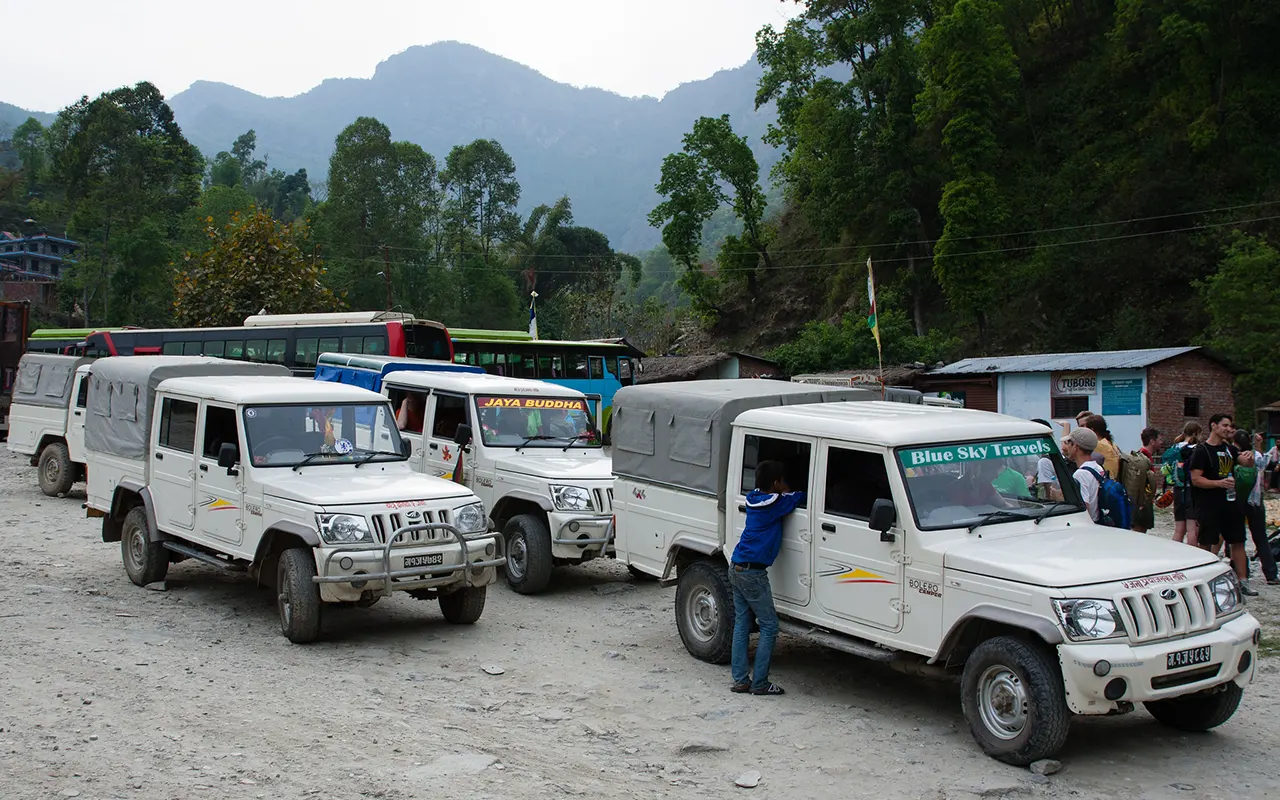
The Mahindra Scorpio is the most widely used jeep for travel in Nepal. You will see it on almost every mountain road in the country. It seats up to seven passengers including the driver and offers a good balance of durability and comfort. Spare parts are available even in remote towns, which matters when you are far from Kathmandu. For most routes and most group sizes, the Scorpio is a solid and reliable choice.
Toyota Land Cruiser
The Toyota Land Cruiser is the premium option. It is more comfortable on long journeys, more powerful on steep climbs, and better equipped for the roughest roads in the country. If you are traveling to Upper Mustang, Rara Lake, or any of the more remote western routes, we recommend the Land Cruiser. The ride quality and engine performance make a real difference when you are spending eight or ten hours on a rough road. It costs more than the Scorpio, but for difficult terrain, the extra cost is worth it.
Suzuki Vitara
The Vitara is a smaller and lighter vehicle that works well for shorter trips and paved or moderately rough roads. It is a good option for two or three travelers who are doing a day trip or staying close to the main highways. We do not recommend it for the most challenging mountain routes where ground clearance and engine power really matter.
Bolero and Pickup Variants
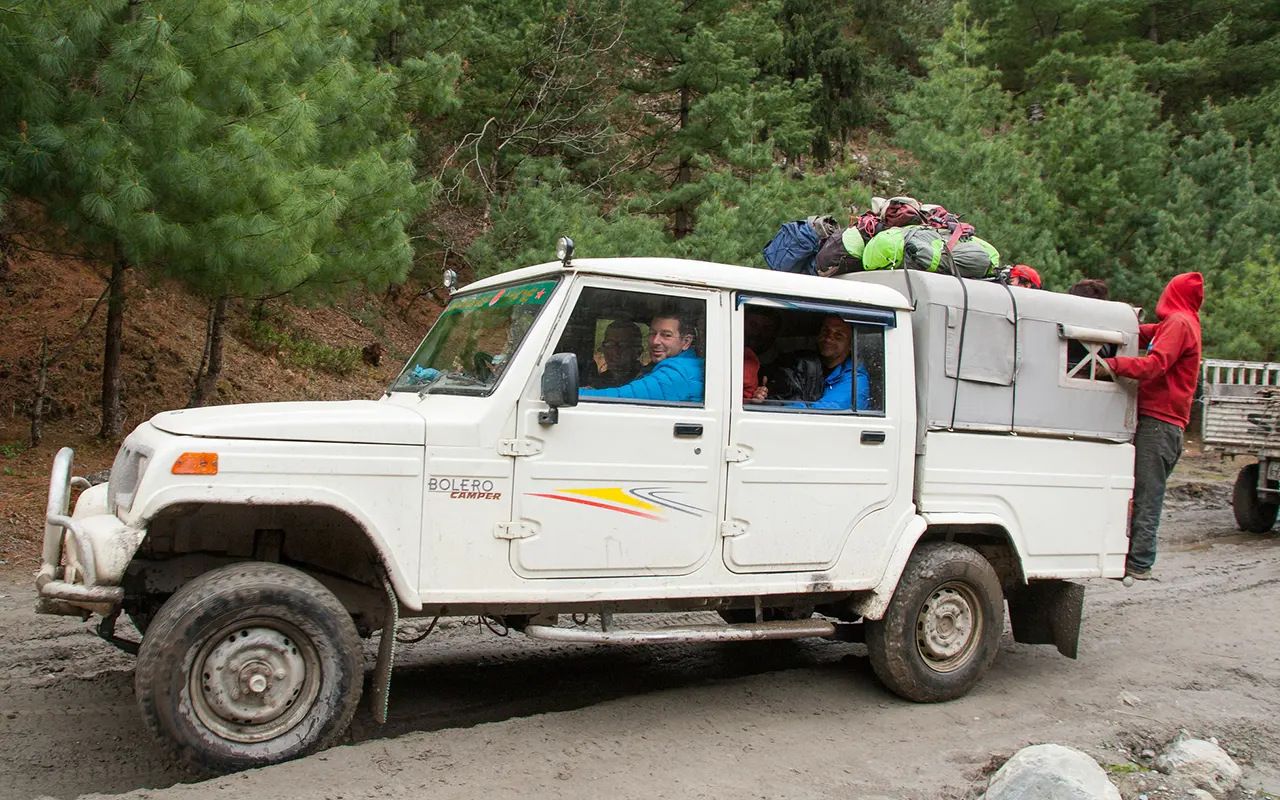
These vehicles are made for utility purposes like moving big loads of equipment or supplies; some groups use them for camping expeditions or filming projects that require bulk gear transportation. The comfort level of these vehicles is lower than the Scorpio or Land Cruiser, so suggest them only for specific reasons.
Jeep Car Hire Costs in Nepal
The cost of jeep car hire in Nepal depends on the route, vehicle type, number of days, and the season. We want to give you real numbers, so you know how to plan your budget, not just guess.
Day Trips Within the Kathmandu Valley
A day trip to places like Bhaktapur, Patan, Nagarkot or Dhulikhel, will usually cost you between 50 and 80 US dollars for a Mahindra Scorpio, including driver and fuel. These routes are mostly paved and do not require anything more than a standard jeep.
Long Distance Mountain Routes
Longer routes that go into mountain regions are priced differently because of the road conditions, the fuel consumption, and the time the driver spends away from home. A one way trip from Kathmandu to Syabrubesi for the Langtang trek costs between 150 and 220 dollars in a Mahindra Scorpio and between 280 and 400 dollars in a Toyota Land Cruiser. A one way trip from Kathmandu to Pokhara costs between 120 and 160 dollars in a Scorpio.
Multi Day Trips
For trips that span three or more days, we offer a daily rate. A Mahindra Scorpio on a multi day trip is generally between 100 and 150 dollars per day with driver and fuel included. A Toyota Land Cruiser runs between 180 and 260 dollars per day. The daily rate drops slightly when you book for a longer period because the driver can plan his time more efficiently.
Quick Reference: Jeep Hire Price Guide
| Route | Vehicle | Price (USD) | Includes |
| Kathmandu Valley day trip | Mahindra Scorpio | $50 to $80 | Driver, fuel, parking |
| Kathmandu to Pokhara (one way) | Mahindra Scorpio | $120 to $160 | Driver, fuel, tolls |
| Kathmandu to Pokhara (round O/N trip) | Mahindra Scorpio | $150 to $200 | Driver, fuel, tolls |
| Kathmandu to Chitwan (one way) | Mahindra Scorpio | $100 to $130 | Driver, fuel |
| Kathmandu to Syabrubesi Drop (Langtang) | Mahindra Scorpio | $130 to $150 | Driver, fuel |
| Kathmandu to Syabrubesi (Langtang) | Toyota Land Cruiser | $280 to $400 | Driver, fuel |
| Kathmandu to Salleri or Phaplu (Everest region) | Mahindra Scorpio | $250 to $300 | Driver, fuel |
| Kathmandu to Jomsom or Lower Mustang | Toyota Land Cruiser | $400 to $550 | Driver, fuel |
| Kathmandu to Upper Mustang | Mahindra Scoprio | $500 to $700 | Driver, fuel, permits arranged separately |
| Kathmandu to Rara Lake (6 to 7 day drive) | Mahindra Scorpio | $600 to $850 | Driver, fuel, driver meals |
| Multi day mountain trip (per day) | Mahindra Scorpio | $100 to $150 per day | Driver, fuel |
| Multi day mountain trip (per day) | Toyota Land Cruiser | $180 to $260 per day | Driver, fuel |
Note: Prices reflect a private jeep with an experienced driver and fuel included. Shared jeeps cost 40 to 60 percent less but follow fixed departure times. Peak season months of October and November may add 10 to 20 percent. Fuel price changes can also affect rates. Always confirm the full cost breakdown before confirming your booking.
What Affects the Price of Jeep Car Hire in Nepal
It is useful to understand why two quotes for what looks like the same trip can be quite different. Several real factors drive the final price, and knowing them helps you compare fairly.
Road Condition and Route Difficulty
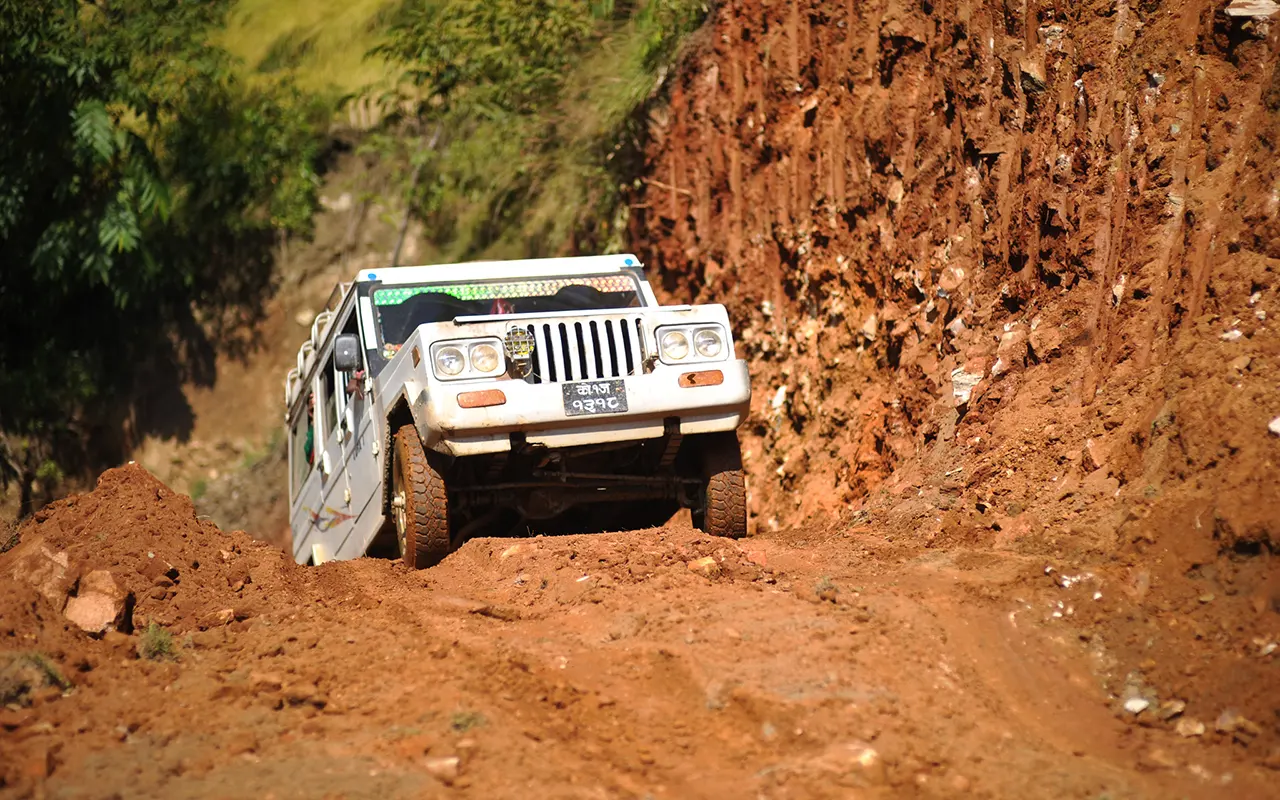
Driving to Mustang puts far more wear on a vehicle than driving to Pokhara. The engine works harder. The tires take more punishment. The driver needs more skill and concentration. Routes with rough terrain, river crossings, and high altitude passes cost more because the demands on the vehicle and the driver are higher.
Fuel Costs
Fuel prices in Nepal change regularly. When diesel costs go up, the cost of running a jeep goes up too. We try to keep our prices stable, but fuel is a genuine variable that affects what we need to charge for longer routes. We will always tell you upfront if a fuel adjustment applies to your trip.
Driver Allowances and Overnight Costs
For multi day trips, the driver is away from home. He needs meals and a place to sleep. These costs are real and they are factored into our pricing. We include them in the overall quote rather than adding them as surprise charges at the end. When you get a quote from us, the driver’s food and accommodation for overnight trips is already in the number we give you.
Permits and Special Area Access
Some routes in Nepal require special permits. Upper Mustang is the most well known example. The restricted area permit for Upper Mustang costs 500 US dollars for ten days. If your route requires permits, we will tell you clearly and help you arrange them. The permit cost is always listed separately from the jeep hire cost so you can see exactly what you are paying for.
Season and Demand
October and November are the busiest months for travel in Nepal. Almost every jeep is booked during these weeks and prices reflect that demand. June, July, and August are the quietest months. Prices are lower and availability is easier. The roads can be wet during the monsoon season, but travel is still possible on most routes.
Popular Jeep Routes in Nepal
Over the years we have driven jeeps to nearly every reachable corner of Nepal. Some routes are requested again and again. Here are the ones that our clients love most and what to expect on each one.
Kathmandu to Pokhara
This is the most traveled jeep route in Nepal. The distance is around 200 kilometers and the drive takes six to eight hours depending on traffic and road conditions. The road is mostly paved now but there are still rough stretches near the river gorges. We always recommend leaving Kathmandu early in the morning to avoid city traffic and reach Pokhara before evening. Along the way you will follow the Trishuli River valley, and on a clear day you can see the distant outline of Manaslu from certain points on the road.
Kathmandu to Mustang
Mustang is one of the most interesting destinations in Nepal. It sits north of the main Himalayan range in a dry, wind-sculpted landscape that feels very different from the green hills most people associate with Nepal. The road to Mustang passes through Pokhara and then heads north through Beni and along the Kali Gandaki river. After Beni, the road becomes rough and dusty. River crossings are part of the journey. The winds in the Kali Gandaki gorge can be strong in the afternoon. The best time to travel to Mustang is spring from March to May or autumn from September to November. Upper Mustang requires a restricted area permit and we handle that process for our clients.
Kathmandu to Langtang via Syabrubesi
Syabrubesi is the starting point for the Langtang Valley trek, one of the most rewarding short treks in Nepal. The drive from Kathmandu takes seven to nine hours. The road follows the Trishuli River before climbing into pine forests and small mountain villages. The final section of road before Syabrubesi is narrow and winding, but the views of the surrounding hills are worth the extra care the driver needs to take. We often see langur monkeys in the forest along this road, especially in the early morning.
Kathmandu to Everest Region via Salleri or Phaplu
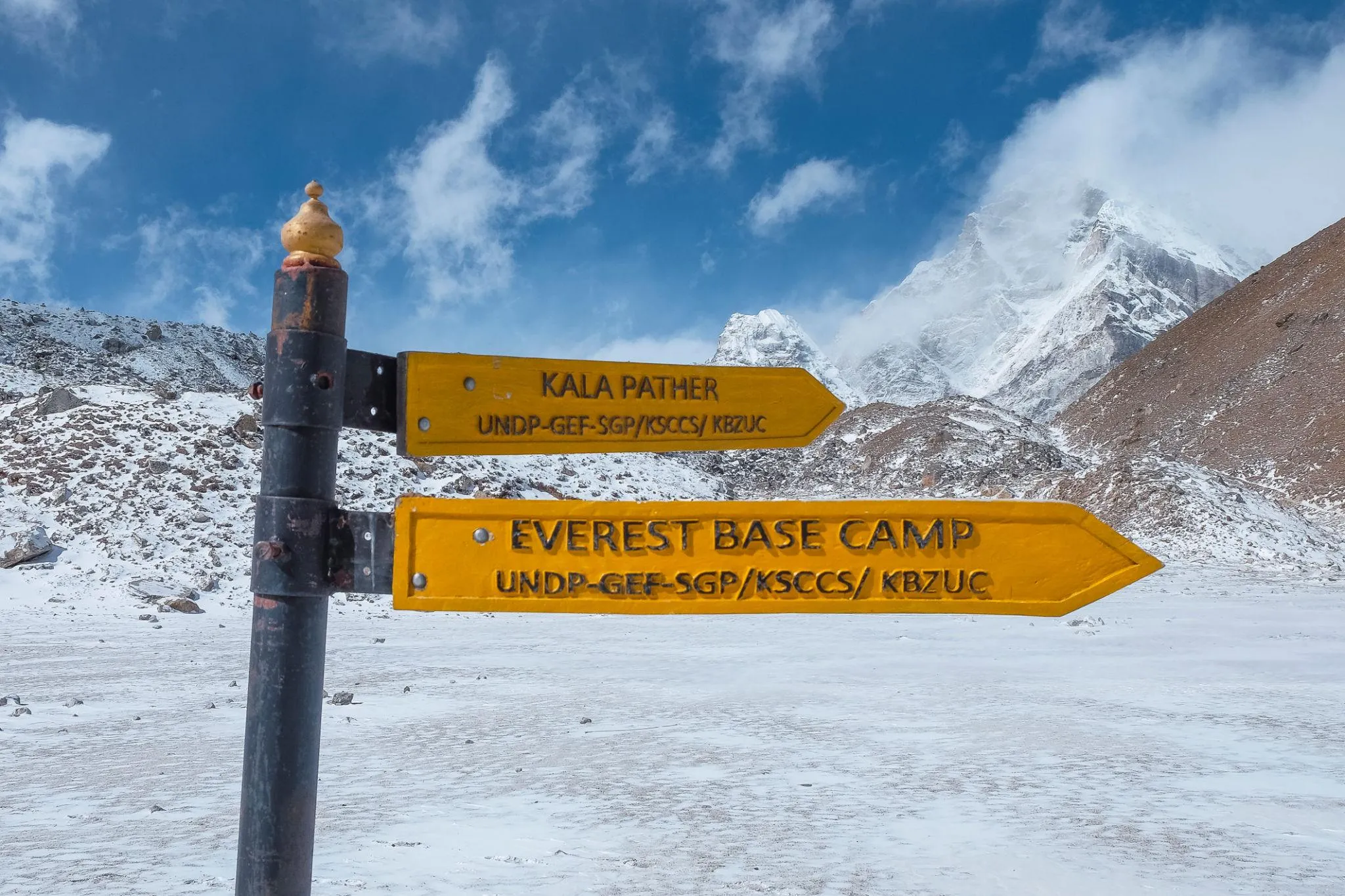
You cannot drive all the way to Everest Base Camp, but you can drive to Salleri or Phaplu, which serve as the main road entry points to the Everest region. From either of these towns, trekkers continue on foot to Namche Bazaar and the trails beyond. The road is rough after Jiri and a capable four wheel drive vehicle is important. The views of distant peaks from the road near Salleri come as a pleasant surprise to many travelers who did not expect mountain scenery from inside a jeep.
Kathmandu to Rara Lake
Rara Lake is Nepal’s largest lake and one of its least visited destinations. Reaching it by road from Kathmandu takes three to four days. The route passes through Surkhet and Jumla before arriving at the lake. It is a long journey and a real commitment of time, but the reward is a very peaceful and beautiful place that most tourists never see. We have taken small groups to Rara Lake and the response has always been the same: they cannot believe how quiet and undisturbed it is compared to more popular destinations.
Annapurna Circuit via Besisahar and Dharapani
The road into the Annapurna region now extends as far as Dharapani and in some seasons even further toward Manang. Many trekkers choose to hire a jeep to skip the lower and less interesting section of the Annapurna Circuit and start their trek from a higher point. This is a smart approach for anyone with limited time. The drive from Kathmandu to Dharapani takes about two days at a comfortable pace and offers views of Manaslu and the surrounding peaks along the way.
Kathmandu to Chitwan
Chitwan National Park is one of Nepal’s most visited natural areas and the drive from Kathmandu takes around four to five hours depending on traffic. The road descends from the hills into the flat plains of the Terai region. This is an easy and comfortable route for most vehicles, and many families and tour groups choose to travel this way rather than taking the tourist bus. We can arrange a drop-off at your resort or hotel inside or near the park.
Practical Tips Before You Hire a Jeep in Nepal
We have been arranging jeep hire in Nepal long enough to see where things go wrong. These tips come from real experience, not from a checklist written in an office.
US$ 1100
Look at the Vehicle Before You Pay
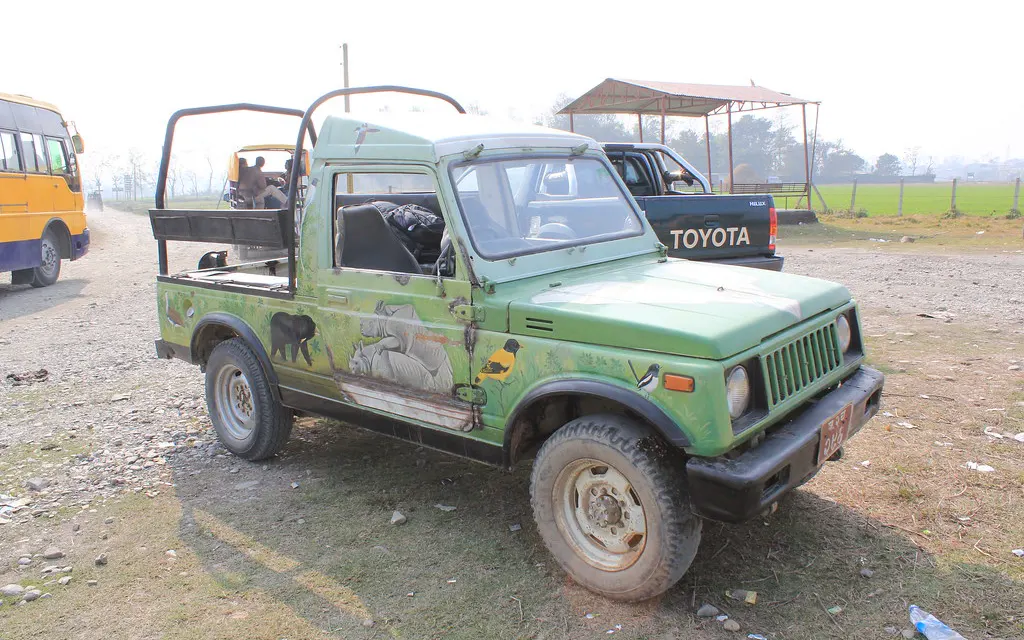
Before you confirm the booking or hand over any payment, spend five minutes looking at the jeep. Check the tires for wear and cracks. Check the spare tire because many people forget this one. Look underneath the vehicle for any obvious fluid leaks. Sit inside and check that the seatbelts work properly. Open the hood if possible and look at the general condition of the engine. A trustworthy company will have no problem with you doing this. If a company is reluctant to let you inspect the vehicle, that is a sign worth paying attention to.
Understand What Is Included in the Price
Before you agree to any price, make sure you know exactly what it covers. Does the price include fuel for the whole trip? Is the driver’s food and accommodation included for overnight journeys? Who pays if there is a breakdown on the road? What is the policy if bad weather or a road closure forces a change of route or an early return? These are not unusual questions and a professional company will answer all of them clearly. Get the agreed scope in writing if you can, even a simple WhatsApp message confirming the details is better than nothing.
Your Driver Matters as Much as the Vehicle
The quality of your driver has a direct effect on the quality of your trip. A good driver knows the roads, knows when to slow down, knows where landslides tend to happen, and knows which river crossings are safe at different times of year. At Ambition Himalaya Treks, we only send drivers who have genuine experience on Nepali mountain roads. We do not send someone unfamiliar with your route simply because our usual driver is not available. Ask about your driver’s experience before you confirm the booking and ask for his phone number so you can be in direct contact on the day of travel.
Carry the Right Documents
You will need your passport and visa for travel within Nepal, especially if you pass through any checkpoint areas. If your route requires trekking permits or conservation area permits, these need to be arranged before you leave Kathmandu. Our team helps clients with permit arrangements as part of the booking process. The driver should also carry the vehicle registration and insurance documents. Ask to see these before departure and keep copies of your own documents in a separate bag from your main luggage.
Pack Wisely for Long Road Trips
Mountain roads in Nepal are dusty even in good weather. Use bags that can be closed properly to keep dust out of your clothes and electronics. Keep a small day bag inside the jeep with water, snacks, any personal medicines, and a warm layer because temperatures drop quickly as you gain altitude. Put the rest of your luggage in the back of the jeep. Travel as light as you reasonably can because excess weight makes the vehicle work harder on steep climbs and is harder on the brakes on the way down.
Plan for Altitude Changes
Several of the popular jeep routes in Nepal pass through areas above 3000 meters. Even if you are sitting in a vehicle and not walking, altitude can affect people in unexpected ways. Headaches, mild dizziness, and fatigue are all possible as you gain elevation quickly. Drink more water than you normally would, avoid alcohol on the day before and during high altitude travel, and tell your driver immediately if you feel unwell. On most of these routes there are options to descend if needed, but catching early symptoms is always better than waiting until you feel seriously unwell.
Safety on Nepal’s Mountain Roads
We take road safety seriously at Ambition Himalaya Treks. Our drivers are selected and trained with safety as the first priority, not speed. Here is what you should know before traveling by road in the mountains.
How Nepali Mountain Roads Work
Mountain roads in Nepal are not like highways in Europe or North America. They are narrow and they have sharp corners where you cannot see what is coming in the other direction. Trucks and buses coming downhill generally have the right of way because they cannot stop quickly. Our drivers know these rules and follow them without needing to be asked. As a passenger, the best thing you can do is stay calm, keep your seatbelt on, and trust the person behind the wheel.
Monsoon and Landslide Risks
From June to August, Nepal receives heavy rainfall. Landslides are a real risk during this period and roads can close for hours or sometimes longer. We monitor road conditions before and during trips and will advise clients if a route is not safe to use on a particular day. If you are traveling during the monsoon, build some flexibility into your schedule so that a road closure does not ruin your plans. We always carry extra food and water in the jeep for situations where waiting is necessary.
Winter Road Conditions
At higher elevations, especially on passes above 3500 meters, snow and ice are possible from December through February. A four wheel drive vehicle with experienced mountain driving skills handles these conditions much better than a standard car, but there are still situations where the safest choice is to wait or turn back. Our drivers will never take unnecessary risks to keep to a schedule.
Emergency Preparations
Every jeep we operate carries a basic first aid kit. We also recommend that travelers carry their own personal medications and keep a small amount of cash in local currency since ATMs are not available in remote areas. A power bank for your phone is practical since charging options can be limited. Travel insurance that covers emergency evacuation is something we strongly recommend for anyone going into remote mountain areas. A helicopter evacuation from a remote location in Nepal can cost several thousand dollars without insurance.
How to Book Jeep Car Hire with Ambition Himalaya Treks
Booking a jeep with us is simple. We have helped travelers book from countries all over the world and the process is straightforward regardless of where you are when you get in touch.
What Information We Need From You
When you contact us, tell us your starting point and destination, your travel dates, the number of people in your group, and whether you have any specific requirements such as a child seat, luggage space for large bags, or a preference for a particular vehicle model. If you are not sure which route is right for your plans, just tell us where you want to end up and we will advise you on the best road to take.
How We Respond
During working days at Kathmandu, we tend to reply to booking requests within hours. We will reply with a transparent quote that includes the vehicle, the route, the total price, and the inclusion. You may use the quote as a source of questions and we are glad to go through the same with you. We do not apply pressure tactics and we do not include things in the bill once you have accepted a price.
Confirming the Booking
After you are satisfied with the quote we book and send you the name and phone number of the driver. We require clients to send a message to the driver the day before the departure to make sure the pickup time and place is correct. This simple step avoids confusion on the morning of travel and gives you a direct point of contact.
Payment
We accept payment in cash at the time of travel. For advance bookings where a deposit is needed to secure the vehicle during peak season, we can discuss payment options with you. We will never ask for payment before we have confirmed the vehicle and driver to you in writing.
Frequently Asked Questions About Jeep Car Hire in Nepal
How much does jeep car hire in Nepal cost?
Prices range from around 50 US dollars for a short valley day trip to over 800 dollars for a multi day remote route. The most common mountain routes fall between 120 and 400 dollars depending on the distance and the vehicle. Our price table above covers the most popular routes in detail.
Is a driver always included?
Yes. All our jeep hire arrangements include an experienced local driver. We do not offer self-drive hire because Nepal’s mountain roads require local knowledge that most visitors do not have, and insurance requirements for self-drive rentals are more complicated.
Can I book a shared jeep to save money?
Yes. Shared jeeps are available on many popular routes. You pay for your seat rather than the whole vehicle, which makes the cost considerably lower. The compromise is that you cannot control the departure time because the jeep departs when it is full and you share the space with other passengers and their luggage.
Are there routes I require a special permit?
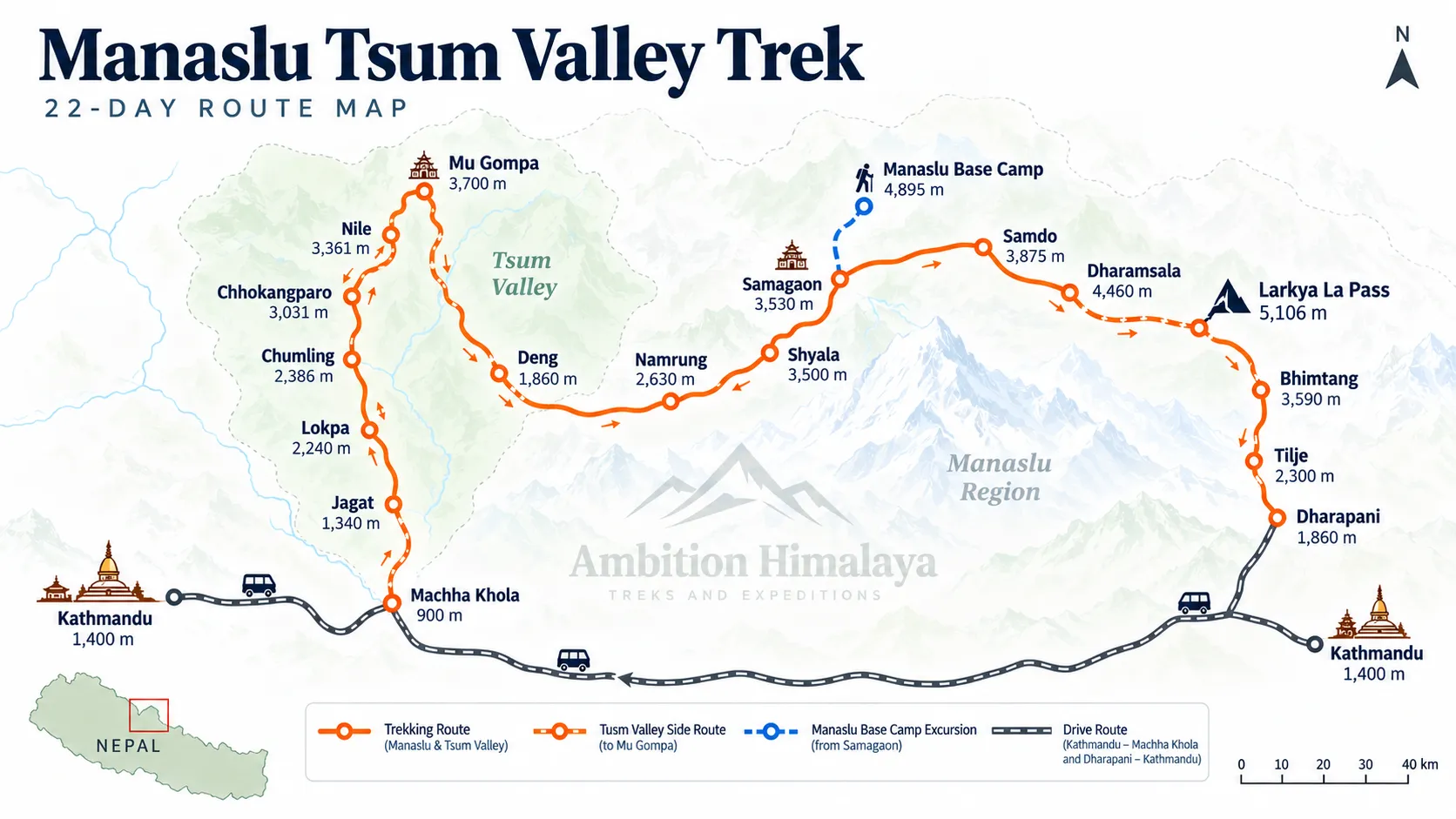
Yes, there are places in Nepal where special permit is needed over the regular tourist visa. There is a limited area permit which costs 500 US dollars and is ten days long, necessary in Upper Mustang. Manaslu and some other trekking areas also have their own permit requirements.
What will happen in the case of road breakdown?
Breakdowns are rare with well-maintained vehicles, but they do happen occasionally on rough mountain roads. In case of a mechanical problem, our driver will call us instantly, and we will decide to either repair or change the vehicle in the shortest time possible.
What is the most appropriate time of the year to rent a jeep in Nepal?
The best seasons are October and November with least cloudy weather and stable road conditions. March to May is also a good time. The monsoon months of June through August bring rain and occasional road closures, though many routes remain passable. December through February is cold at altitude but often very clear and quiet.
A Final Word From Our Team
Road travel in Nepal is one of those things that can either be a wonderful part of your trip or a stressful one, and the difference usually comes down to preparation and the people you travel with. A good jeep, a skilled driver, a clear plan, and a bit of flexibility for what the road might bring are all you really need.
At Ambition Himalaya Treks, we have been helping travelers reach the places they came to Nepal to see for many years. We know these roads well. We know which sections are challenging, where the best viewpoints are, and where to stop for a good cup of tea along the way. Our drivers are not just vehicle operators. They are experienced guides who genuinely know the country they are driving through.
When you hire a jeep through us, you are not just booking a vehicle. You are working with a team that cares about your trip and takes responsibility for making it go well. We never cut corners on vehicle maintenance, we don’t put inexperienced drivers on challenging routes and we don’t add hidden costs after you’ve agreed a price.
If you have questions about any of the routes or costs mentioned in this guide, or if you want to discuss an itinerary not covered here, please get in touch with us. We’re always happy to help you explore your options and find the best solution for your trip. No pressure, no complicated booking systems, just straightforward advice from people who know Nepal and want your time here to be as good as it can be.
Ready to Plan Your Trekking? Contact us
More Blog Posts
Everest Base Camp Trek – 14 Days to the Foot of Mount Everest