
Tribeni Patan-Badimalika

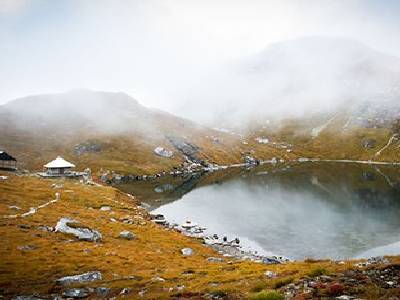
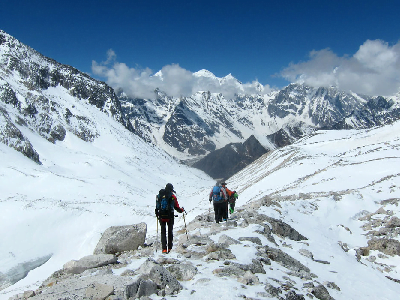
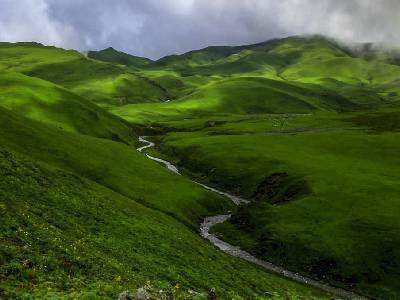
Tribeni Patan and  Badimalika are two of the newly popular trekking regions in the far western region of Nepal. Tribeni Patan is one of the open green landscapes and pastures in the far west. While Badimalika Temple is a Hindu temple which lies on the top of the Bajura District in Nepal. Both Badimalika Temple and Tribeni Patan lie in the SudhurPaschim region in Nepal. Along with the Karnali region in Nepal, the SudhurPaschim region is one of the most remote regions in Nepal. Due to this region, both Nepalese and people outside Nepal will find Tribeni Patan-Badimalika Temple an exotic and unique trek in Nepal.


Tribeni Patan- Why has it become a famous local spot?
 

Badimalika-tribenipatan-img1

Badimalika-Tribenipatan

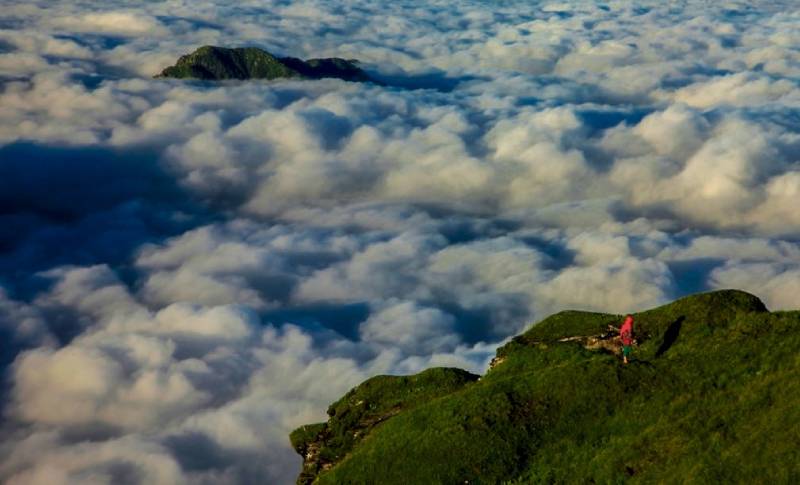
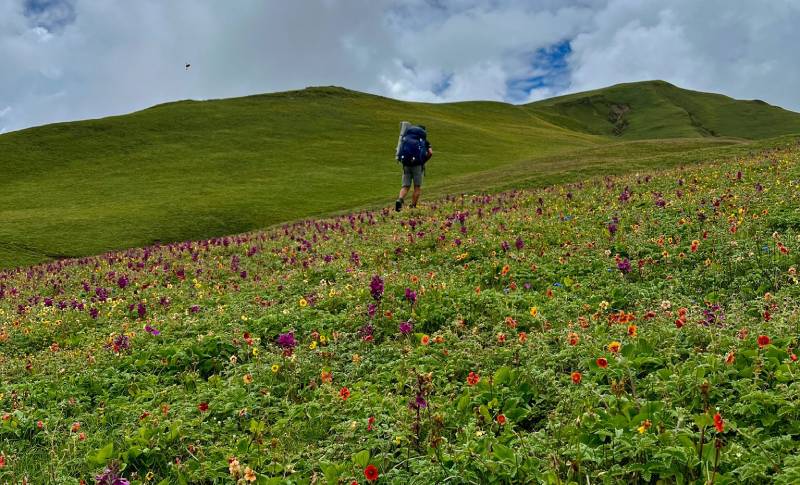
Tribeni-Patan has huge grassy meadows with a mix of small wetlands. They have a lot of wild flora and fauna. Many shepherds around the surrounding region come to graze their sheep and Yaks in this area. They create temporary homes in Madithala and Bhatejuila and go home in winter. The large meadows that show the panoramic view of the surroundings, along with the peaceful grazing of sheep and yak have made Tribeni Patan, a famous local attraction. Also, its beautiful natural environment along with its quality as a photogenic scenic spot has made Tribeni Patan more popular than the others.

Badimalika Temple-History, Local Myth and Culture
Badimalika-temple
Badimalika-temple


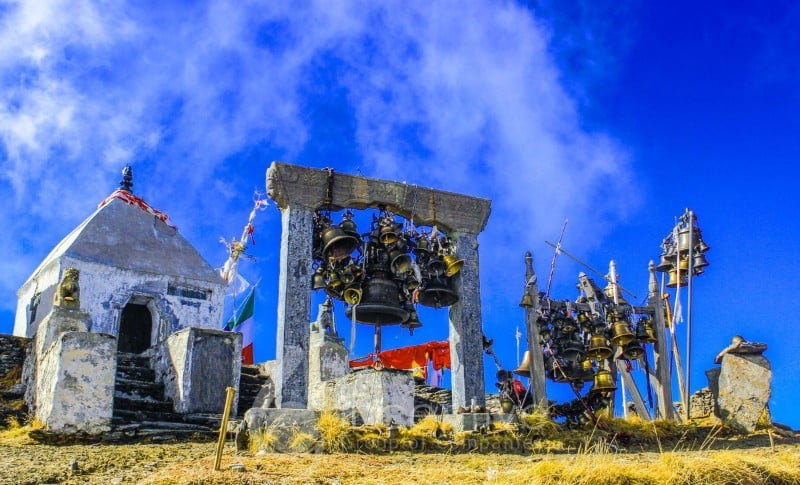
Badimalika temple, which lies on the top of Mallagiri Peak, has a height of 4200m. This temple is dedicated to Goddess Bhagawati. They also have some small shrines to many Hindu gods and goddesses. This is one of the few temples where two priests worship at the same time. Many locals believe that the Goddess descended on this temple from Kalikot. So, the temple recruits priests from both Bajura and Kalikot. This temple is also believed to be an area of Sakthi Peeth, from the parts of the shoulders of Lord Shiva’s first wife, Sati Devi. Badimalika Temple has a fair in Janaipurnima  and Ganga Dashara.


Highlights of Tribeni Patan-Badimalika Temple

  • Explore the grassy meadows in Trebeni-Patan
  • Views of Mt Api and Mt Saipal
  • Visit Madithala and Bhatejuila, Shepherd’s temporary home
  • Mallagiri Peak
  • Worship the Badimalika Goddess


Best time to trek in Tribeni Patan-Badimalika Temple
 

Badimalika-Tribenipatan-img1

Tribeni Patan and Badimalika Temple are two of the most beautiful and newly popular destinations in Nepal. Untouched by human traces, the best time to trek in this area is spring, summer, and autumn.

While it is possible to trek during the monsoon season, the muddy and slippery roads, leeches, and being far from public amenities, as well as the difficulties of flight and weather, may pose a significant risk to your life. Therefore, a few agencies will trek to this place during the monsoon. Most agencies discourage, if not outright prohibit, trekking during this season.


Equipments

To travel to Tribeni Patan-Badimalika Temple, you will need a full set of waterproof trekking clothes, a set of warm gloves and socks, and a set of quick-drying clothes. You will also need sets of thermal shirts and raincoats. Also, tents, medicines, sleeping bags, led lamps, trekking poles, and waterproof and dry boots are also necessary.

Please consult your guide for all the necessary medicine needed for this trek.


Notes

Although the TAAN (Trekking Agencies Authority of Nepal) has already recognized the trekking trail of Tribeni-Patan and Badimalika, the trail has not been completely developed for local and foreign tourists/trekkers. 

Therefore, make sure that you know most of the information like food, health posts and place to stay etc.

If you like the Tribeni-Badimalika Trail, we can also arrange a long trail for more remote hiking.
Top 10 Exciting Souvenirs to buy in Nepal

Souvenirs are unique gifts that are selected to be gifted to your loved ones, close friends, and colleagues. It is also used as a memory of some trips, travels, or times of your lives.

Nepal is a country blessed with amazing natural beauty and unique diversity of cultures and ethnicities. Millions of people come to Nepal every year for glimpsing the beauty and cultures of Nepal. From the world’s highest mountains to traditions that have not existed in many parts of the world Nepal is one of the city’s best destinations.

Along with natural beauty, the existence of more than 100 tribes and ethnicities living in Nepal makes it filled with unique cultures, traditions, and legends. It also leads with unique cuisine and goods that may not be found anywhere else. While many goods were either used for ancient cultural and traditional and other purposes, today there are many of them which are used as souvenirs.


Here is the list of top 10 exciting souvenirs you can buy in Nepal:


Khukuri

Khukuri-Souvenir-to buy -in-Nepal

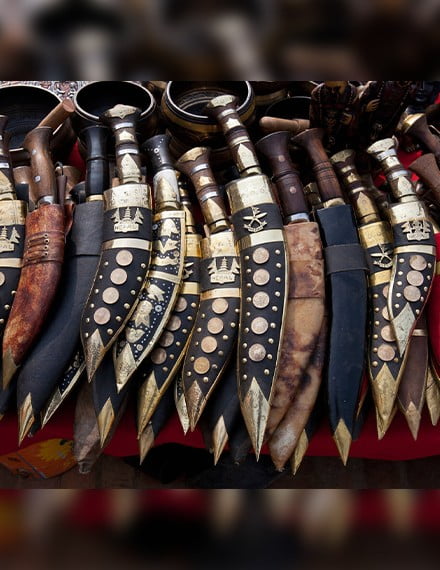
It is a curved shaped knife the national weapon of Nepal which is used by the Gorkhas of Nepal. It is commonly known for its unique khukuri traditional metalwork. It serves as a symbol of wealth, social background, and prestige in some communities as well as identifying a social purpose. The khukuri has served as both the main weapon of war and a powerful tool in times of peace, and many men from diverse communities in Nepal like always having one with them.


Pashmina 

Pasmina-souvenir-to-buy-in-Nepal

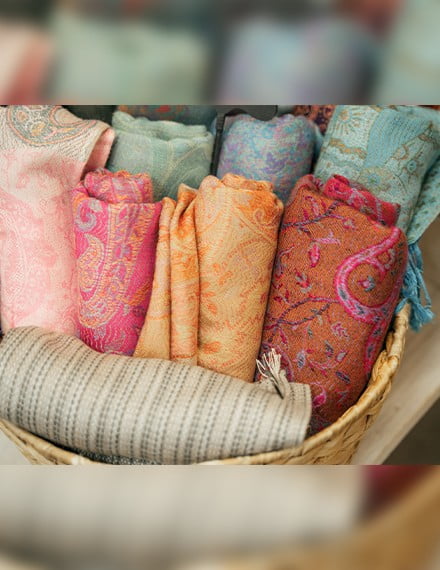
The unique natural fiber known as pashmina, which is good for human skin, is taken from the fur of mountain goats, also known as Chyangra. The term Pashm, which comes in Farsi and is used to describe the fleece of the Himalayan Goat (Changra), originates from Urdu. Making a Pashmina shawl needs at least three or four Himalayan goat’s wool of the finest quality. Although it is quite thin, a pashmina shawl is extremely soft, warm, and comfortable. It helps as an insulator by keeping the heat inside and covering the skin from the chilly wind. 

Tibetan singing bowls

Tibetan-singing-bowls-souvenir -to-buy-Nepal
Tibetan-singing-bowls-souvenir-to -buy-in Nepal


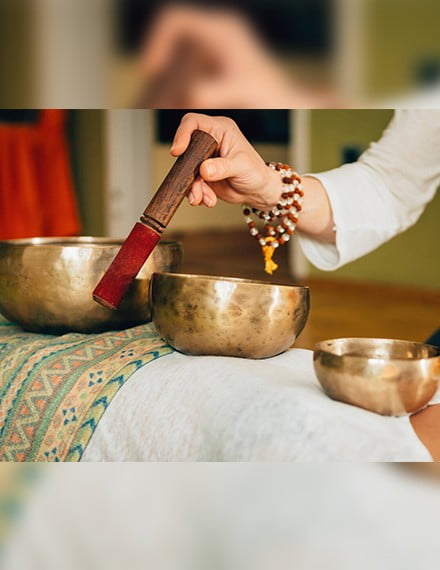
The Tibetan singing bowl is a form of a bell that vibrates and generates a deep, rich tone. It is often known as the Himalayan bowls or singing bowls. muscular repair and deep relaxation. It helps for better blood circulation, pain treatment for spine injuries, stress relief, pain relief, headaches, and migraines, as well as relief for joints, muscles, and other types of suffering. You should pour just about enough water into the bowl to fill it in half. Moreover, it is long used by Buddhist monks during their meditation practice. 

Thangka paintings

Thangka-Souvenir-to-buy-in-Nepal

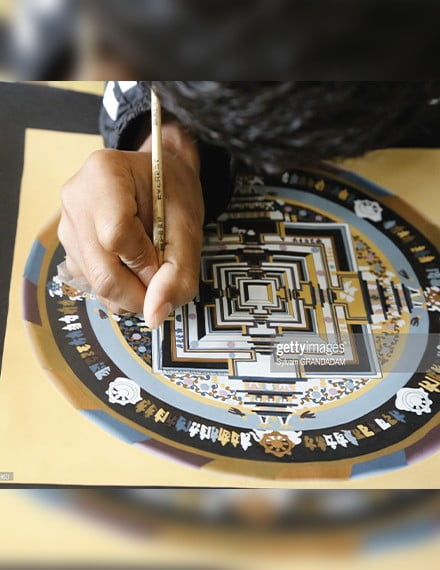
Thangka is a Tibetan painting including a Buddhist god, event, or mandala, on cotton with silk applique. It is used for both personal meditation and teaching others about Buddhist doctrine. The lives of the Buddha, several famous lamas, and other gods and bodhisattvas are portrayed in thangka, which is a significant teaching instrument. Moreover, it is also known as tangka, thanka, tanka, or Tibetan scroll painting.

Nepali Dhaka

Dhaka-Souvenir-to-buy-in-Nepal
Dhaka-Souvenir to buy in Nepal

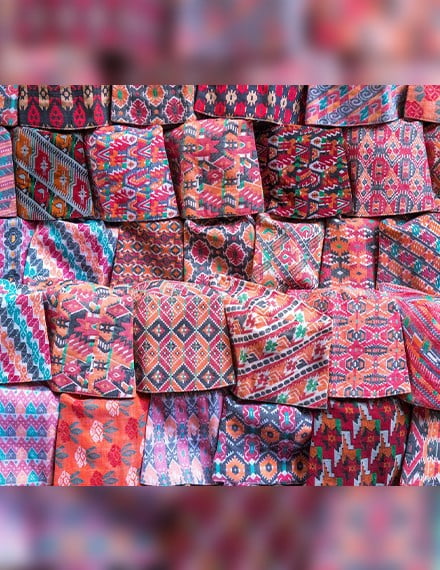
Nepali Dhaka is a traditional handmade fabric of the indigenous Limbu people of Eastern Nepal which is famous not only in Nepal but all over the world. Dhaka is a fine cotton fabric that is hand knitted in many colors and designs, commonly with geometric shapes. The Dhaka topi is a feature of Nepalese national dress and a symbol of Nepalese identity. For official photographs of passports and paperwork, Dhaka topi is recommended. At the Dashain and Tihar celebrations, Dhaka Topis are given as gifts. 


Statues and mask

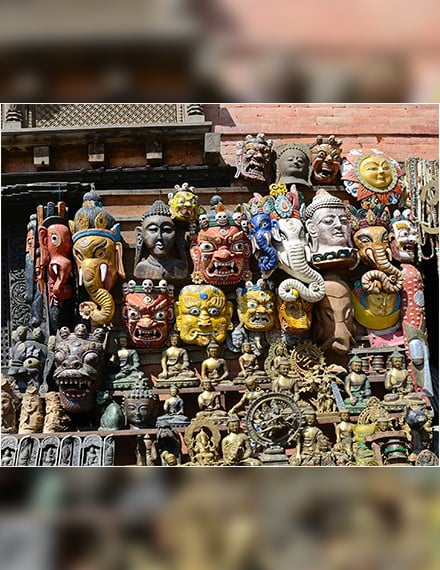
Statues-and-Mask-Souvenir-to-buy-in-Nepal

Nepal is a diversified country where you can find different mask statues of different cultures’ gods and goddesses. Hence, you can bring statues of mythological gods back to your home to promote good fortune and calm when you visit Nepal. According to mythical cultures, Nepali masks come in a variety of shapes and sizes. These masks are mostly used in Lakhe dance and religious mimicry, which has made them more popular and attracted the attention of tourists. There are several statues of local Hindu and Buddhist followers across the magnificent cities of Kathmandu. So if you are in Nepal you can take statues and masks as a momentum of Nepali unique cultures.


Tibetan Prayer flags

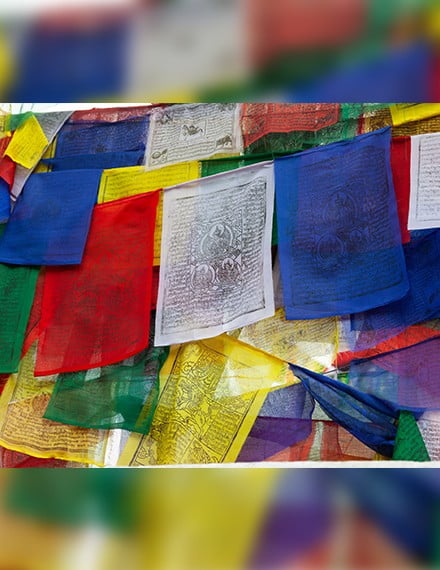
Prayer-Flags-souvenir-to-buy-in-Nepal

A Tibetan prayer flag is a rectangular flag with prayers written on it that is waved to represent wisdom, strength, and compassion. They supposedly emit positive spiritual vibrations, and the prayers are silently carried by the wind. Burning old prayer flags is a traditional Tibetan respect act that sends prayers to the sky. People are mainly used to hanging this flag outside where the wind blows them moves them and carries prayers and positive energy to a variety of places and creatures, including humans. There is a total of five colors in the prayer flag blue represents the sky, white represents air, green represents water, red represents fire and yellow represents the earth.  


Prayer wheels

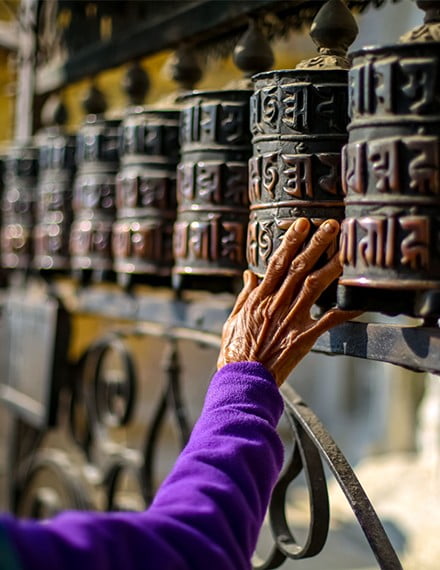
Prayer-wheeler-souvenir-to-buy-in-Nepal.

The prayer wheel is a spinning cylinder that includes prayers, and each rotation represents the repetition of a specific prayer. A tightly wrapped roll of printed mantras can be found inside each prayer wheel cylinder. About 23,000 of these mantras are printed on each of the 1,400 paper sheets inside each cylinder. Buddhists also place prayer wheels at the front of their homes so that guests can spin them as they enter and exit. Worshipers spin prayer wheels to earn merit, help all living things, and purify their karma 


Spices

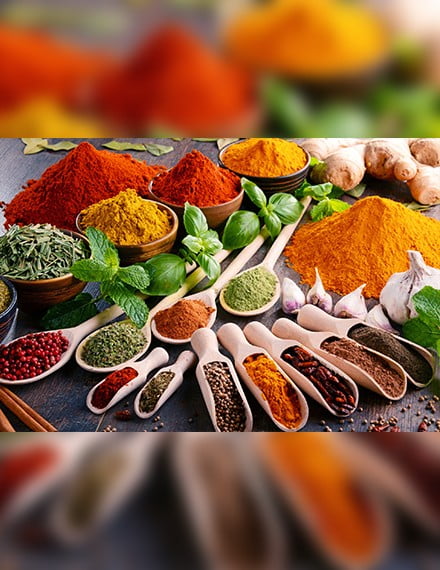
Spices-Souvenir-to-Buy-In-Nepal.

Nepal, a country in the Himalayas, is well known for its unique spices and exotic herbs. Every Nepalese kitchen emits the scent of these particular herbs which gives a unique taste to Nepal’s food. Fresh spice aroma meets you as you go through the neighborhood market and backstreets. Nepal’s bazaars have many different spices, some of which are local specialties.


Tea

Tea-Souvenir-to-buy-in-Nepal

Nepalese love drinking tea as it is refreshing and has many health advantages. A large percentage of Nepal’s gardens produce diverse types of tea in the east. Tea comes in a variety of gorgeous packs, Earl Grey, green, masala, silver tips, and golden tips. The taste of the local tea also known as Nepali Chiya will make you addicted to the tea. So before leaving Nepal don’t forget to bring the packets of tea and start your day with a cup of tea from Nepal.   


Panchase Hill Trek


Panchase Hill Trek is  one of the famous hill trek of Annapurna region. Panchase hill is the name of the five hills surrounding the districts of Syangja, Parbat and Kaski. Panchase Hills and its surroundings are home to approx 70,000 people. They mostly include villages like  Kalabang, Chitre, Bhadaure, Deurali, Talibarang, Arthare and Sidhane villages.

Many ethnicities like Gurungs, Magars, Brahmins, Kshatriyas, Pariyars, Nepalis and Newars have their home in Pokhara.

The Panchase Hill ranges from 800 to 2,500 meters above sea level. 


Why is Panchase Hill famous?

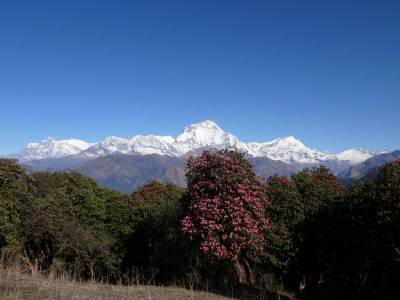
Panchase hill is famous for many reasons. Firstly, you can see the view of snowcapped mountains like Mt. Dhaulagiri, Mt. Annapurna, Mt. Gangapurna, Mt. Manaslu, Mt. Fishtail etc.

Secondly, it has a large amount of flora and fauna. Panchase hill is also the origin of famous rivers and lakes in Pokhara namely: Phewa Lake, River Harpan, River Aadhi, River Rapti, and River Jarey. 

It is also famous for its peace and yoga treks and also for its suitability as an extension to any of our tours of Kathmandu, Pokhara and Chitwan.


Panchase Hill Trek overview

Max Altitude: 2500 meters

Difficulty: Moderate

Transport: Private Vehicle & Local bus

Accommodation: Private Accommodation Tea Houses, Homestay

Meals: All Included


Famous Flora and Fauna found in Panchase Hill

The Panchase Hill is the home of more than 250 bird species, 600 plant species, 118 orchid species and more than a dozen species of herbs.

The Panchase Hill is the home of famous medicinal herbs like Satuwa, Chattre Unyu, Titte, Kurilo, Naagbeli, Paanch Aaule, Loth Salla etc.

Famous flowers like Rhododendron, Sunkhari, and Leksallo are also produced by Panchase Hill.

Animals like leopards, black bears etc are found in Panchase.

It also has plants like Loktha, Khashru, Champ, and Phalat which are the main ingredient for manufacturing Nepali Paper.

It is also home to a large number of butterflies, insects and other animals. 


Special Festival/Temples/Religion related to Panchase Hill


The five hills in Panchase hold a huge religious significance. The five hills are the home of The Temple of Shidda Baba, Homekunda, Panchasse Lake, and Balaji Phachyan Temple. It also includes Buddha Stupa which is more than 200 years old. Locals believed that many religious saints and sages have meditated in this place many centuries ago.


Panchase Hill Trek also Let you celebrates major festivals like Balachuturdashi Festival and Buddha Purnima. There are also many other religious spots like Shrawan Kumar’s Samadhi and more.


Accommodation and food in Panchase Hill

In Panchase Hill Trek, you can find many homestay services in Kalabang and Pumdi villages. Other lodges are also opening in many places of Panchase Hill.

The restaurants in Panchase serve rice, potatoes, noodles, eggs, momo, chapati etc and tea, and coffee for table drinks.

The local homestays mostly serve Dal/Bhat (a Nepalese set meal that comes with boiled rice, lentil soup, fried/cooked vegetables and pickle). You can also find soft drinks, beer, distillery drinks and local wines.


Best Time to Panchase Hill Trek

The best time to trek Panchase Hill Trek is all year round. However, it is not suitable to trek in Panchase Hill during monsoon because it is one of the largest rain-receiving places in Nepal. 

You can also come to Panchase in the winter to play in the snow.


Khayer Lake

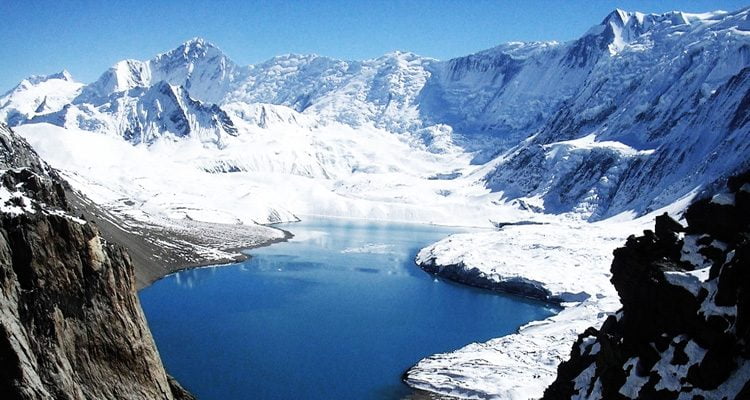
Khayer Lake is a beautiful trekking destination in Myagdi. It is a trekking destination that was only released to the public a few years ago. This lake is between two famous trekking destinations, Annapurna Base Camp and the Jomsom Trekking Trail. A less touristy trek, the trail around Khayer lake has yet to be highly disturbed by concrete buildings, leaving a natural beauty undisturbed by artificial disturbance.

Khayer lake, at an elevation of 4,700m, is also higher than the Annapurna Base Camp

Highlights of Khayer lake

  • Views of Annapurna Range
  • Rhododendron Forest
  • Views of Mt Himchuli, Mt Fishtail
  • Yak Pastures
  • Jungle hikes
  • Views of Dhaulagiri Range and Kali Gandaki Valley
  • Swanta Village with unique local cultures

Seasons suitable for Khayer Lake Trek

If we are to talk about the best seasons for Khayer Lake Trek, most people would recommend you trek in Nepal after the fall or after the winter. They are also Nepal’s most packed and popular seasons.

But there is also another trekking season that has risen in recent years. Just after the fall of winter to the beginning of spring, there is a rise in pleasant and warm temperatures. New flowers bloom on trees and the ground during this season, making them suitable for unique treks and expeditions.

Along with these seasons, you can choose to trek in autumn and spring. Due to Autumn and Spring being some of the best seasons for treks, if you do not like the crowd, Khayer lake is one of the suitable destinations for you.

Khayer Lake’s best attractions


khayer-lake
khayer-lake

Khayer  is among the best attractions for trekking in the Annapurna Region. Nestled in the heights above the Annapurna Base Camp, it is also famous in Hinduism due to its location near Khayer Barahi Temple. The Khayer Barahi Temple has more than 10,000 devotees every year. This temple also has high visits during the Janai Purnima Festival.

While less well-known, lake has enormous potential for trekkers. Khayer lake can be taken along with trekking to Annapurna Base Camp and other places in the Annapurna region. This trail in Annapurna has a high chance of being connected to other treks in the Annapurna region like Khopra Danda Trek, Ghorepani Poon Hill Trek , Ghandruk Trek, Jomsom Muktinath Trek, Annapurna Circuit Trek, etc.

This Khayerlake trail has a beautiful view of Dhaulagiri (8,167m), Nilgiri (7,061m), Bhara Shikhar (7,647m), Annapurna I (8091m), Machhapuchhre (6,997m), and the Annapurna Range. It also includes jungle hikes, different flora and fauna views, and a beautiful rhododendron forest.

You can also enjoy the local culture and traditions of Gurung, Magar, and Swanta villages.

Hence, once you visit Khayer lake this place will definitely, captivate you, visit this place once you come to Nepal.


Annapurna Base Camp trek Difficulty

Before going to Annapurna Base Camp trek Difficulty, The Annapurna Trek in the Annapurna region is from the south as you make your way up into the world famous Annapurna Sanctuary.It is the world’s 10th highest mountain which lies in Gandaki Zone in Nepal.This is one of the great treks in the world. Unique and the diverse landscapes, a culture of the local ethnic group, views of the world iconic mountain are the main attractions of this trek. The Annapurna base camp trek offers you the beautiful views of the stunning mountain vista from the different attractions and the beautiful viewpoint, which takes you through the terraced field surrounding the village and valley, the charming village of Gurung and Magar, breathtaking views of the Himalayan flora and fauna. This aspect will rejoice you during the adventure walk to the Annapurna Base Camp.


So how difficult is it to trek to the Annapurna Base Camp?

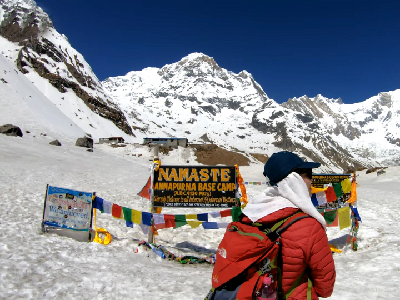
Annapurna Base Camp is situated at an altitude of 4130 meters and the route of this trek is the one of the most popular and the beautiful trekking trails in Nepal after Everest Base camp. It is also very popular for the solo and the group trekkers experienced trekkers as well.

Annapurna Base Camp trek is not considered to be a difficult trek because this trek is very adventurous and the key factors of the trek are to walk slow and steady. So this trek is considered to be a moderate trek. Like Everest Base Camp Trek it is also demanding and the beautiful trek but with a bit of patience, this trek is very enjoyable and achievable.

It is the most frequently asked question among the traveler and the visitors.So, here are some of the list why visitors/trekkers feel difficult to trek to Annapurna base camp.

  1. Altitude Sickness
  2. Weather and Temperature
  3. Lack of Training
  4. Budget
  5. Guide and Porter Difficulty
  6. Clothing

Altitude Sickness

It is the major problem and the difficult situation in the mountainous region. The atmospheric pressure and the oxygen is lower than the sea level in the higher altitude location.With the thinner level of oxygen and the high altitude, it will take time to adjust to the surrounding environment at such high altitude. During the altitude sickness, you may get symptoms like nausea, diarrhea, headache, loss of appetite, insomnia and other. High altitude can be moderate for some trekkers but it can be serious for others.  you find some symptoms of altitude sickness while making the adventure hike, you should immediately return back to a lower altitude region. Do not ignore these types of symptoms which may result in serious problems or the death of the traveler while trekking to the high altitude.

It is not recommended to drink alcohol at such a high altitude. Though there is some medicine available to prevent altitude sickness, you are suggested to take rest and take precautions rather than medicine.


Weather and Temperature

Weather and Temperature is a major factor that can create a major difficulty in Annapurna base camp trekking. Change in the temperature drastically is based on the weather , altitude , climate and seasons. The average temperature at the Annapurna Base Camp region is about 15 to 20-degree centigrade on a sunny day during the autumn and spring whereas, in the summer, the temperature ranges from 20-25 degrees centigrade.The temperature is normal and moderate during the day time or under the sun time.  In winter, it is the most dangerous and the challenging season in the Annapurna Base Camp Trek. In this season, there is the possibility of heavy snowfall and the temperature can be below 0 and can be decreased to minus 17 degrees centigrade at the night time. Autumn is the picking season to trek Annapurna Base Camp because of the good and calm weather condition in the mountain at this time of the year. After Autumn season, the spring season is also best season to trek in Annapurna region because the days are very beautiful and charming, we can experience the green and beautiful Himalayan flora and fauna, walk through the green terraced field, with the gorgeous and the heart touching views of the snow painted mountain peaks.The best part of the trekking in Annapurna Base Camp is you can trek here in monsoon too as there will be less chance of rainfall in this region. This whole region is rain shaded, so the monsoon does not affect too much while trekking in the Annapurna region.So,before trekking you should take all the essential and seasonal clothes for the drastic change in weather and temperature.


Lack of Training

The most reliable, legendary and classical trek is the Annapurna base camp as the route of this trek is not so difficult. However for the new mountain hikers it will be a challenging trek. Therefore, best preparation is needed for the adventure hiking if you are trekking the mountain region for the first time. First of all the trekkers should take 6 weeks of training before making a trip to the Annapurna region to make the body healthy as well as physically and mentally fit and fine.At the higher altitude walk or the walk-in uphill, even a short period of the walk will make you feel tired. Descending towards the lower region is comparatively easier than ascending uphill to the higher altitude as in the high altitude there is very less amount of the oxygen up in the mountains.If you are perfectly trained, you can trek any kind of trekking trial easily. To maintain your fitness, you have to perform difficult works, even simple exercises such as stretching, jogging, swimming, skipping can be helpful for you.


Budget


The country of Nepal is one of the most inexpensive trekking destinations in the world. However, the price of the goods and things you use will get more expensive as you reach at a higher altitude than at the lower altitude. The cost of the food and accommodation get tripled or more than it is in normal rate this due to the lack of good transportation and communication facilities in the mountain region.


Guide and porter difficult

Most trekkers do trekking with a guide but not a porter and there are some trekkers who trek to Annapurna base camp on their own without any guide or porter. Annapurna base camp is absolutely doable without a guide or a porter. However hiring a guid means you are always on a safer side.The trek doesn’t involve any technical sections but there are some steep and rugged sections. Also, walking up and down the stone stairs is not so easy. So, hiring a porter is also useful.But if you think that you have good physical conditions, you can carry your backpack on your own.


Clothing

The temperature in the mountainous region changes day to day due to higher altitude location from sea level. In the mornings are colders for most of the seasons while the day time is a bit warmer. So, you need to wear clothes according to the weather conditions.

Here are some of the list of clothings that should be carried while trekking to Annapurna base camp:


For Spring and Autumn

  • Lightweight hiking shirt
  • Full or half Pants/ Trousers
  • Hiking underwear
  • Thermals
  • A pair of good quality trekking shoes
  • Wind-cheater Jacket and trousers
  • Lightweight down jacket
  • A pair of hiking sandals
  • Gloves
  • Lightweight hiking socks
  • Shorts
  • Light underwears
  • Comfortable Sports Bras (for girls)
  • A Sun Hat
  • Sunglasses

For Winter

  • Warm Shirt and Trousers
  • A woolen cap
  • A woolen scarf
  • Layered clothing
  • Lightweight woolen jumper/ sweater
  • Down jacket or down vest
  • Fleece or wool trousers
  • Heavyweight gloves or mittens
  • Thermals
  • Thermal underwears

For Summer/Monsoon

  • Full sleeve trekking Shirt
  • Windproof/ waterproof trekking trousers (long)
  • Windstopper Jacket (waterproof)
  • Anti-leech Socks
  • Down Jacket for cold nights
  • A Rain jacket
  • A Rain Pant
  • Waterproof trekking boots


Difficulty level of trek in Nepal

Nepal is a country with the beauty of abundant nature Nepal and biodiversity. The huge geographical and topographical diversity in Nepal results in a diversity of trekking routes in Nepal. The diversity of the trekking trail in Nepal cannot be found in any other part of the world. Further, these trekking trails are embedded with magnificent Himalayan ambiance aspiring varieties of cultural wealth. However these all the trekking trails have a different Difficilty Level of Trek In Nepal. When it comes the question about the difficulty level of trek in Nepal, there are different factors.

The difficulty level of trek is measured on the basis of altitude, geographical structure and time duration of the trekking. Prior to deciding the trekking destination you should consider and plan which trek is perfect for you. By analyzing all the mentioned basis of trek difficulty you can choose the suitable trekking destination based upon your fitness level and vacation.

The difficulty level of trek in Nepal are categorized into four grades
The difficulty level of Nepal is divided into easy, moderate, strenuous and challenging which are described below.

Easy Trekking

An easy trek is perfect for those who do not have any experience of trekking. This grade of trekking is suitable for beginner trekkers. Easy trekking is favorable for people of all age groups. Even a family with children and senior parents can join this trek. Normally, it takes only a few days to complete the easy trek and this trek belongs to the altitude below 4000 meters. There will be a rare chance of altitude sickness. People with normal fitness level can choose the trek of this grade.

Some of the easy trekking routes in Nepal are :

Ghorepani Poon Hill Trek
Everest View Trek
Helambu Valley Trek
Dhampus Sarangkot Trek
Chisapani Nagarkot Trek
Chepang Heritage Trail Trek
Short Annapurna Base Camp Trek
Panchase trek and so on.

Moderate Trekking

Moderate trekking could be a bit challenging and tough for the beginner trekkers. Further, these treks are challenging for elderly people and children as the difficulty level of trek is high compared to easy trek. However, without trekking experience also you can join this trek if you are physically fit. If you are habituated of doing physical exercise regularly and your fitness level is good then you can do this trek. In this type of trekking, you have to walk for a long time and also you have to pass through higher passes but you can enjoy the spectacular views of mighty Himalayas.

Some of the moderate trekking destinations of Nepal are:

Langtang Valley Trek
Annapurna Base Camp Trek

Strenuous Trekking:

Strenuous trekking gives you the real adventure of the Himalayas. Solid Physical fitness level, high stamina, and sound health are required to complete this type of trekking. This type of trekking takes a long duration to complete as you have to give some extra days for acclimatization. You have to walk for a long time and also you have to pass through strenuous trials. Further weather change makes strenuous trek riskier. When it comes to accommodation only tea houses with basic facilities are available there. Before doing this type of trekking it is better to have some knowledge of trekking equipment and techniques.

Some strenuous trekking in Nepal are

Annapurna Circuit Trek
Everest Base camp trek
Langtang Ganjala pass trek
Upper Mustang trek

Challenging trekking (Alpine trekking)

It is the last grade of the difficulty level of trek in Nepal. Challenging trekking is the tough and adventurous treks in which you have to pass through high passes, snow-filled lands. In addition, challenging Treks are the high altitude treks so high level of stamina and trekking experience is required to complete such treks. The accommodation available is camping and a few teahouses with basic facilities. The trekking duration for the trips is more than 20 days.

Some Challenging Trekking in Nepal are

Kanchenjunga Base Camp Trek
Upper Dolpo Trek
Everest High Passes Trek
Manaslu Circuit Trek