

Annapurna Base Camp Trek Cost in 2027: Full Expense Guide
One of the initial things that you need to do before trekking in Nepal is to plan your budget. The Annapurna Base Camp trek price of 2027 is related to various factors, such as your itinerary, transport, lodging, a guide and personal expenses.
A budget trek would cost USD 500- USD 700, a comfortable mid-range trek would cost USD 700- USD 1,000 and a fully organized trek with other services would cost USD 900- USD 1,500 or even more. The final amount depends on your transportation, accommodation, guide services, meals, gear and personal spending.
US$ 620
You will stay in tea houses, experience mountain life, eat local cuisine and enjoy the beautiful surroundings of some of the highest mountains in the world on the trek to Annapurna Base Camp (4,130 m / 13,550 ft).
This guide covers all of the major expenses that are likely to be incurred in 2027. From permits and transportation to accommodation, meals, guides and personal spending, this complete Annapurna Base Camp trek cost breakdown will help you plan a realistic budget. Whether you want a budget adventure or a more comfortable trek understanding the Annapurna Base Camp trek price will help you prepare accordingly.
What Affects the Annapurna Base Camp Trek Cost in 2027?
The Annapurna Base Camp trek cost 2027 is different for every traveler because several factors influence the total budget.
The itinerary is the most critical thing. Some trekkers take a total of 7 or 8 days from Pokhara and others opt to trek longer with other destinations like Ghorepani Poon Hill or Ghandruk. The more days spent trekking, the more money will be spent on lodging, food and guide services. A standard 7-to-9-day Annapurna Base Camp trek price is usually lower than a 10-to-14-day itinerary, simply because you spend fewer nights on the trail.
Another aspect of transportation that’s worth considering is your budget. Most trekkers leave Kathmandu to drive to Pokhara before taking the trail. A tourist bus costs around NPR 1,000 to NPR 2,000 (USD 8 to USD 16) one way, while a domestic flight costs approximately USD 100 to USD 140 one way. Choosing the bus can significantly reduce the overall Annapurna Base Camp trek cost 2027.
This is another key consideration which is the type of accommodation you are looking at. Standard tea houses usually charge NPR 500 to NPR 1,000 (USD 4 to USD 8) per night at lower elevations, while rooms near Annapurna Base Camp generally cost NPR 800 to NPR 1,500 (USD 6 to USD 12) because supplies must be transported into the mountains.
The use of a licensed guide or porter also affects the cost. A licensed guide generally costs USD 30 to USD 40 per day, while a porter costs around USD 20 to USD 30 per day. A guide will improve safety, assist with logistics, share local knowledge and help if weather or trail conditions change, while a porter allows you to carry only a light daypack.
Last but not least, personal spending can have a huge impact on your overall spending. The Annapurna Base Camp trek cost breakdown includes items such as snacks, coffee, bottled water, hot showers, internet access, charging electronic devices and souvenirs. Depending on your habits, these extras can add USD 10 to USD 25 per day to your budget.
Permit Costs
All trekkers are required to obtain permits, and they should always be considered as part of the Annapurna Base Camp trek cost 2027.
The main permit required is the Annapurna Conservation Area Permit (ACAP), which costs NPR 3,000 (approximately USD 23) per foreign visitor. For visitors from SAARC countries, the permit costs NPR 1,000.
Since April 2023, trekkers in the Annapurna region are also required to hire a licensed guide. The former TIMS Card is no longer required for most trekkers in the Annapurna Conservation Area, making the ACAP the primary trekking permit.
Permit regulations can change, so it is always wise to check the latest requirements before travelling. Most registered trekking companies include permit arrangements in their packages making the process simple.
Transportation Costs
Another significant aspect of the cost of the Annapurna Base Camp trek is transportation. The majority of international tourists make their way to Kathmandu before travelling to Pokhara which is the gateway to the Annapurna region. The cheapest are tourist buses which take approximately seven to nine hours depending on road conditions and cost around USD 8 to USD 16 (NPR 1,000 to NPR 2,000) one way.
Those wishing to bypass the hassle of international travel can opt for domestic flights, which take approximately 25 minutes but cost around USD 100 to USD 140 one way.
Once you arrive in Pokhara, you will have to get to your starting point by local transportation. From where you start the trek, it can be from either Siwai, Jhinu Danda, Ghandruk, Nayapul, Kimche or another village nearby. Shared jeeps and buses generally cost USD 8 to USD 20 per person, while private jeeps usually cost USD 70 to USD 120 per vehicle. The trek ends with another jeep or bus ride back to Pokhara at a similar cost.
One of the most convenient ways to save on the price of the Annapurna Base Camp trek is to travel by tourist bus instead of flying.
Guide and Porter Costs
Trekking with a licensed guide is an essential component of trekking in Nepal and should be added to the Annapurna Base Camp trek in Annapurna cost for 2027.
The highlight of the tour is the navigation, accommodation, communication with the tea house, weather updates and local information of a tour guide. They are also able to react promptly to unforeseen circumstances on the journey.
Another popular option for trekkers is to have their gear hauled by a porter. This will make long uphill climbs easier and more enjoyable and will allow you to enjoy the view without having to carry a large backpack.
A licensed guide generally costs around USD 30 to USD 40 per day, while a porter usually costs USD 20 to USD 30 per day. The price is based on experience, language abilities and hiring from a trekking firm or independently. Agency packages typically cover the agency guide’s salary, insurance, accommodation, meals and transportation.
US$ 370
Accommodation Costs
The Annapurna Base Camp trek cost breakdown includes accommodation, which is one of the less costly aspects of the trek.
The majority of villages on the way have family-run tea houses that provide basic twin-sharing rooms, beds, blankets and shared bathrooms. The facilities tend to be good at low levels and are more basic toward the mountains. Room prices generally range from USD 4 to USD 12 (NPR 500 to NPR 1,500) per night depending on the season and location.
The accommodation at Annapurna Base Camp (4,130 m / 13,550 ft) is usually at the higher end of this range, as everything is brought into the mountains.
For those who eat breakfast and dinner in the same lodge, many tea houses offer a low price for rooms or even provide the room free of charge. This is not uncommon in the Annapurna area; it helps to keep the Annapurna Base Camp trek affordable in 2027.
Food and Drink Costs
Another high cost on the trek is food and the cost of the Annapurna Base Camp trek cost 2027 should always include this. Meals are sold in tea houses along the way and the cost for each increase as you climb higher and further from the base due to the need for supplies to be carried up the mountain on a vehicle, porter or mule. Most trekkers spend around USD 25 to USD 40 per day on food and drinks during the trek.
The most popular dish eaten by trekkers is dal bhat, which is not only tasty but also quite nutritious and is usually offered with free refills. A serving of dal bhat typically costs around NPR 700 to NPR 1,200 (USD 5 to USD 9). Other popular choices include fried rice, noodles, pasta, soups, potatoes, momos, eggs, pancakes, porridge and Tibetan bread, with most meals costing between NPR 500 and NPR 1,200 (USD 4 to USD 9). Typically, breakfast is basic and the lunch and dinner menus are the same along the way.
Nearly all tea houses have tea, coffee, hot chocolate and lemon honey ginger tea. Hot drinks are not only more expensive at higher altitudes, but also a great way to stay warm after a long day on the trails. A cup of tea generally costs NPR 150 to NPR 350 (USD 1 to USD 3), while coffee usually costs NPR 250 to NPR 500 (USD 2 to USD 4).
Drinking Water Expenses
It is very important to stay properly hydrated while on the trail in the higher elevations. Many trekkers to Annapurna Base Camp tend to underestimate this cost while making the Annapurna Base Camp trek cost breakdown.
It can be costly to purchase bottled water daily and it also contributes to the mountain with additional plastic waste. Bottled water generally costs NPR 100 to NPR 150 (USD 1 to USD 1.5) at lower elevations and NPR 300 to NPR 500 (USD 2.5 to USD 4) near Annapurna Base Camp. Consider bringing your own water bottle and using water purification tablets, filters or a UV purifier. Most tea houses also offer boiled drinking water, which is a safer and more eco-friendly alternative costing NPR 100 to NPR 300 (USD 1 to USD 2.5) per refill.
As you climb to Annapurna Base Camp at 4,130 m / 13,550 ft, you face even greater danger of dehydration due to dry mountain air and activity.
US$ 950
Trekking Gear and Equipment
Equipment costs will vary according to your own equipment. In case you have appropriate trekking equipment, your cost of the Annapurna Base Camp trek is going to be reduced in 2027. New trekkers might have to purchase or hire the necessary items before embarking on the trek.
One of the key equipment items is a good pair of trekking boots. Other essentials for changing mountain weather include warm clothes, a waterproof jacket, thermal clothing, gloves, a hat, a good backpack and good old boots.
Many shops in Kathmandu and Pokhara rent sleeping bags, down jackets, trekking poles and other equipment at reasonable prices if one does not want to buy expensive equipment. Travelers who are not planning on trekking regularly may find it to be the most convenient choice to rent. Renting the essential trekking gear usually costs around USD 40 to USD 80 for the entire trek, while purchasing new equipment can cost USD 300 or more, depending on the quality and brands chosen.
Travel Insurance
One of the most crucial components of the cost of a trek to Annapurna Base Camp is travel insurance. This adds a little to your budget, but can save a lot of money if you have an emergency.
You should have high altitude trekking insurance up to at least 4,130 m / 13,550 ft, which should also include emergency helicopter evacuation. Additionally, it’s wise to select a policy that includes medical treatment, trip cancellation, delayed flights and lost baggage coverage.
The price of insurance is determined by the age, country of residence, length of travel and insurance coverage. Most trekkers spend around USD 60 to USD 180 on travel insurance, depending on their policy and country of residence.
WiFi, Charging and Hot Showers
Services not included in the room price are usually provided in most tea houses. These optional costs should be included when estimating the Annapurna Base Camp trek cost 2027.
In many villages, WiFi is available, although the internet slows down and is not as reliable the higher you go. WiFi usually costs around NPR 200 to NPR 500 (USD 2 to USD 4) per device. Mobile phone charging, camera charging and power bank charging generally cost NPR 200 to NPR 500 (USD 2 to USD 4) each, as electricity is limited in the mountains.
Lots of tea houses also have hot showers, which generally cost NPR 300 to NPR 600 (USD 2.5 to USD 5) per shower. Taking a fully charged power bank with you before leaving Pokhara will help reduce charging costs during the trek.
These costs are not mandatory, but add to the total Annapurna Base Camp trek cost if they are utilized each day.
Personal Expenses
Each traveller has a different level of spending. Some trekkers may be paying only for the lodging and food and others may be paying extra for snacks, coffee, soft drinks, dessert, souvenirs or extra services. Most trekkers budget around USD 50 to USD 150 for personal expenses during the trek.
Numerous trekkers also go to villages along the route to buy a few small handicrafts or eat additional snacks when they reach Annapurna Base Camp. These are additional options, but still cost as part of your Annapurna Base Camp trek.
Tipping is customary in Nepal. It is not mandatory, but is welcome as an acknowledgment of good service and as a help to local workers. Many trekkers tip around USD 50 to USD 100 for a guide and USD 30 to USD 60 for a porter after completing the trek. It’s also a good idea to maintain a small emergency fund in case of changes in transportation plans or weather.
Estimated Budget
The price of the Annapurna Base Camp trek varies by the mode of travel you choose and is ultimately determined by your transportation preferences.
A more affordable option is to opt for tourist buses, standard tea houses, local food, and keep personal spending in check for the budget conscious trekker. A budget trek generally costs around USD 500 to USD 700.
For those who use a licensed guide, stay at comfortable tea houses and make use of services like WiFi or hot showers, a mid-range budget generally falls between USD 700 and USD 1,000.
Domestic flights, private transport, upgraded hotels before and after the trek and fully organized trekking packages are all options available to travellers who seek maximum comfort. These choices add to the cost of the Annapurna Base Camp trek, with prices generally ranging from USD 900 to USD 1,500 or more depending on the itinerary and services included.
It’s easier to budget when you are booking a whole package, as all the permits, lodging, transportation, guide services and most meals are all included in one price.
How to Reduce Your Trekking Costs
The Annapurna Base Camp trek is one of the most popular treks in Nepal and there are several ways you can save money on it without sacrificing the quality of your experience.
It can be a great way to save on transportation expenses by opting for tourist buses rather than air travel. If it is your first trek, another good way to save money is to rent the equipment instead of purchasing new equipment.
Drinking water from a reusable water bottle with a water purification system will be cost-effective daily and help protect the environment. Other tips for keeping spending on track involve going out for dinner or a snack rather than purchasing unnecessary items, and planning a day’s worth of spending in advance.
It’s also a good idea to compare tours from trusted local trekking operators if permits, lodging, transport and guide expenses are bundled into the price.
Is the Trek Worth the Cost?
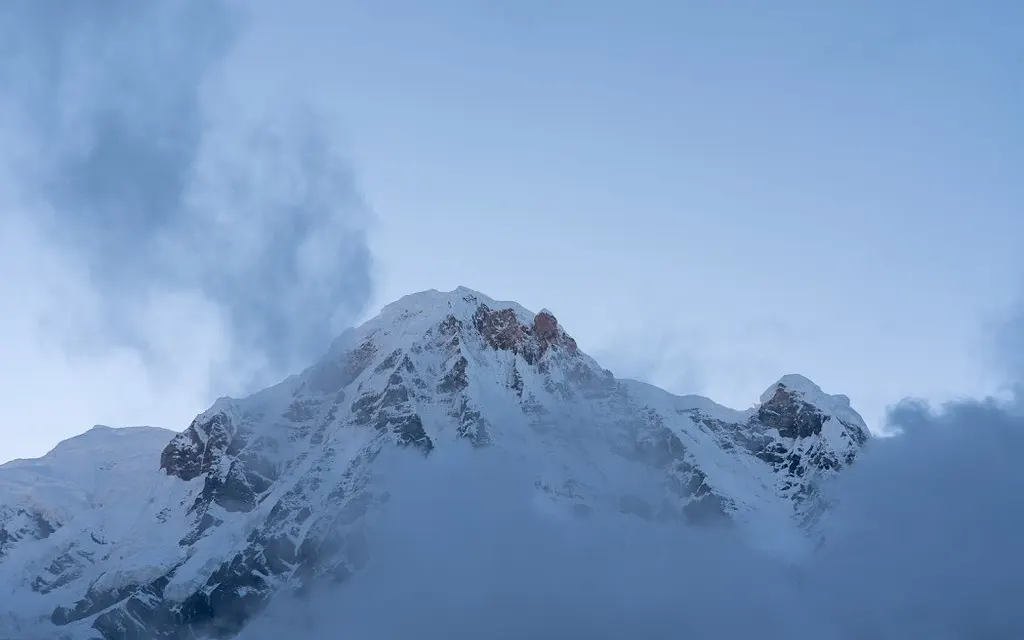
The answer for most travellers is yes. In comparison to numerous trekking places around the globe, the Base Camp trek to Annapurna is a great deal of value. In a few days, you will get to see beautiful forests, traditional villages, rivers and mountain landscapes leading up to Annapurna Base Camp (4,130 m / 13,550 ft).
US$ 400
The trail offers scenic vistas, cultural experiences, a great place to stay at a tea house, and a stable trekking infrastructure. Even if you do it on the cheap or opt for something more luxurious, you will have memories to last a lifetime and have had a close encounter with the Himalayas.
Final Thoughts
If you know what you can expect to cost you on the Annapurna Base Camp trek, you will be able to make a proper budget for your trip and have a practical estimation and thus you will not be surprised by any cost. This will vary with your tour plans, travel, how you stay, guide services, food, gear, insurance and your personal preferences on the trail.
This trek to Annapurna Base Camp trek cost breakdown will give you a good idea of how your money will be spent and which travel style suits you best depending on your budget. Planning also helps you to enjoy the journey without worrying about the costs that you may not have been prepared for.
The price of the Annapurna Base Camp trek is still one of the most economical trekking packages in the trekking industry of Nepal. With careful planning and good budgeting, you can have a rewarding experience in the Himalayas, enjoy welcoming local people, comfortable tea houses and unforgettable scenery.
Ready to Plan Your Trekking? Contact us
More Blog Posts
Everest Base Camp Trek – 14 Days to the Foot of Mount Everest