
8 Highest Mountains of Nepal
Nepal homes eight of the highest mountains in the world, with the Himalayas adding beauty to it. These towering peaks are simply magnificent expressions of its natural beauty, attracting people from all over the world to come and see its beauty.
The eight highest mountains in Nepal, with the iconic Mount Everest on top, represent great pride for the nation and make it a haven for trekkers and climbers around the world.
Towering peaks like Kanchenjunga, Lhotse and Makalu dominate the sky, offering challenges and vistas that are beyond comparison. These towering giants are not only interlinked with Nepal’s history and culture but also with its tourism industry since these have played a vital part in shaping this country’s identity.
The eight highest peaks of Nepal offer the ultimate adventure to mountaineers and nature lovers who come into their grips of formidable heights and serene beauty thousands of times every year in search of the same.
1. Mount Everest
Mount Everest, the tallest at 8,848 meters, is one of the 8 highest peaks in both Nepal and in the world. Located on the Nepal-China (Tibet) border in the Sagarmatha Region, it has been, for a very long time, a source of inspiration to many adventurers and mountaineers alike.
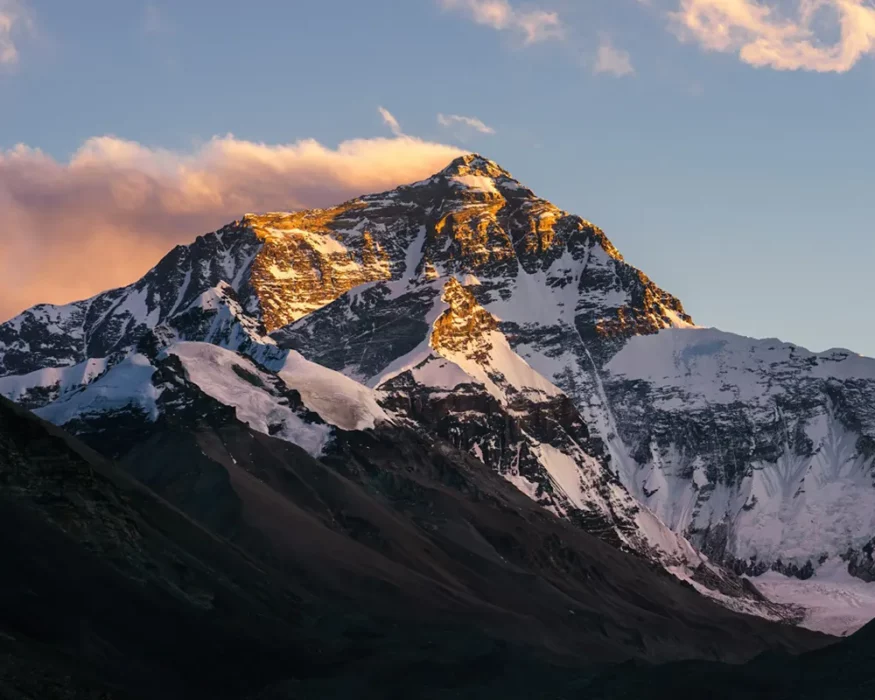
Sagarmatha is the local name for Everest which means “Forehead of the Sky,” signifying the mountain as a cultural icon of human determination and natural beauty.
Combined with its immense height and rough conditions, it has definitely been the most important aim of any climber around the world. The Everest Base Camp trek, at an altitude of approximately 5,430 meters, is considered one of the most popular treks in Nepal.
Views from here include some of the breathtaking views of the Everest massif and surrounding peaks. The trail goes through the Khumbu region that is inhabited by the Sherpas, who have played a critical role in the history of Everest expeditions.
It is not only a natural wonder but also a place of historical importance. Sir Edmund Hillary, with his guide, Tenzing Norgay, who ascended for the first time in 1953, marks this date in mountaineering history. Since then, thousands have tried to reach the top, making Everest a perennial symbol of exploration and human achievement.
The rich biodiversity, flora, and fauna with ancient monasteries and Sherpa villages are the value that Mount Everest adds to this country. For being itself the highest of the 8 highest mountains of Nepal, it never stops amazing and commanding respect from those who would like to push their limits in front of nature’s toughest challenges.
2. Kanchenjunga Mountain
Situated at an altitude of 8,598 meters above sea level, Mount Kanchenjunga stands as the third highest out of the highest eight mountains in Nepal and in the world. The mountain lies in the Kanchenjunga Region of far eastern Nepal, right on the border with Sikkim, one of the Indian states.
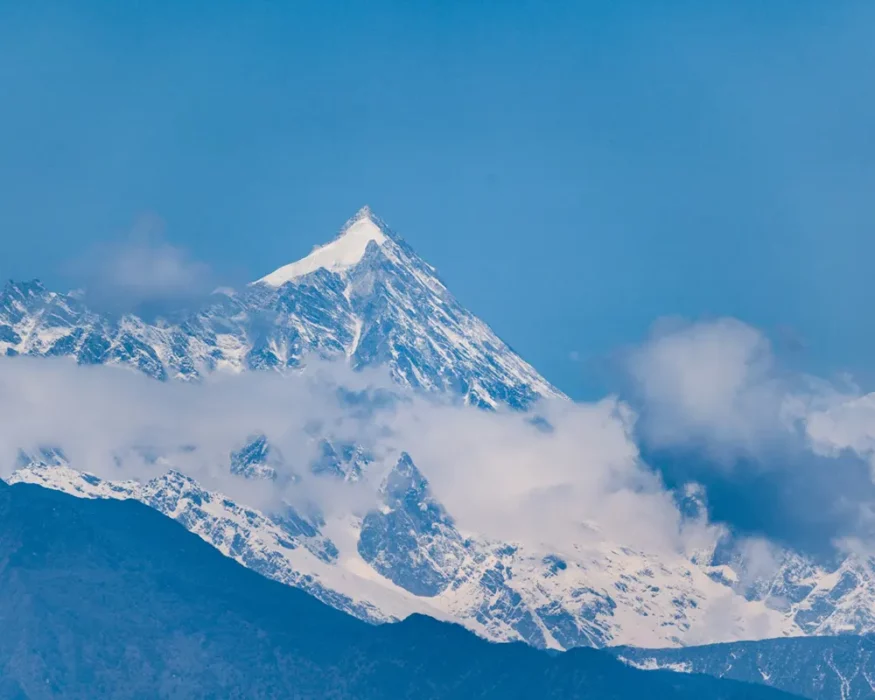
Kanchenjunga is referred to as the “Treasure of Snow,” the most remote and overwhelming peak, which offers the most adventurous but equally rewarding trekking experience in Nepal.
While treks to Kanchenjunga Base Camp are simply famous for their panoramic view of Jannu Himalaya landscapes, seen extending from Mirgin La Pass, the serene beauty of remote villages along the borders of Sikkim and Tibet envelops the trekkers.
Hence, this land abounds in cultural diversity and natural beauty, making the journey an experience not only of a test of physical endurance but also of immense enrichment.
Despite its lure, Kanchenjunga is one of the lesser-traveled areas due to strict government permits that really help preserve its pristine environment. So, in effect, such remoteness adds to the mystique and provides trekkers with a great opportunity to see an unspoiled region in the Himalayas.
Kangchenjunga Region is also the abode of the elusive Snow Leopard, Nepal’s national bird, the Danphe, Musk Deer, and Blue Sheep, with the legendary Yeti said to be residing in these remote reaches.
A defining factor, Kanchenjunga is one of the 8 greatest mountains of Nepal, which has housed the symbiosis between a land of untamed wilderness and rich cultural heritage that makes Nepal so unique.
3. Mount Lhotse
Mount Lhotse raises to 8,516 meters and is the fourth highest of the 8 highest mountains in Nepal and the world.
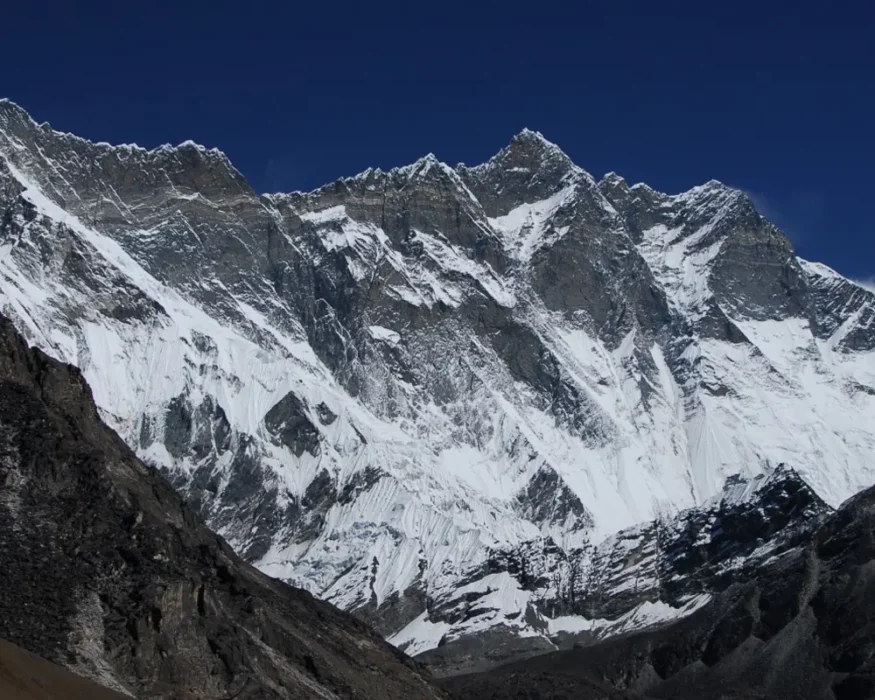
Situated just immediately south of Mount Everest, the Lhotse shares a tremendous geographical association to Everest because of the fact that the two peaks are linked through the South Col—a ridge that does not dip below 8,000 meters. This close proximity has led to Lhotse sometimes being mistaken as the south peak of the Everest massif, though it is an imposing peak in its own right.
The imposing and long crest of Lhotse runs east-west; the mountain is, hence, challenging, and is usually reserved for experienced mountaineers only.
Despite its height and location, Lhotse remained relatively neglected by climbers until the first ascents of Everest had been accomplished in 1953. It was then finally ascended in 1956 by Swiss climbers Fritz Luchsinger and Ernest Reiss, which was one of the significant accomplishments in Himalayan mountaineering at that time.
In addition to the main summit, Lhotse also has two sub-peaks to the east and west: Lhotse Shar next to the main summit and Nuptse, a big peak in the west ridge of the mountain respectively. The entirety of all the above features is what makes Lhotse such a complex and beautiful mountain. One of the prime targets for mountaineers looking to join the exclusive list of people who have climbed the highest peaks in the Himalayas.
Of the top 8 highest mountains in Nepal, Lhotse would be the most striking feature, depicting the rugged beauties and extreme challenges of the Himalayan region. This towering Lhotse would be inspiring, intensified by its shared history with Everest.
4. Mount Makalu
The fifth highest of the 8 highest mountains in Nepal and the world, Mount Makalu is 8,463 meters in height. This mountain is pointed in its pyramidal shape, with four sharp ridges, giving it a dynamism enhanced by its striking isolation, only 14 miles east of Mount Everest. This unique structure makes Makalu one of the most impressive-looking peaks in the Himalayas.
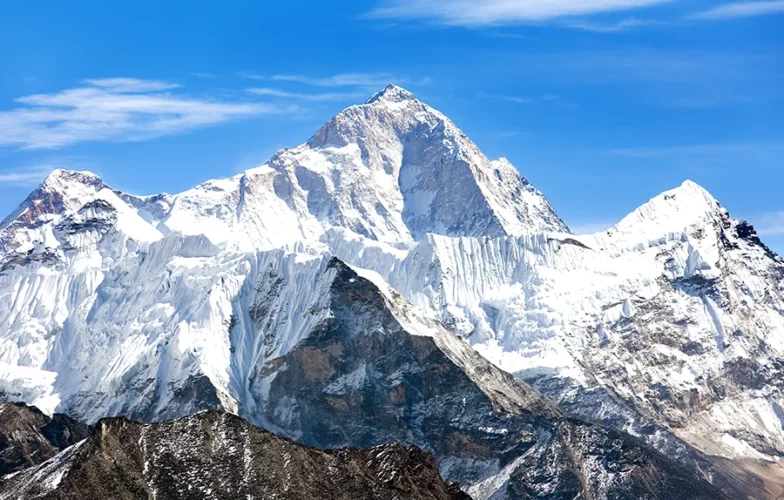
The ascent to the summit of Makalu has been particularly difficult. Of the first sixteen attempts, only five were successful, thus testimony in itself of the difficulty of this peak.
Unlike most of the other high giants in the vicinity around the Khumbu, Makalu wasn’t seriously tried until after the success on Everest in 1953.
In 1955, a French expedition made the first ascent of Makalu, the third major success in Himalayan mountaineering.
In addition to the main summit, Makalu has Chomo Lonzo, another subsidiary peak rising just to the north of the higher summit. This peak, trenched by a narrow saddle, contributes to the complexity of the massif.
Its sheer size and typical peak in a pyramid shape make Makalu outstanding among the 8 highest mountains in Nepal. The mountain remains highly inaccessible, hence a very prestigious and highly sought-after goal for mountaineers targeting the highest peaks in the world.
5. Mount Cho Oyu
Mt. Cho Oyu rises to the altitude of 8,201 meters above sea level, hence becoming the sixth highest among the 8 highest mountains in Nepal and the entire world. It is found in the Khumbu area in Eastern Nepal near the Tibetan border.
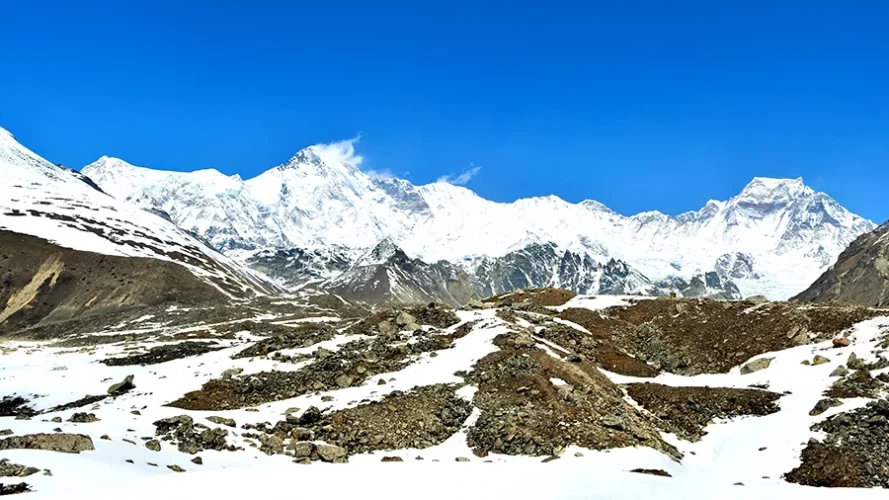
Cho Oyu is just west of Everest and Lhotse; as such, it makes a distinctive feature in this part of the Himalayas. Its towering peak is often visible from Everest’s north face, where it forms a familiar landmark to climbers.
The climbing routes at Cho Oyu are relatively more accessible, making this the “easiest” among the 8 highest mountains in Nepal. This, of course, does nothing to detract from its grandeur or dissipate the challenge to mountaineers. First ascended in 1954, it was the third of the 8,000-meter peaks to be ascended and the first to have an Australian team climb it in autumn.
With its proximity to the Nangpa La, a 19,000-foot glacier pass and the main trade route between the Khumbu Sherpas and Tibet, Cho Oyu assumes much cultural and geographical importance in this region. This mountain’s proximity to this pass has added to the attraction for climbers, whereby, other than providing a formidable climb, it showcases abundant cultural interchange.
Among the 8 highest mountains in Nepal, Cho Oyu is still considered one of the highest peaks that international climbers want to scale, being mesmerized by its towering altitude, historical importance, and relative accessibility among the towering giants of the Himalayas.
6. Mount Dhaulagiri
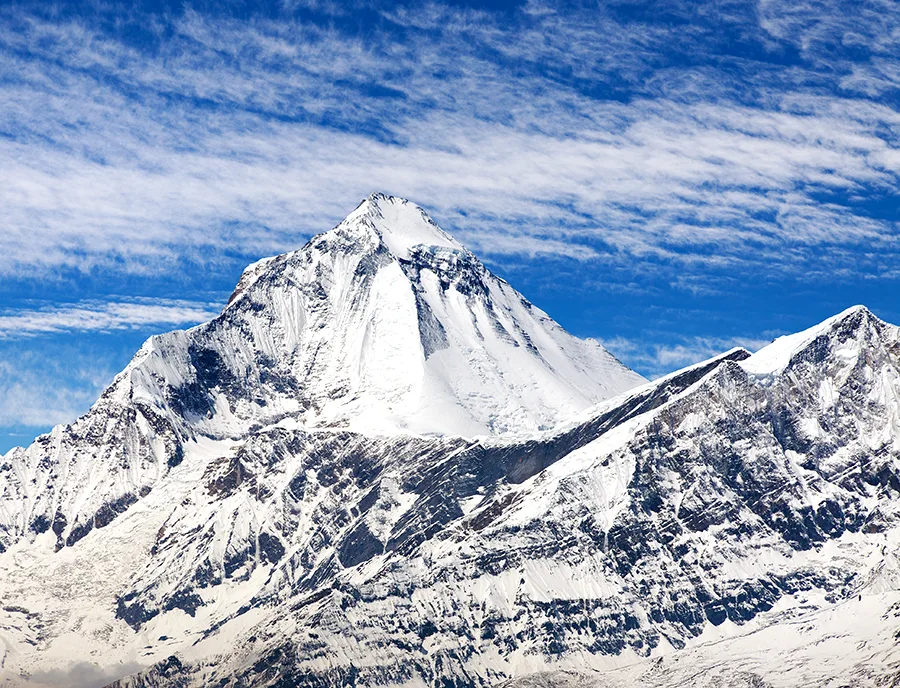
Mount Dhaulagiri is the seventh highest of the 8 highest mountains in Nepal and the world, towering at 8,167 meters. Dhaulagiri, which means “White Mountain,” is an enormous Himalayan massif located in north-central Nepal. The name reflects the dazzling snow that covers its peaks and gives the region a unique landmark.
The eight highest mountains, including Mount Everest, stand for something more than just geographical features; they are the embodiment of the natural beauty, rich culture, and historic importance of Nepal. These towering peaks—from Everest to Annapurna—not only enhance the beauty of the country but also form the backbone of its tourism industry by attracting a large number of adventurers, mountaineers and nature enthusiasts worldwide.
First known to the Western world in 1808, Dhaulagiri was thought to be the world’s highest mountain, topping Ecuador’s Chimborazo, a distinction it held for nearly 30 years until Kanchenjunga was discovered and mistakenly deemed to be the highest peak in the world at that time. Although no longer considered the highest, Dhaulagiri is still an impressive and highly regarded mountain.
The crest stretches across for 30 miles, with its convoluted topography of twisted ridges, glaciers, and icefalls. Interrupting this rough landscape are a few pyramid-shaped peaks; the largest four attain an elevation over 25,000 feet and give more mass to the massif structure.
It is this dramatic landscape that presents itself as a visual feast and in the form of challenge to climbers, making Dhaulagiri one of the coveted destinations for mountaineers.
Dhaulagiri features in the list of the 8 highest mountains in Nepal; the mountain has played quite an influential role in mountaineering history. Its towering presence and complicated topography keep adventurers exploring some of the lesser-traveled yet equally breathtaking peaks in the Himalayas.
This greatness of the White Mountain ever stands as evidence of natural beauty and has remained attributed to the challenges going in the name of the Himalayan region.
7. Mount Manaslu
Mount Manaslu, the eighth seventh among the 8 highest mountains in Nepal and eighth the world, stands at 8,163 meters. It is the highest peak in the Gorkha massif and is tentatively placed some 40 miles east of the tenth highest peak, Annapurna.
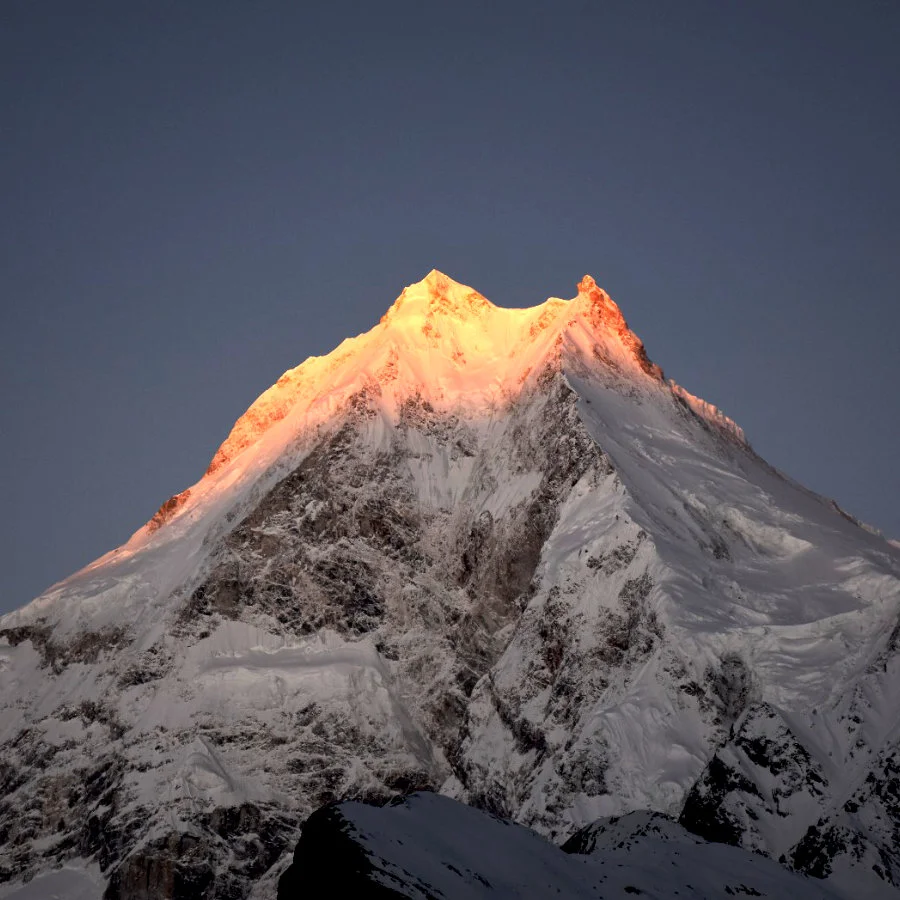
With its imposing height and magnificence, it is a dominant mountain, but the long ridges and valley glaciers oblige easy routes from all directions and relatively easy access to the peak.
The name Manaslu is derived from the Sanskrit word “Manasa,” which literally means “mountain of the spirit.” It is this spiritual connotation that confers due significance to its peak, hence being a destination to trekkers and climbers alike.
The peak rises steeply above the surrounding landscape at a view that can be breathtaking and seen from afar.
In 1956, the first all-women Japanese expedition reached the summit of Manaslu. This had become the first ascension of an 8,000-meter peak for the females. This therefore proves that Manaslu is a challenging yet rewarding mountain. Due to this, mountaineers from all over the world have been drawn to conquer its heights.
Another attraction of this place is the famous Manaslu Circuit Trekking, famous all over, presenting great mountain vistas in one hand, stern and harrowing landscapes in the other. The respect keeps coming forward to the Manaslu region, living the spirit of adventure that Himalayas render to the people of Nepal.
8. Mount Annapurna
Annapurna is the 8th highest of all the 14 mountains over 8,000 meters and the 10th highest peak in the world and in Nepal at 8,091 meters above sea level. This huge Himalayan peak is a part of one gigantic massif hanging east of the Kali Gandaki River, cutting an extremely deep gorge through the Himalayas.
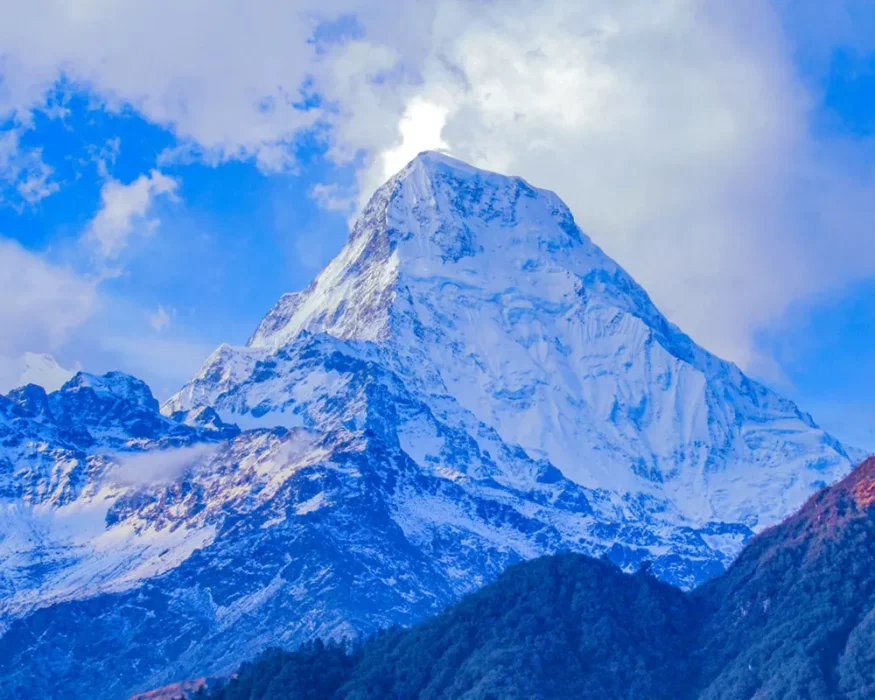
This mountain is famous in itself, not only because of its height but also because it was the 8,000-meter peak climbed very first time in the year 1950.
The name “Annapurna” comes from Sanskrit and can be translated to mean “goddess of harvests” or simply “the provider,” thus showing the awe by which the mountain was treated.
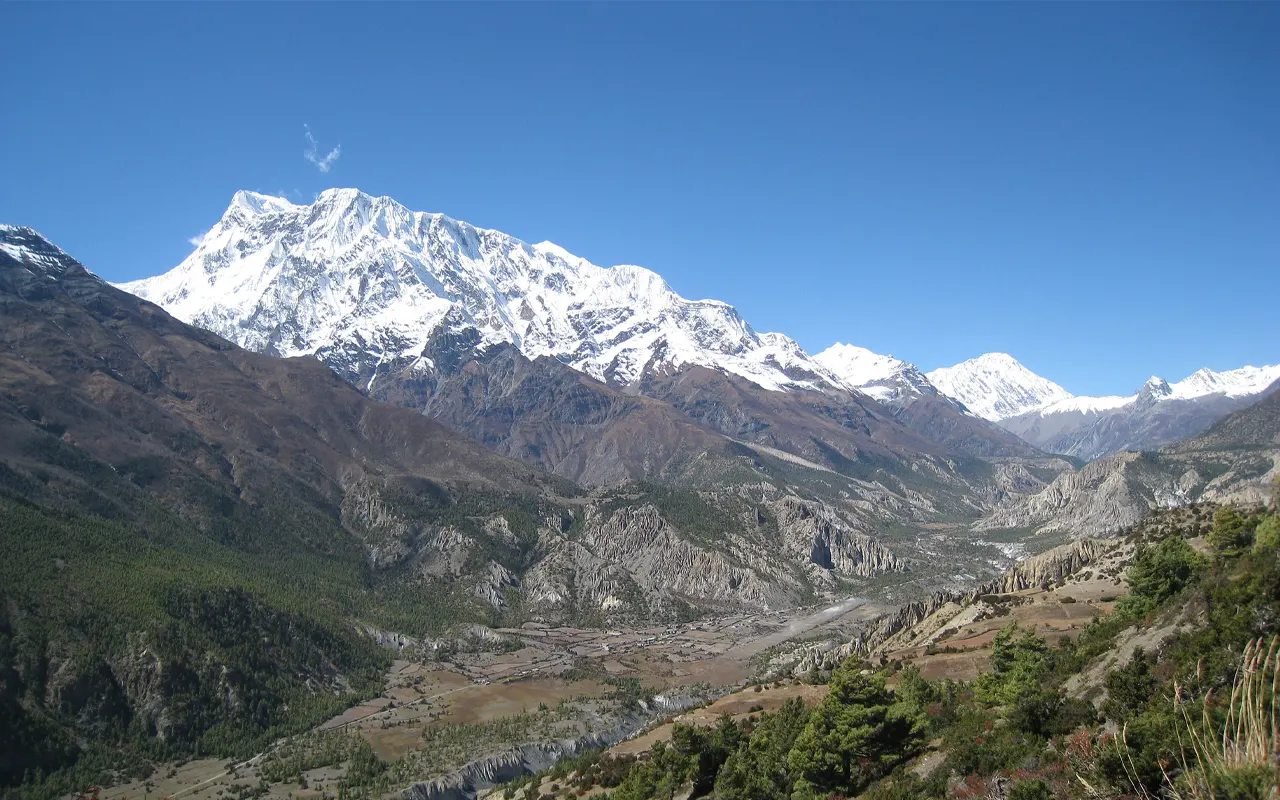
The Annapurna massif encompasses several peaks; the two highest, at either end of the range, west and east, respectively, are Annapurna I and Annapurna II. These peaks have a lot to focus on in the dramatic landscape thrust upon the massif, including those vast glaciers slipping down its western and northwestern slopes.
On the other side, treks to the Annapurna region are some of the most famous across Nepal. The vistas offered of the complete Annapurna Range from some points are simply astounding.
The Annapurna Circuit Trek and Annapurna Base Camp Trek are extremely famous and attract many adventurers from the world over who want to experience the beauty and the challenging terrain of the region.
One among the eight highest mountains in Nepal, Annapurna epitomizes natural beauty. The trekking routes are varied by the attractions of the majestic peaks and therefore are much in number, attracting major exploration in the grandeur of the Himalayas.
The eight highest mountains in Nepal, comprising Mount Everest, do not stand as part of the geography but are rather a symbol of its natural magnificence, rich cultural heritage, and historical importance.
From Everest to Annapurna, these towering peaks standing tall add beauty to the country and form the backbone of its burgeoning tourist industry by drawing mountaineers, adventure seekers, and those in love with nature from all around the world.
These mountains are closely associated with the culture and spirituality of Nepal. The 8 highest mountains in Nepal are also linked with the lore of the Sherpas, who are the mainstays for any expedition to the Himalayas.
Added to this are the vast ranges of flora and fauna, including rare species like the Snow Leopard and the Danphe, which further enhance these areas ecological importance.
Those ranging journeys across the 8 highest mountains of Nepal are much more than a physically challenging task; they forge a spiritual journey and unite one deeply with Nature.
From remote trails of Kanchenjunga to the famous Annapurna Circuit, every trek leaves a different stamp in the memory of the wanderer who roams through these wonderful landscapes.
It is thus that Nepal’s 8 highest mountains form the nation’s heart and soul, identity, and invitation to the whole world to witness the grandeur and experience the sublime beauty of the Himalayas.