

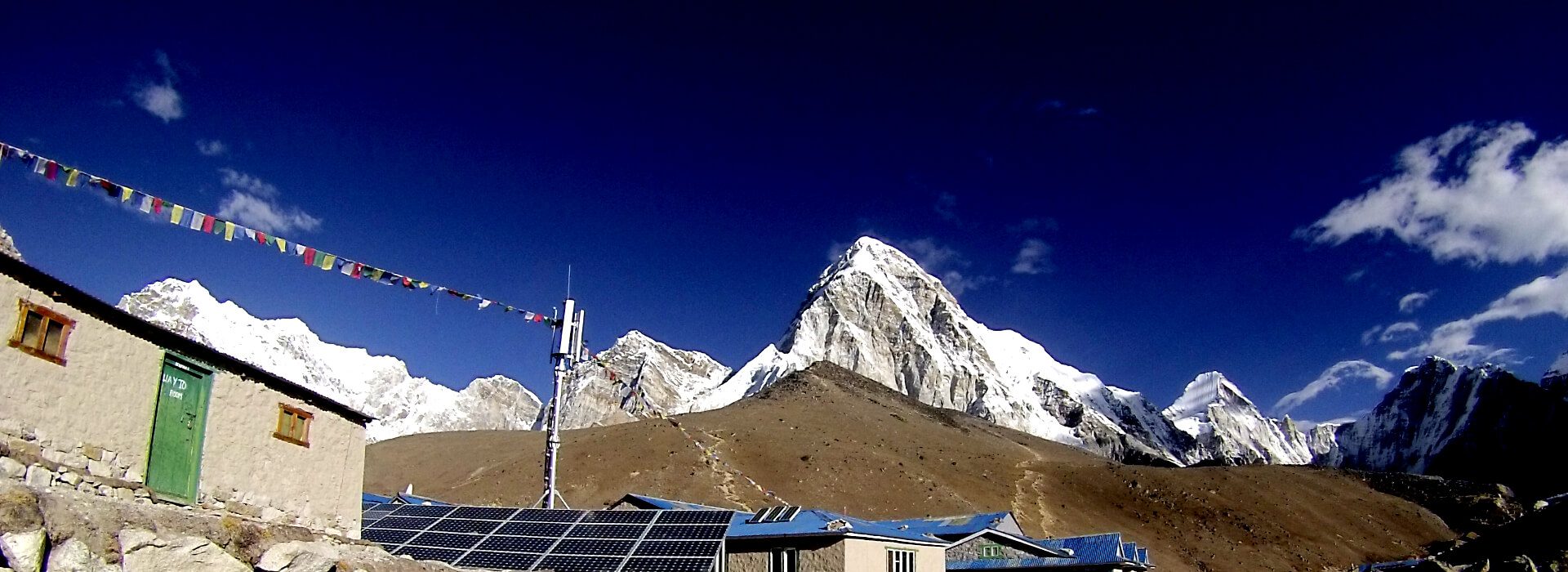
Everest High Passes Trek -21 days


 Trip Duration
  Group Size
  Max. Altitude
  Difficulty
 Meals
Meals - 20 Breakfast
- 16 Lunch
- 17 Dinner
 Accommodation
 - 4 Nights Hotel
- 16 Nights Lodge
 Activities
- Trekking
- Hiking
 Best Season
 - Sep – Nov
- Mar – May
$ 1300USD
- No. of Pax Per person
- 1 - 1 personUS$ 2050
- 2 - 2 peopleUS$ 1750
- 3 - 5 peopleUS$ 1650
- 6 - 9 peopleUS$ 1500
- 10 - 15 peopleUS$ 1400
- 16 + people 9999 US$ 1300
Total Cost:
US$ 2050
- Private trip departures everyday
- No hidden cost
- Local based company
- We can help for big group
- Over 17 years of experience
- According to your needs, we can Customize the itinerary.

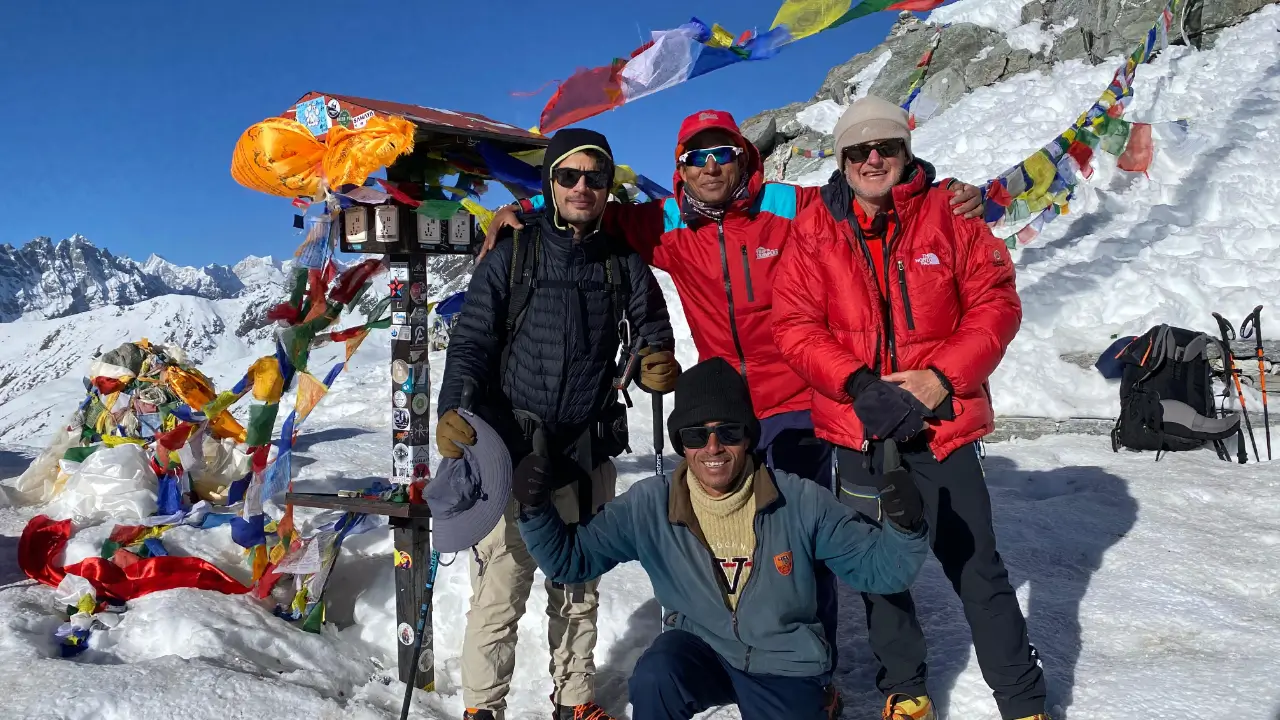
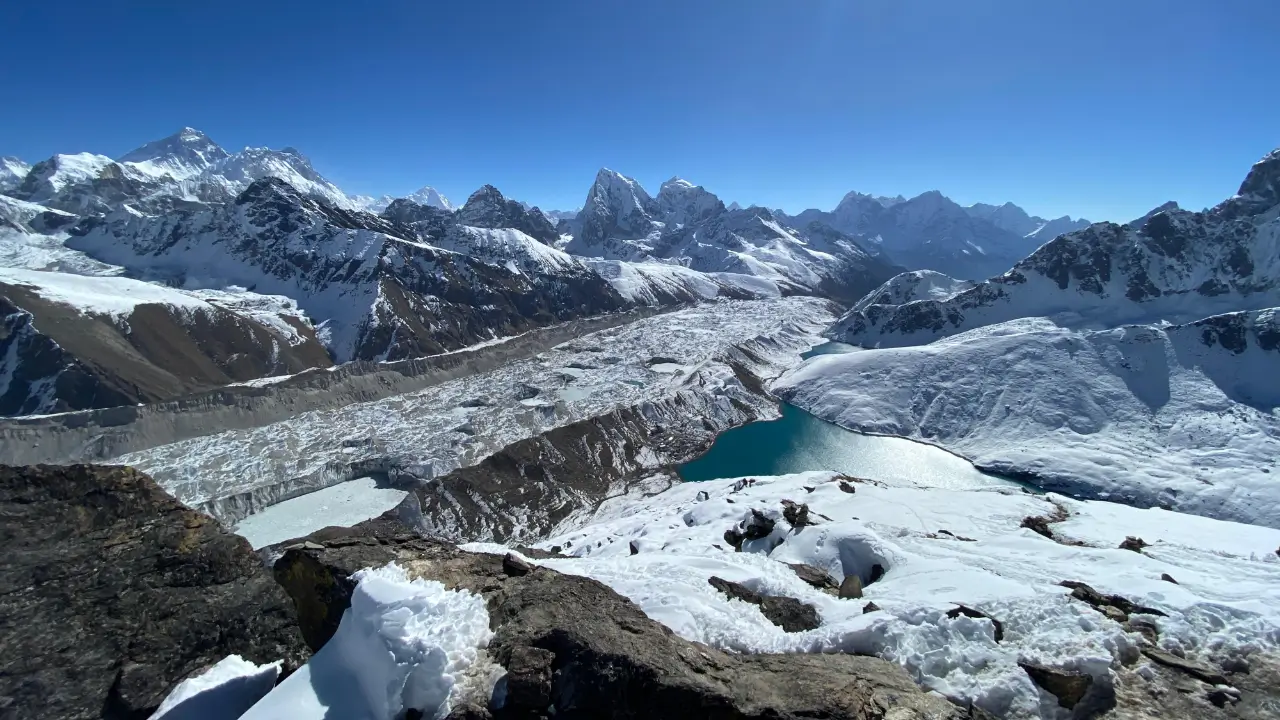
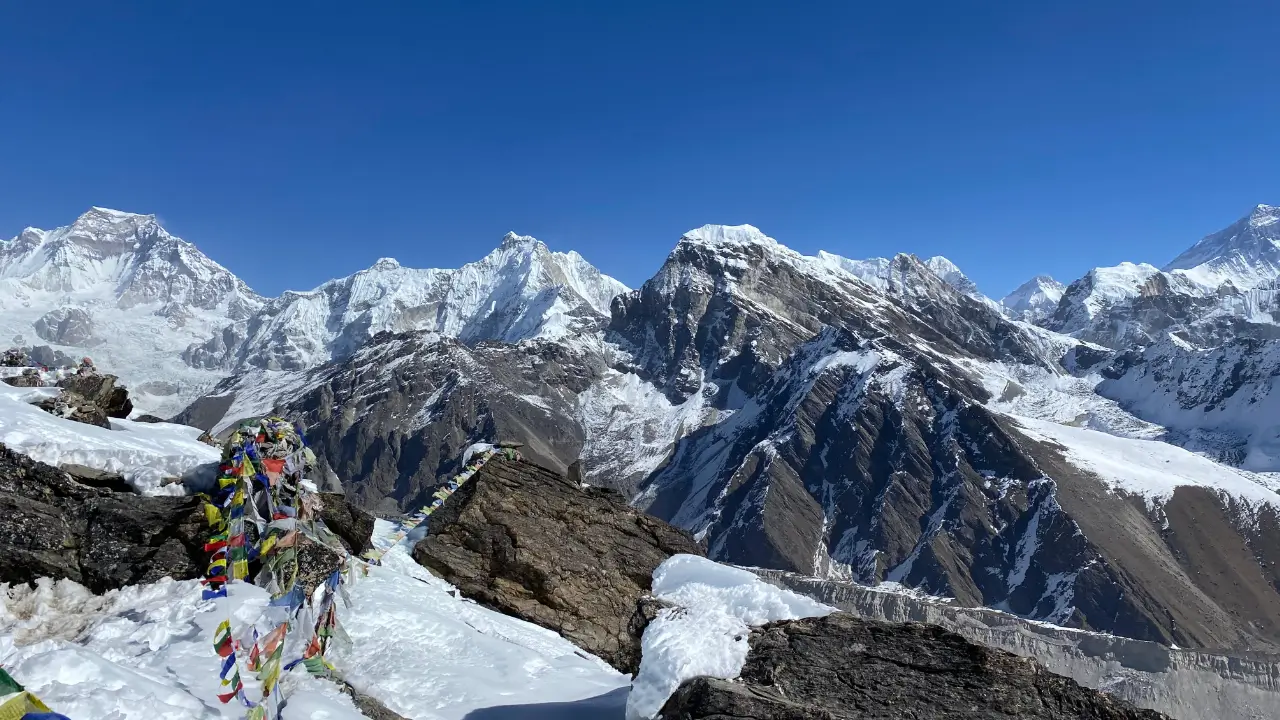
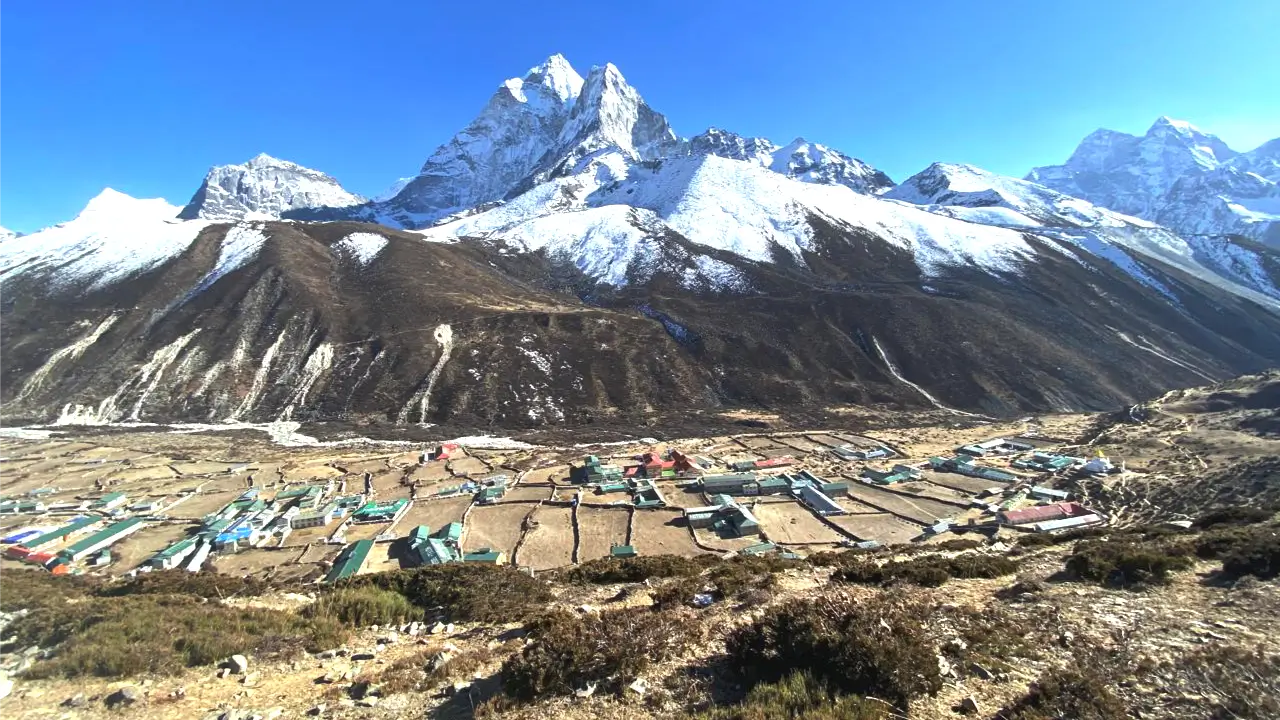
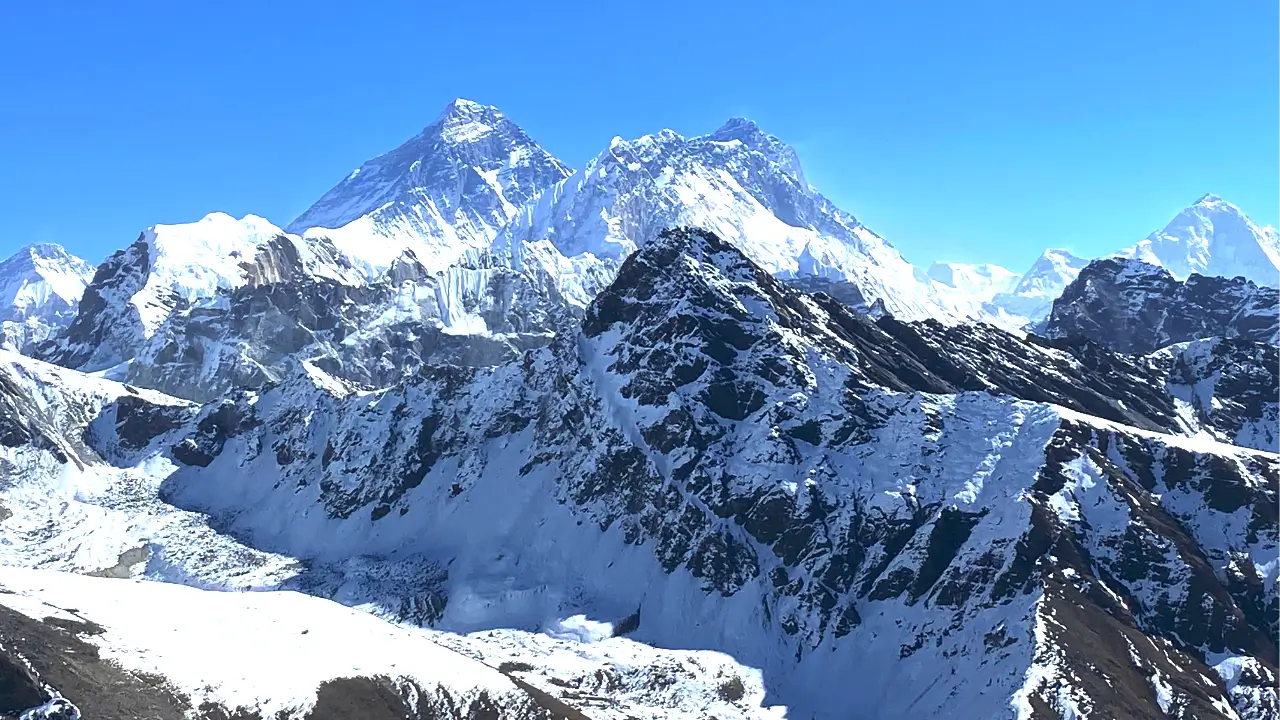
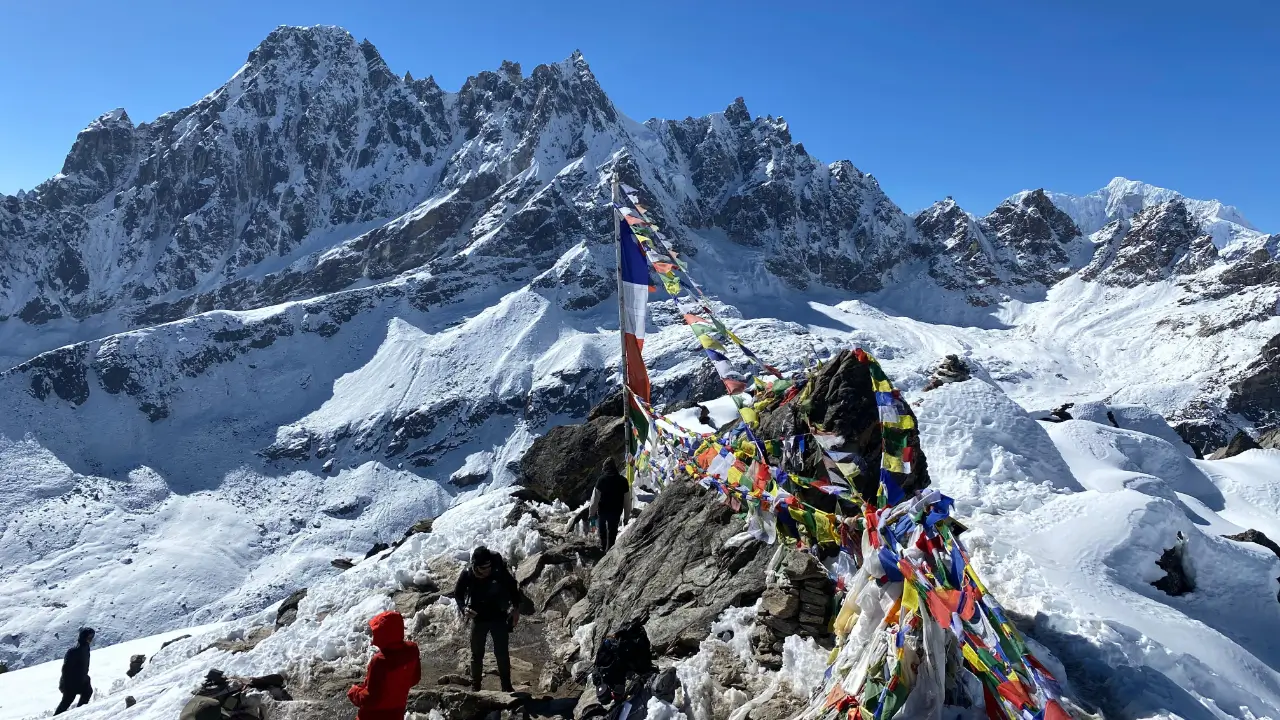
Everest High Passes Trek -21 days Photo Gallery
Itinerary of Everest High Passes Trek -21 days
| Day | Mode | Route Itinerary | Elev.(m) | Duration | Overnight | Included |
|---|---|---|---|---|---|---|
| 01 | Flight | Arrival Kathmandu - Hotel (3KM) | 1,300 | ---- | Hotel | Dinner |
| 02 | Free day | Kathmandu - Trek preparation | 1.300 | ---- | Hotel | Breakfast |
| 03 | Flight/trek | Kathmandu - Lukla - Phakding (7.5KM trek) | 2,860/2,610 | 3/4 hrs | Lodge | B L D |
| 04 | Trek | Phakding - Namche Bazar | 3,340 | 6/7 hrs | Lodge | B L D |
| 05 | Hike day | Hike - Everest View Hotel | 3,962 | 4/5 hrs | Lodge | B L D |
| 06 | Trek | Namche - Thame Village | 3,800 | 5/6 hrs | Lodge | B L D |
| 07 | Trek | Thamel - Merlung - Lungden | 4,200 | 6/7 hrs | Lodge | B L D |
| 08 | Trek | Lungden - Renjola Pass - Gokyo | 5,360/4,750 | 7/8 hrs | Lodge | B L D |
| 09 | Hike | Hike - Gokyo Ri | 5,357 | 4/5 hrs | Lodge | B L D |
| 10 | Trek | Gokyo Lake - Thagnak | 4,750 | 3/4 hrs | Lodge | B L D |
| 11 | Trek | Thagnak - Chola Pass - Dzongla | 5,420/4,830 | 8/9 hrs | Lodge | B L D |
| 12 | Trek | Dzongla - Lobuche | 4,940 | 4/5 hrs | Lodge | B L D |
| 13 | Trek | Trek - Everest B C - Gorakshep | 5,364/5,180 | 8/9 hrs | Lodge | B L D |
| 14 | Trek | Trek - Kala Patthar - Lobuche | 5,545 | 5/6 hrs | Lodge | B L D |
| 15 | Trek | Trek - Kongma la Pass - Chhukung | 5,535/4,730 | 8/9 hrs | Lodge | B L D |
| 16 | Trek | Trek - Chhukung Ri - Pangboche | 5,546/3,985 | 8/9 hrs | Lodge | B L D |
| 17 | Trek | Trek - Tengboche - Namche | 3,440 | 6/7 hrs | Lodge | B L D |
| 18 | Trek | Namche - Lukla | 2,860 | 6/7 hrs | Lodge | B L D |
| 19 | Flight | Lukla - Kathmandu - Hotel | 1,300 | 30 m | Hotel | Breakfast, |
| 20 | Rest | Rest - Shopping day | 1,300 | ----- | Hotel | Breakfast, |
| 21 | Flight | kathmandu - Final Departure | ----- | ----- | ----- | Breakfast, |
Includes/Excludes
What's included
- Pickup and drop service from and to airport in private vehicle.
- Accommodation in a hotel in Kathmandu with complimentary breakfast.
- Flight between Kathmandu and Lukla round Airfare/taxes
- Pasang Lyamu Roral Municipality entrée permit
- Sagarmatha National park Entry Permit
- Meals during trek ( 3 Meals a day , Breakfast, lunch and dinner)
- Seasonal fruits after night meal in trekking
- Accommodation in Lodge during trekking
- English speaking guides with proper first aid training and his expenses and insurance paid for.
- We provide Assistance guide over 6 People in the group and his Expenses
- Porter throughout the trek( 1 porter = 2 people), his expenses and insurance
- Basic equipment for trekking such as down jacket, sleeping bag, duffel bag if you need, after trekking return us.
- Free Ambition Himalaya t-shirt
- Normal First aid kit with guide
- Taxes, paperwork and necessary documentation, and company fee.
- Complimentary welcome or farewell dinner in Kathmandu at a cultural restaurant [optional]
- Pre-trip meeting in Kathmandu before the trek
Optional Addons
(Available addons on extra cost)
- Luxury Hotel in Kathmandu
- Kathmandu Sightseeing tour
What is excluded
- Visa fee and international airfare.
- Emergency evacuation and insurance.
- Extra food, Bar and beverage , hot and cold drinks, telephone bills, dessert,
- Laundry charges and shower fees.
- Wi-Fi and battery charging bill during the trek
- Lunch and dinner in Kathmandu
- Costs arising from natural calamities, mishaps or anything beyond our control (Costs are not refundable and transferable in any mean if you leave the trek voluntarily and want to return from the trek)
- Tips, gifts and similar extra payment to guide and porters.
- Things not mentioned in the ‘cost includes’ section.
Special Note for Trekkers:
During peak season, the Civil Aviation Authority of Nepal may operate flights from Ramechhap to Lukla and vice versa, aiming to ease congestion at Kathmandu’s Tribhuvan International Airport. In the event of affected departures, you will need to rise early on day 2 and embark on a scenic 135-kilometer drive from Kathmandu to Ramechhap airport, with private transfers offered at no extra expense. We strive to keep you fully informed with the latest flight information, ensuring your journey proceeds as smoothly as possible.
Important Note:
The flight from Kathmandu to Lukla is usually reliable, but bad weather can cause delays or cancellations. Additional fees for a hired helicopter may apply, ranging from $300 to $600. Itineraries may or may not include an extra day as a buffer for delays, so we suggest adding a few days to the end of your trip in case of any delays. Extra days should be added after the journey, not at the beginning.
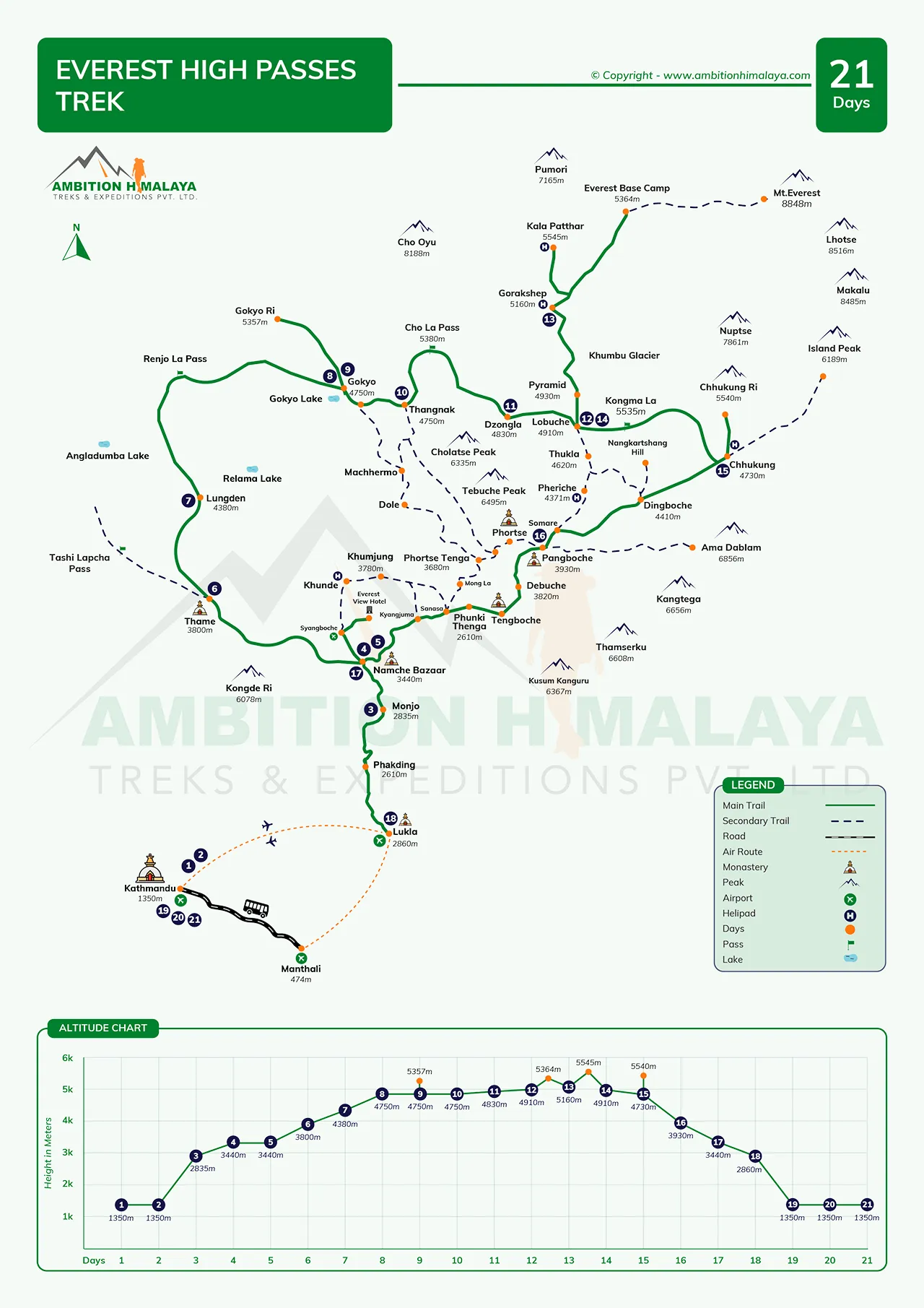
Route Map & Altitude Chart
Private Group Discounts Available
| No. of People | Price Per Person |
| 1 Pax | US$ 2050 |
| 2 Pax | US$ 1750 |
| 3-5 Pax | US$ 1650 |
| 6-9 Pax | US$ 1500 |
| 10-15 Pax | US$ 1400 |
| 16 Over | US$ 1300 |
Trip Information
Best Time
The most optimal months to complete the Everest High Passes Trek are in the autumn season (September to November) and spring (March to May). The months present the best weather, clear skies, and warmth in trekking conditions required for going across the high mountain passes like Renjo La, Cho La, and Kongma La.
During the fall, the climate is clear and dry, and the view is magnificent. The trekkers will have a clear view of famous peaks like Ama Dablam, Cho Oyu, and Makalu, which are crystal clear.
The Gokyo Lakes are turquoise in color, the Khumbu Glacier is extremely large, and the views of Kala Patthar and Gokyo Ri are also at their best in this season. However, spring has fewer cold temperatures, there are colorful rhododendron forests in the lowland areas, and the mountain views and the daylight are excellent.
Everest High Passes Trekking is even more difficult in the off-season. During winter, snowfall is heavy, the roads are icy, and the weather is very cold, thus making high passes dangerous or impassable.
Monsoon season (June to August) leads to heavy rain, slippery roads, poor visibility, and postponements of flights towards Lukla. The best season will guarantee safer transgression, more spectacular scenery, and a more fun trekking expedition to this challenging yet rewarding Himalayan adventure.
Elevation and Distance
The Everest High Passes Trek is a high-altitude adventure demanding high elevation gain and a high distance of walking on a daily basis over a period of 21 days. After a brief flight from Kathmandu, the expedition starts at Lukla with an altitude of 2,860 meters.
Still there, the route slowly moves up through Phakding, Namche Bazaar, Thame, and Lungden, giving time to be properly acclimatized before reaching the higher alpine region.
The lowest point of the trek is 1,300 meters in Kathmandu, where the trek begins and ends. The highest point is Kala Patthar (5,545 meters), providing one of the nearest perspectives of Mount Everest.
The other significant high points are Kongma La Pass (5,535 m), Cho La Pass (5,420 m), and Renjo La Pass (5,360 m); thus, this trek is one of the highest and most physically demanding routes in the region of Everest.
The walking part of the journey between Lukla and Everest Base Camp and Lukla is a distance of about 160 to 170 kilometers, varying according to the side trips like the Gokyo Ri and Chhukung Ri. The range of daily walking is between 7 and 15 kilometers, and the trekking hours are between 3 and 9 hours daily; hence, endurance and fitness are very crucial during the trek.
Difficulty and Altitude Sickness.
It is regarded as one of the most challenging and physically demanding treks in the Everest region. This expedition entails many days of walking, steep ascents and descents, rocky paths, and several crossings of high mountain passes that are over 5,300 meters above sea level, such as Renjo La, Cho La, and Kongma La.
Some of the trekking days involve a period of 7-9 hours of walking continuously at high altitude, usually in icy or snow-covered areas, and as such, the trek is only doable by the well-trained and fully equipped trekkers who have good physical fitness and strong mental stamina.
One of the key issues on this trek is altitude sickness because the increase in elevation is very rapid. The expedition begins at Lukla (2,860 m) and progressively ascends to the extreme levels, and the peak of the expedition is Kala Patthar (5,545 m). Acute Mountain Sickness (AMS) can present with the following symptoms: headache, dizziness, nausea, loss of appetite, and fatigue.
The itinerary also involves acclimatization walks in such destinations as Namche Bazaar and Gokyo, which are critical in assisting the body to adapt to thin air.
To minimize the chances of altitude sickness, proper acclimatization, a slow trekking pace, being well hydrated, and avoiding alcohol are important considerations. During the Everest High Pass Trek, it is highly advised that one carry the right medication and travel insurance, which includes helicopter evacuation as a precaution, should the need arise to be evacuated.
Maximum and minimum walks per day
The Everest High Passes Trek is characterized by a large variety of hours of daily walks because of the alternation of the terrain, elevation, and passing through high mountain passes. Based on the itinerary, the shortest number of walking days will be the acclimatization day and the hike day, in which the hours spent on the trek will be relatively shorter.
The day with the lowest distance is the walk to Everest View Hotel in Namche Bazaar on Day 5, and it will take approximately 4 to 5 hours and is primarily not an extended walking day but a day of acclimatization. The other day was the walk between Gokyo Lake and Thagnak, which happens to be short and requires about 3-4 hours.
The most challenging and longest walking days are when passing through high passes. Day 11, Cho La Pass Thagnak to Dzongla, is a walk that takes about 8 to 9 hours walking on a steep, icy, and rugged path.
In the same way, Day 13 (trek to the Everest Base Camp via Gorakshep) and Day 15 (trek to the Kongma La Pass to Chhukung) are also 8 to 9 hours of constant trekking, so they are also among the most difficult days of the trip.
Overall, the trekkers go on an average walk of between 120 and 130 hours over the whole itinerary during an estimated 16 full trekking days. This involves a lot of time and a hectic timetable, and this explains why the Everest High Passes Trek is physically challenging and requires proper fitness and stamina.
Accommodation
Accommodation on the Everest High Passes Trek is a service that is aimed at making trekking in the high Himalayas comfortable. Trekkers in Kathmandu occupy an average hotel with an individual room, with all modern amenities and breakfast being offered free of charge. Such hotel accommodations enable trekkers to relax, get ready to continue with the trek, and relax after the trek.
Clean washrooms, hot showers, heating where necessary, Wi-Fi, and comfortable bedding are typical features of Kathmandu hotels and guarantee a convenient beginning and conclusion of the adventure.
The trekking part will be accommodation in the mountain lodges or teahouses in the village, which include Phakding, Namche Bazaar, Thame, Gokyo, and Chhukung. Lodges are simple and neat with twin or triple sharing accommodations consisting of mattresses, blankets, and pillows.
There are normally communal washrooms, and during higher altitudes, running hot water could be restricted. A lot of lodges offer hot showers at an extra cost and minor room heaters or electric heaters in certain places. Food, such as breakfast, dinner, and lunch, is eaten in shared food halls.
Even though they are simple, the lodges in the Everest High Passes Trek offer warmth, safety, and the true Himalayan experience. The accommodation will be part of the trip, as trekkers can experience hospitality in the area, meet Sherpas, and relax well after tiring days of trekking.
Foods and Drinks
Food and beverages in the Everest High Passes Trek are well arranged and structured in a way that will ensure that trekkers remain active and healthy during the high-altitude expedition.
In Kathmandu, accommodation will be in a hotel with a free breakfast, which normally consists of eggs, toast, cereal, fruit, tea, and coffee. It is also an optional welcome or farewell dinner in a cultural restaurant where the trekkers can have traditional Nepali food in a soothing environment before or after the trek.
The lodges offer three meals a day, that is, breakfast, lunch, and dinner, during the trekking days. Breakfasts usually consist of porridge, eggs, pancakes, bread, or noodles. Lunch and dinner include favorite Nepali and Tibetan foods like dal bhat (rice with lentil soup), momo (dumplings), noodles, soups, potatoes, and vegetables.
Fruits are served after dinner, which are seasonal, to supplement the intake of vitamins and refreshments. The trekkers are recommended to exclude alcohol and meat during the trek to enhance better acclimatization and energy control.
It is important to maintain hydration; therefore, trekkers ought to have reusable water bottles and water purifying pills to make sure that they drink safe water. All in all, the Everest High Passes Trek offers healthy, hearty, and locally produced foods that are conducive to stamina and boost the adventurous Himalayan trekking.
Alternative Routes
The Everest High Passes Trek has various alternative paths that the trekkers may follow depending on time, fitness, and experience. The most popular option is to make two high passes (out of three), and most often passing Renjo La and Cho La without passing Kongma La; this shortens the number of trekking days and makes it easier.
The other alternative is primarily the route of Gokyo Valley with a crossing of Renjo La Pass and additional days around the Gokyo Lakes and climbing the Gokyo Ri, but not moving on to the Everest Base Camp.
Other trekkers would want to take the popular Everest Base Camp trek together with Cho La Pass alone in order to make an itinerary that is also challenging and shorter. The classic Everest Base Camp trail through Namche Bazaar and Tengboche is more popular among those who have limited time or are not so experienced at high altitudes.
These alternative paths continue to offer breathtaking mountain scenery, Sherpa culture, and glacier scenery, besides flexibility in the Everest High Passes Trek region.
Can a beginner join this trek?
The Everest High Passes Trek is not the kind of trek that complete beginners would normally prefer to opt for because this is one of the hardest treks in the Everest region. This is a walking expedition that includes numerous days of walking, hiking up and down steep trails and rugged features, and traversal of three mountain passes with elevations of elevations more than 5,300 meters.
On certain days, trekkers are required to walk as much as 8 to 9 hours as they experience thin air, cold weather conditions, and weather that changes at a very fast rate. The issue of altitude sickness is critical, though it can be serious in instances where a person has no prior experience of high altitude levels.
But in case of excellent physical fitness, strong mental determination, and proper preparation, even beginners are allowed to join with caution. Previous trekking experience, frequent endurance exercises, and familiarity with the symptoms of altitude are strongly advised before trying this route.
Acclimatization days are to be taken seriously, and joining a guide with experience is crucial to ensuring safety, as well as detailed travel insurance. The Everest High Passes Trek can be done right with the preparation and help, though it is still a demanding one.
Charging of gadgets, Internet, and communication
Remaining connected and keeping gadgets charged may be a difficult task in the Everest High Passes Trek, as some of the locations are remote and don’t have the best connectivity. The majority of the teahouses and lodges on the trekking route offer simple charging facilities at some fee.
However, the power supply can be unreliable, particularly at the higher altitudes such as the Cho La, Renjo La, and Kongma La passes. Power banks or solar charging banks are highly recommended to have continuous access to vital gadgets.
In places like villages, like Thame, Lungden, and Gokyo, the internet is scarce and slow, and where it exists, it could be just by Wi-Fi at certain lodges. The coverage of the mobile network is usually good in large villages such as Namche Bazaar, Tengboche, and Lukla, but becomes inconsistent in the high or extreme regions.
Communication can be enhanced by satellite phones or local SIM cards, which have data packages. Proper planning will also see to it that the trekkers are able to be in touch and keep their devices charged during the Everest High Passes Trek.
Preparation and Fitness
The Everest High Passes Trek is not an easy task, and both preparation and fitness are essential to complete the Everest High Passes Trek successfully; otherwise, it is not a trek that can be completed by all beginners. The trip requires days of walking and going up and down the same mountain several times above 5,300 meters, and cold, windy, and snowy conditions.
The training should start at least three months before traveling, and it must include cardiovascular endurance, leg strength, and stability of the core. Hiking with a loaded backpack, climbing stairs, cycling, and running are some of the activities that aid in stamina building. Knee, hip, and ankle strength training minimizes the risk of injuries on sharp descents.
Mental preparation is also a critical factor since the rugged terrain and unpredictable climatic conditions demand patience and endurance. Previous high-altitude trekking experience is of great help before the trek at high altitude.
Slow walking, good breathing, hydration, and diet are practices that should be done. Sufficient rest, good equipment, and slow ascending days in the schedule favor safe adjustment to the Everest High Pass Trek.
Permit
You do not have to worry about any form of permits to organize the trek to the Everest High Passes Trek, as it is all in the trekking package. Trekkers do not have to bother over the official documentation, as we take care of the paperwork, which makes the journey hassle-free and smooth.
The primary permits needed to do this trek are the Sagarmatha National Park Permit (SNP) and the Khumbu Pasang Lhamu Rural Municipality Permit, which is a compulsory permit to do treks in the protected places and at high altitudes.
The presence of these permits guarantees the rights and safe access of all trekkers to such destinations as Namche Bazaar, Gokyo Valley, and the high passes like Renjo La, Cho La, and Kongma La. The guides typically carry copies, although trekkers may be required to provide their permits at police checkpoints or park entrances on the route.
The Everest High Passes Trek involves permits as part of the package, and thus, the trekkers will be fully involved in the adventure and make the experience a smooth and well-scheduled Himalayan adventure.
Transportation
The Everest High Passes Trek can be transported by flight, starting with a scenic flight between Kathmandu and Lukla, which is the most accessible and time-saving method to commence the trek.
It is a scenic ride of approximately 30 to 40 minutes and allows the viewers to have a close-up view of the Himalayan Mountains, including Everest, Lhotse, and Nuptse, providing the trekker with an eye-opening experience as he or she embarks on the trip. The flight back to Kathmandu after spending 21 days on the trek also ensures that one has the convenience of going back to Lukla.
One may have an add-on experience of the Kathmandu to Lukla trek, through beautiful villages, terraced fields, and rivers. Nonetheless, this comes at the cost of a few days of walking, and one needs to be very fit because even the walk itself is of moderate to high altitude increase.
Altogether, the transportation is well-thought-out in order to provide an efficient and convenient trekking experience.
Insurance
Insurance is strongly advised for anyone trying to participate in the High Passes Trek on Everest, but it comes outside the trek package. This expedition encompasses high altitudes, rough terrain, and unpredictable weather conditions, and that is why extensive insurance is necessary as a precaution for safety and tranquility.
The trekkers must buy the emergency medical insurance, evacuation insurance, and even helicopter rescue insurance because extreme conditions of high altitude, injuries, or diseases in isolated places might demand immediate help.
The fact that the policy includes the cancellation of the trips, missed baggage, and the delay is of importance as well because the flights to and out of Lukla are frequently affected by the weather conditions. Good insurance will also mean trekkers do not have to worry about the risks that may occur, and can concentrate on the adventure.
Even though the Everest High Passes Trek is a journey to remember, with the views of the Himalayas being breathtaking, the insurance is an important element of preparation. It is highly recommended that any trekker select a plan that clearly involves high-altitude trekking and emergency evacuation.
What to Expect
The Everest High Passes Trek is a challenging and satisfying trek to the Himalayas and a memorable experience for experienced trekkers. The length of walks will be lengthy and on rocky paths, through three high passes, such as Renjo La, Cho La, and Kongma La, which will give you panoramic views of Everest, Lhotse, Nuptse, Ama Dablam, and other Himalayan giants.
Trekkers will go through Sherpa villages, Namche Bazaar, Thame, and Pangboche, where there is traditional culture, monasteries, and hospitality, which will offer a special trekking experience.
Throughout the hike, you have a hiking path that switches between scenic woods, glacial moraine, and Alps scenery. Gokyo Lakes and Gokyo Ri are great places that can give excellent natural beauty, whereas the Everest base camp and Kala Patthar are other places that can give the best views in the region.
Trekkers are expected to suffer cold nights in lodges, long walking days, and potential difficulty with altitudes, particularly where they have to cross the high passes.
Another adventure that can be taken in the Everest High Passes Trek is to see the endangered wildlife and the Khumbu Icefall. Good equipment, training, and readiness are needed because this adventure trek is a mixture of culture and adventure, coupled with some of the most beautiful scenery in the world.

Good to know, before you travel
Want to learn more about this journey in-depth? Essential Trip Information includes a thorough itinerary, information for visa processing, Accommodations, Food , Acclimatization’s and pretty much anything else you could possibly need to know about this tour. Read more inside.
Frequently Asked Question
The trip takes 21 days, which includes flight and rest days.
Its peak is Kala Patthar, which is 5,545 meters.
Ideally, it is between September and November and between March and May.
It is not usually suggested to a total beginner.
Hotels in Kathmandu, including breakfast, and lodges on the trek.
Yes, breakfast, lunch, and dinner are taken during trekking.
Yes, all the required permits are covered in the package.
Flight to Kathmandu: trekking to Lukla is not compulsory.
Insurance is strongly suggested yet excluded.
The journey is not easy, and there is a lot of walking and elevation.
Everest, Lhotse, Nuptse, Ama Dablam, Gokyo Lakes, and Khumbu Glacier.
Wi-Fi is not very extensive in some lodges; there is mobile connection in big villages.
Warm clothes, walking sticks, a first aid kit, and high-altitude equipment.
Yes, there can be alternative routes and side hikes.
The length of walking that is taken daily ranges between 3 and 9 hours depending on the route and pass.
Quick Inquiry Form
 Read all reviews in Tripadvisor
$ 1300USD
- No. of Pax Per person
- 1 - 1 personUS$ 2050
- 2 - 2 peopleUS$ 1750
- 3 - 5 peopleUS$ 1650
- 6 - 9 peopleUS$ 1500
- 10 - 15 peopleUS$ 1400
- 16 + people 9999 US$ 1300
Total Cost:
US$ 2050
- Private trip departures everyday
- No hidden cost
- Local based company
- Over 17 years of experience
- Trip Customization