
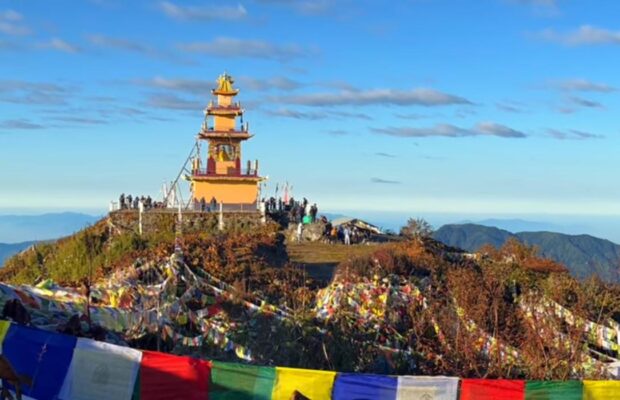
Ama Yangri: A Blend of Spirituality, Culture, and Mountain Majesty
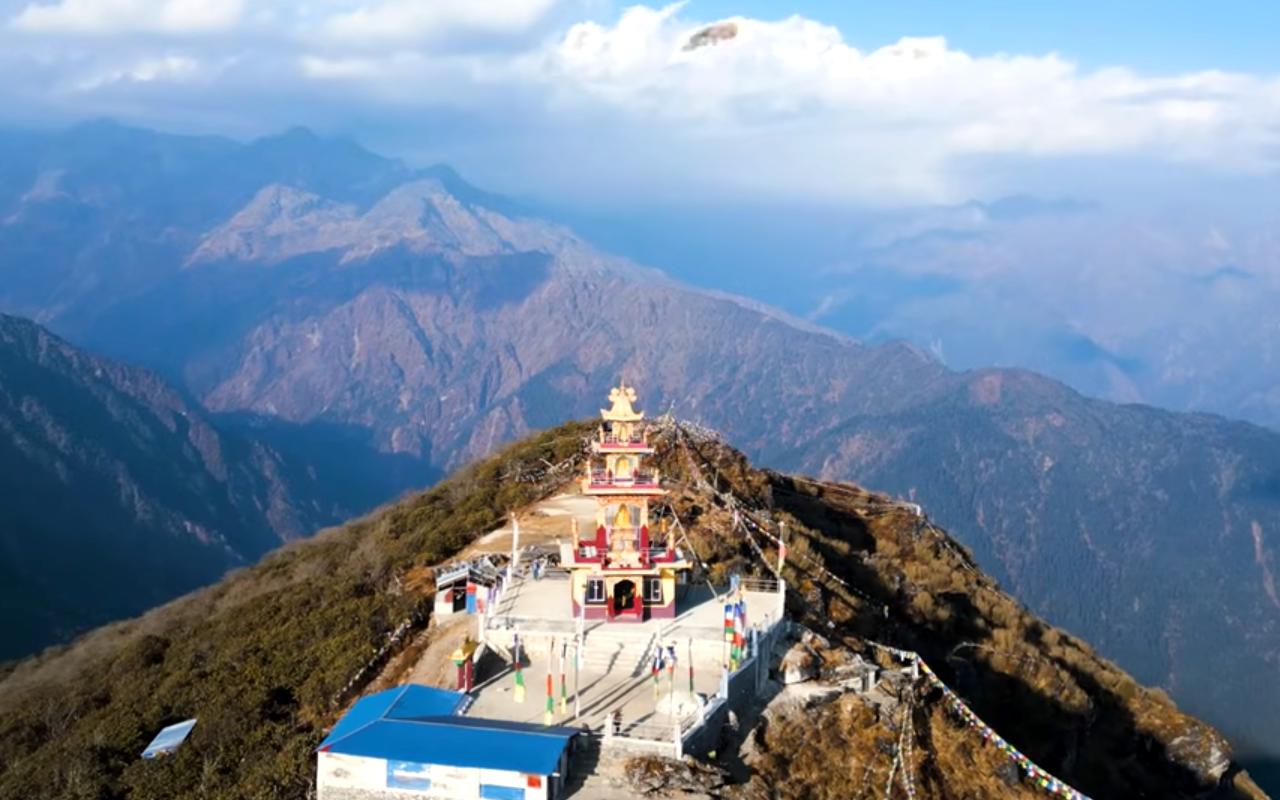
Nestled about 90 kilometers north of Kathmandu in Nepal’s Sindhupalchok district, Ama Yangri is a sacred peak rising to about 3,770 meters. This modestly high Himalayan summit crowns the Helambu region — a lush, terraced landscape famed for its Tibetan Buddhist heritage and alpine forests.
From Ama Yangri’s summit, the entire Kathmandu Valley and surrounding ranges unfold like a map, making it an unparalleled viewpoint.
The name itself means “Mother Protector”, reflecting the mountain’s guardian role in local lore. Fit hikers even see it as a weekend pilgrimage: leave Kathmandu on Friday, summit early Sunday, and return by evening. For many, Ama Yangri is like Kathmandu’s closest high Himalaya escape. The Helambu villages are primarily inhabited by the Hyolmo (Sherpa) people, whose language and customs closely resemble those of Tibet.
In fact, the very name Helambu comes from the Sherpa words “ha” (potato) and “labu” (radish) – staple crops historically grown here. Nearly all villagers practice Tibetan Buddhism of the Nyingma lineage (often blending in Bon animist rituals). So you’ll see prayer flags, rock-carved mani walls, and small stupa shrines decorating every trail and village.
In 2015, a massive earthquake devastated much of Helambu (flattening old gompas and homes). The communities have rebuilt most structures with sturdy materials, so today’s trekkers find mostly new tea-houses and lodges. Your visit helps this recovery: at each stop, your spending directly supports local families.
Spiritual and Cultural Significance of Ama Yangri
For the Hyolmo people and local Buddhists, Ama Yangri is far more than a scenic peak – it is a living deity. Traditional lore says Ama Yangri was a dakini (female spirit being) who became the guardian goddess of Helambu through her compassion. Villagers pray to her mountain form for long life, safety, and good fortune before long journeys.
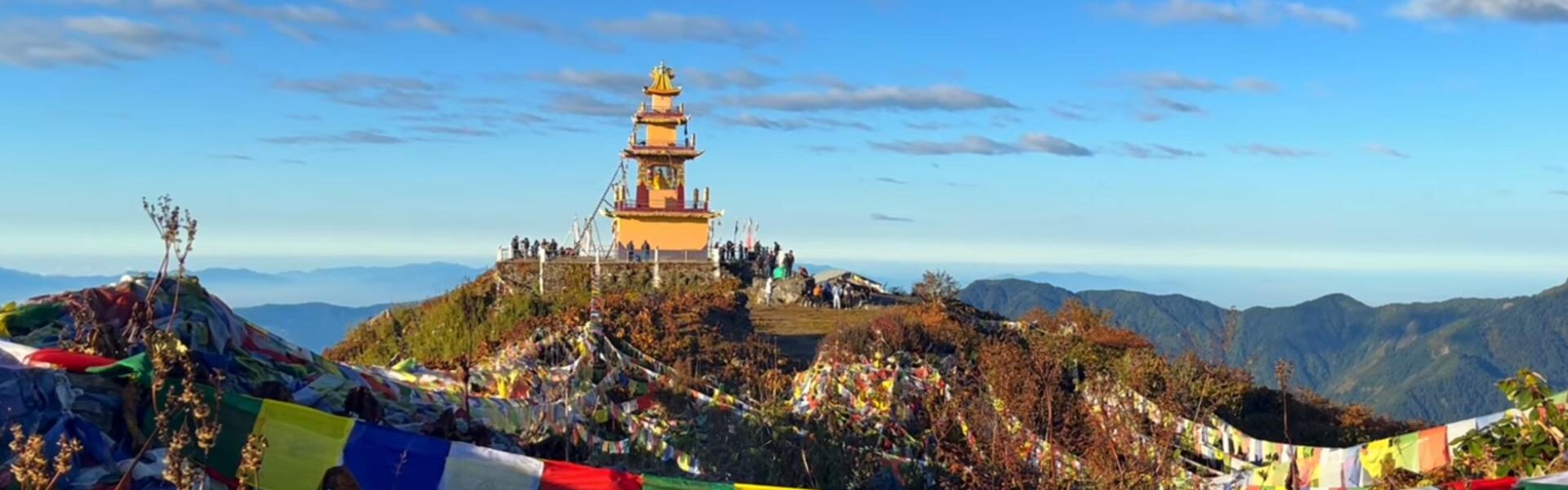
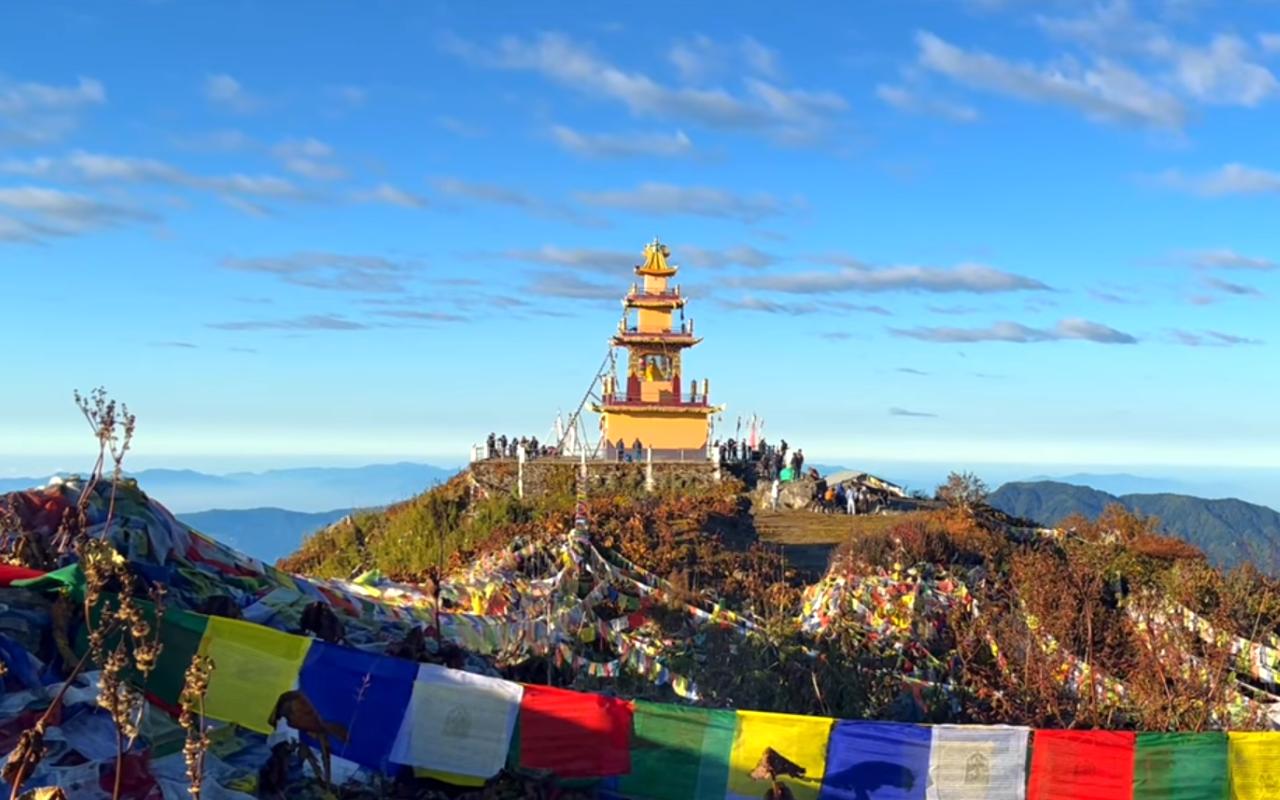
It is common to make offerings (flowers, grains, incense) at the little shrine on the trail or even at the summit to seek her blessings. In fact, at the peak of Ama Yangri is a tiny gompa (shrine) called Ama Yangri Zangdopelri – pilgrims circle its prayer wheels and place stones there as offerings.
Ama Yangri’s star event is the Chaitra full–moon puja (around March/April). On that sacred day, Hyolmo villagers from across Helambu wake before dawn and climb Ama Yangri’s slopes. A monk conducts a morning-long puja (blessing ritual) at the summit, and by mid-day the community gathers to dance and offer local drinks – barley beer (chang), home-brewed wine (raksi), butter tea, and sweet rice wine – in the goddess’s honor. By evening, the rituals end and the mountain is left silent again, the incense smoke drifting down through its forests.
The spiritual tapestry of Helambu is also woven with legends of Padmasambhava (Guru Rinpoche), the 8th-century Buddhist master. Old texts and oral history say Padmasambhava meditated in the Helambu valley before traveling to Tibet.
His disciples later built some of the first monasteries and placed mani stones as they trekked these trails. Even today, you’ll pass through mani walls and small chortens (stupas) tracing his legacy. For example, the village of Tarkeghyang has a historic 19th-century gompa lined with prayer wheels – pilgrims pause here to chant and spin the wheels for merit.
Himalayan Majesty: Views, Flora, and Fauna
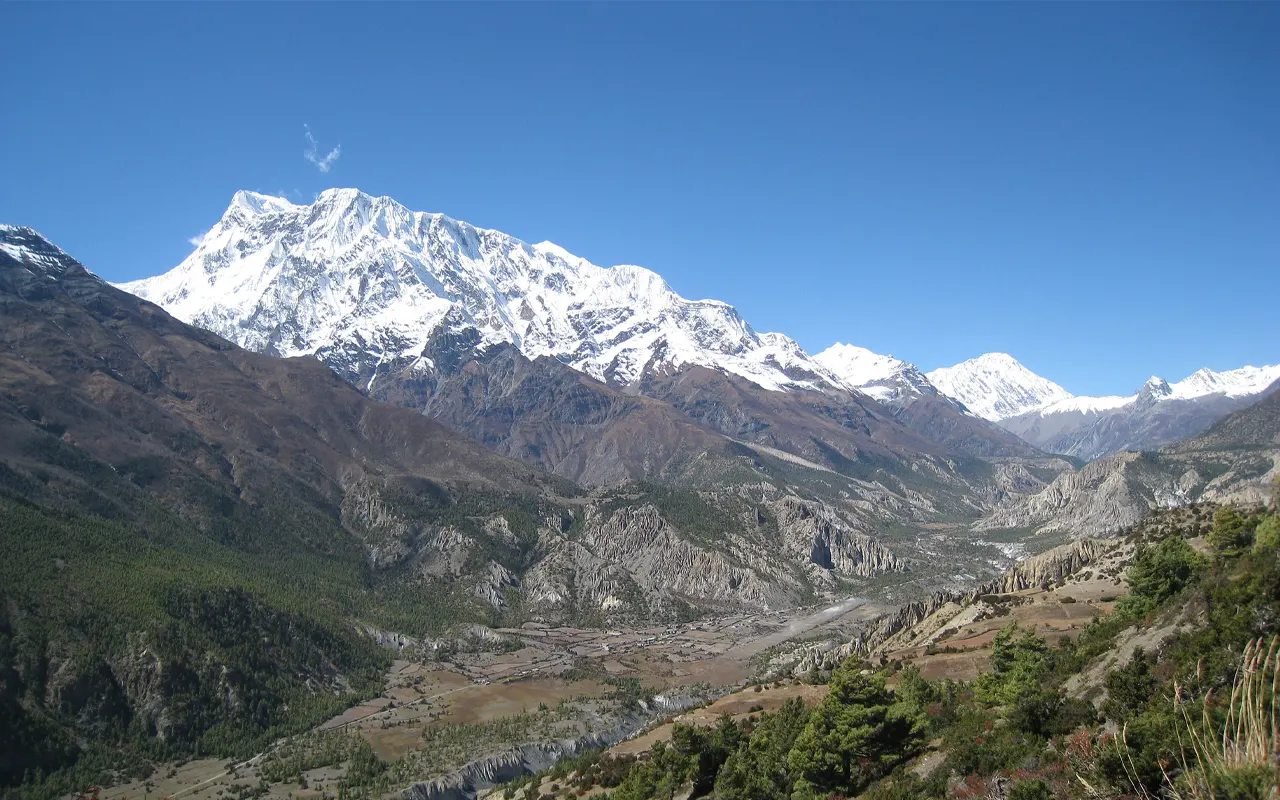
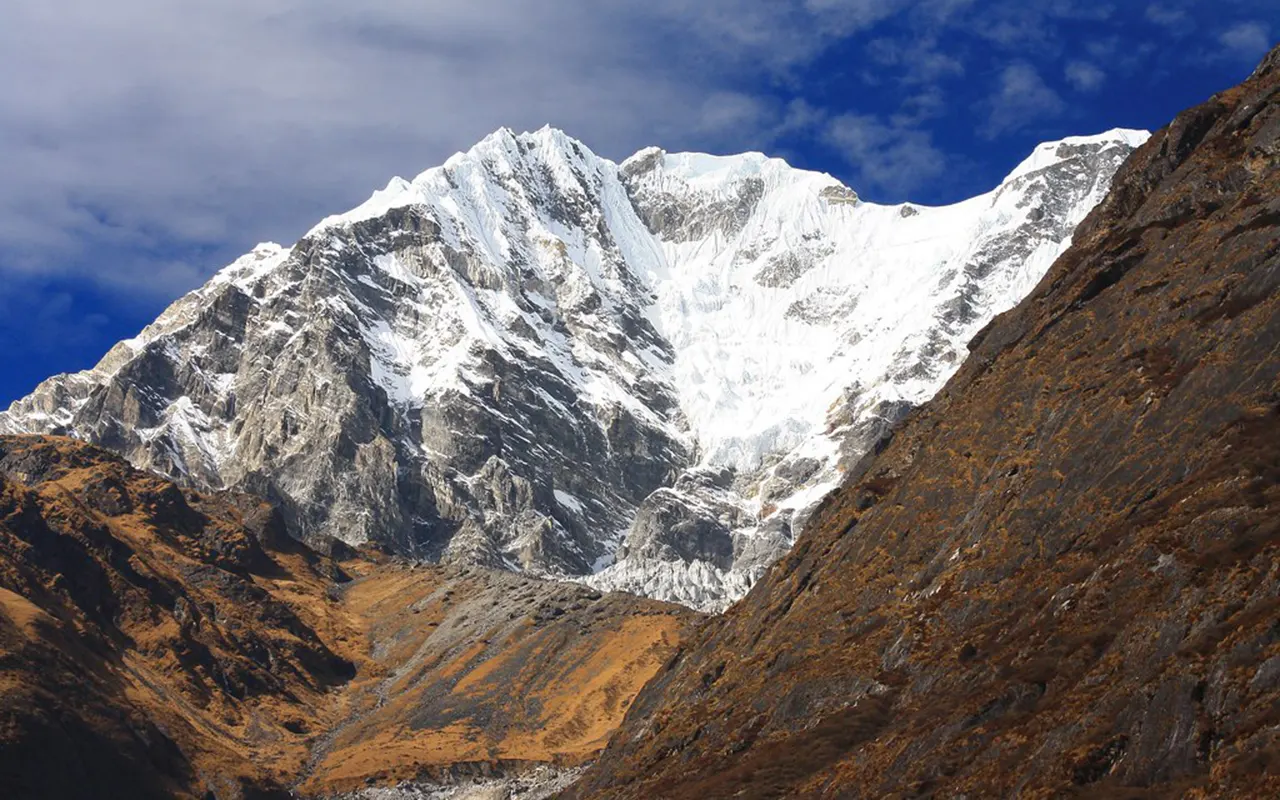
Ama Yangri lives up to its name as a viewpoint. From the summit’s 3,770 meters, you have an unobstructed 360° panorama of the Himalayas. To the north soar the rugged Langtang Lirung (7,227 m) and even distant Shishapangma (8,013 m). Ganesh Himal and Dorje Lakpa stand to the east, the Annapurna range and Manaslu to the west.
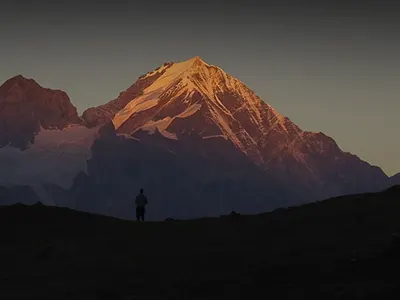
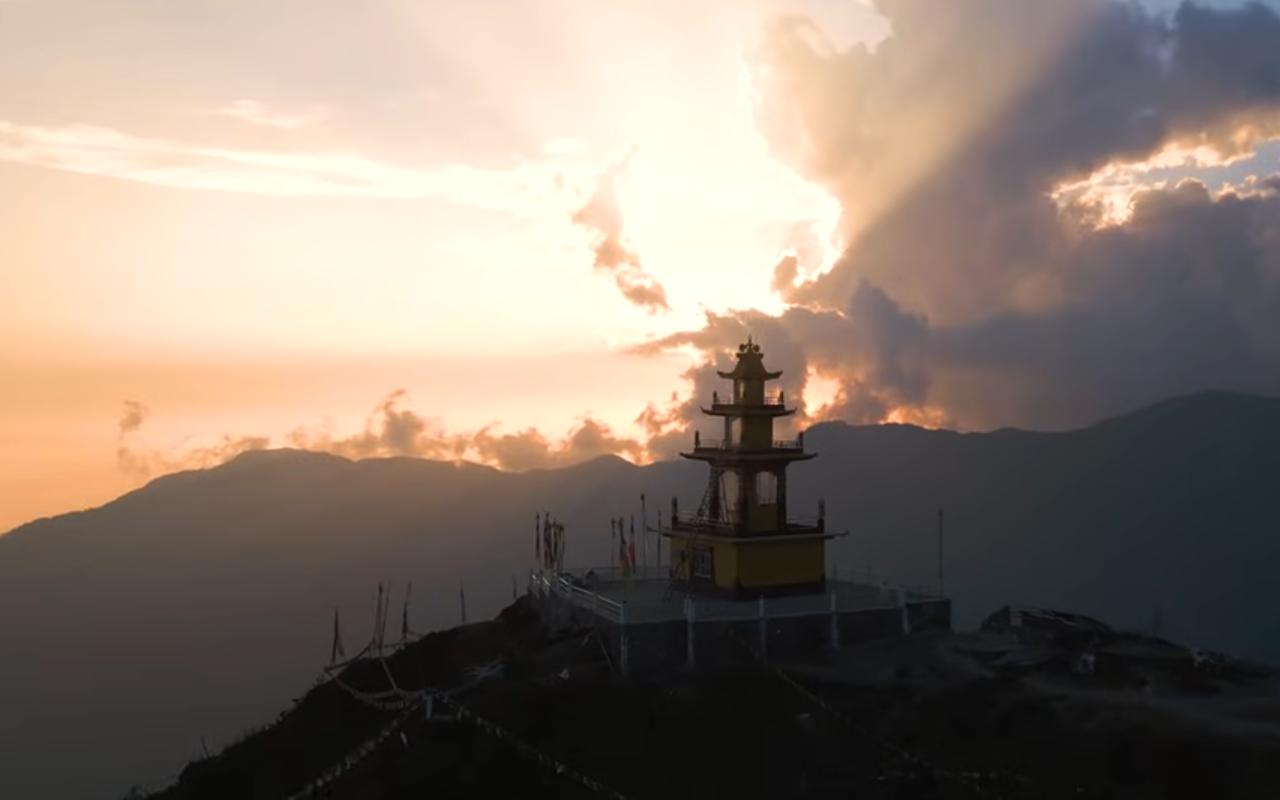
On a clear morning, the slanting sun paints these peaks in gold and pink before dawn. In the softly lit pre-dawn hours, snowfields and ridges glint gold as the first rays streak across the sky – a magical Himalayan sunrise. This sweeping view rivals those of more famous treks, even though Ama Yangri’s trail is relatively short.
The climb to Ama Yangri winds through richly forested Helambu slopes. Initially, you pass mossy groves of fir, pine, and oak. In spring (April–May), the hills are ablaze with rhododendron – Nepal’s national flower – in brilliant reds, pinks, and whites.
You’ll also see magnolia and maple blossoms. In autumn, the forests glow golden with oaks; even in winter, the gnarled rhododendron trunks stand out stark against frost. Each season has its charm here: after the monsoon, new green shoots cover the understory, and even winter’s dustings of snow add a fresh feel to the trail.
This lush habitat supports surprising wildlife. Trekkers often spot gray langur monkeys leaping through the treetops and barking deer (musk deer) grazing quietly. With luck, you may glimpse the elusive red panda or see bear tracks in damp brush.
In higher alpine meadows, hardy Himalayan tahr (goat-antelopes) move sure-footed on rocky slopes. Birdwatchers will enjoy pheasants calling from the ridges, sunbirds darting among blossoms, and eagles or hawks circling above. Every step brings something new to see – a rare wildflower, an iridescent butterfly, or the gentle murmur of a prayer.
Planning Your Visit
Reaching Ama Yangri is relatively easy by Himalayan standards. The Helambu region is about 90 km north of Kathmandu, connected by the Melamchi-Sundarijal highway. From Kathmandu, you can catch a minibus or jeep heading east out of Ratna Park or Sundarijal to Timbu, a small road head village at 1,600 m. The drive takes roughly 5–6 hours on a winding, bumpy road (note: heavy rains often cause landslides that block this road in the monsoon).
At Timbu, you must switch to a local jeep or walk. The motorable road currently ends just short of Tarkeghyang (2,600 m), so travelers usually hire a 4WD for the last 1–2 hours or walk (1 hour) from Timbu up to Tarkeghyang village. Tarkeghyang is a well-known trekking hub (2,600 m) with several lodges and tea-houses, plus the old gompa. Many itineraries break the ascent into two stages: overnight in Tarkeghyang, trek up to Ama Yangri Base Camp (3,300 m) on day 2, and summit on day 3.
Base Camp (Chyomuthang) has only a few simple tents/tea-houses, so it’s wise to reserve spots ahead of peak days. The next morning, you set out very early (often before 4 AM) for the 1–2 hour climb to Ama Yangri’s summit (3,770 m). On a clear day, you arrive in time to watch the sunrise paint the peaks before descending. Then you return to Tarkeghyang and walk or jeep back to Timbu for the return drive to Kathmandu.
Duration: Most trekkers plan about 3–5 days for this route (Kathmandu→Timbu→Tarkeghyang→Ama Yangri→return). A sample itinerary is: Day 1 – Kathmandu to Tarkeghyang; Day 2 – Tarkeghyang acclimatize or short hike (e.g., Shermathang); Day 3 – Tarkeghyang → Ama Yangri Base Camp; Day 4 – Summit Ama Yangri → back to Tarkeghyang; Day 5 – Tarkeghyang → Timbu → Kathmandu.
Fitter hikers can shorten it to 2–3 days by driving higher on Day 1 or sleeping in tents (a few nights of rough camping is also an option). (If absolutely necessary, some ambitious teams start at midnight on Day 2 from Tarkeghyang and do Tarkeghyang→summit→back in one very long day.)
Best Season: Ama Yangri can be trekked year-round, but spring (Mar–May) and autumn (Sep–Nov) are ideal. In spring, the rhododendrons bloom, and the weather is mild. After the monsoon, autumn skies tend to be crystal clear. Winter (Dec–Feb) is cold and often snowy, but offers solitude and stunning white scenery (nights often drop below –10°C).
Monsoon (June–Aug) brings frequent rains, muddy trails, and leeches on the lower paths, so fewer trekkers attempt Ama Yangri then. (One perk: post-monsoon, the forests are emerald-green, but always check the road status before you go.)
Permits: Ama Yangri lies within the Langtang National Park buffer zone, so trekkers need a Langtang National Park Permit (NPR 3,000) and a TIMS Card (NPR 1,000). No separate Helambu permit is required.
If you extend into Langtang National Park (e.g., hiking via Shermathang or beyond), you’ll also need the Langtang Park permit (~NPR 3,000). Guides and agencies can arrange all permits in advance; independent trekkers often buy TIMS and Langtang permits in Kathmandu and get the Helambu permit in Timbu (cash only). Always keep permit and passport copies with you – rangers occasionally check.
Altitude Tips: Ama Yangri’s summit is 3,770 m, but the climb is gradual (only one night above 3,000 m). Altitude sickness is uncommon if you ascend slowly. Drink plenty of water and rest if you feel headaches or nausea.
Taking an extra day to acclimatize in Tarkeghyang or Shermathang can help. If you do feel unwell, simply stop or descend – there’s no rush. (Note: Ama Yangri is a trekking peak, not a technical climb – you do not need ice axes or ropes, just good boots and fitness.)
Gear & Essentials: As with any Himalayan trek, be prepared for big temperature swings. Pack a sturdy pair of hiking boots (with ankle support). Dress in layers: moisture-wicking base layers, a warm fleece/down jacket, and a waterproof rain shell. Nights at 3,300+ m are cold, so a warm sleeping bag (rated –5°C or lower) is wise.
Bring sunglasses and sunscreen for the intense mountain sun. Also pack a hat and gloves for the wind. A water bottle (1–2 L) and purification tablets or a filter are very helpful, since taps are limited. A simple first-aid kit (band-aids, painkillers, altitude pills) and some high-energy snacks (nuts, bars) are advised. Headlamps are essential for the pre-dawn summit walk.
Checklist Packing
This is what you should carry to your Ama Yangri trip:
Warm clothes– Pack layers of base layer, fleece, and an insulated jacket, as well as a waterproof raincoat
Gloves and hat – Keep your hands and your head warm, particularly in the mornings and evenings
Good hiking boots – Select ankle-supported waterproofs and wear warm trekking socks
Trekking poles -They come in handy during steep or slippery paths
Sleeping bag – A warm bag with a rating of approximately -5 °C and a light sleeping pad where camping
Water bottle and purifier– Pack at least a litre of water and purification tablets or a filter
Headlamp or torch – With spare batteries, the first climb in the early morning, or lodges in the dark
Small first-aid kit– Contain blister plasters, painkillers, and simple altitude medicine
Snacks– Nuts, energy bars, or dried fruit to have instant power on the trail
Cash and documents – Bring Nepali rupees in small notes (no ATMs after Timbu) and passport, and permit copies
Travel insurance – This is important to ensure that it is inclusive of trekking above 3,000 m.
Toiletries – Toilet paper, soap, and hand sanitizer; most lodges have rudimentary squat toilets and little running water.
Connectivity – Mobile phone coverage (Nepal Telecom) works in most Helambu villages, so you can often text or call from lodges. Wi-Fi is rare. Electricity is limited – most tea-houses use solar panels or small generators after dark. Bring a power bank or solar charger. And carry enough cash (Nepali rupees) since there are no ATMs beyond Timbu.
Hidden Trails and Extensions
Ama Yangri may serve as the focal point of a more extended Helambu expedition. There are a few side roads, which lead off the road:
– Melamchi Ghyang (3-4 hrs from Tarkeghyang): It is a Tibetan-inspired village with an ancient gompa and stone houses. You may spend the night at this place and taste dhindo (buckwheat porridge) or yak cheese stew, which has been cooked by a local family.
– Sermathang – (5-6hr via Melamchi Ghyang): Head south through pine and oak forest to Shermathang and then on to Sermathang. The monastery in Sermathang (3,100 m) is massive and hosts festivals, as well as has sweeping views. The path is smooth and picturesque. There are numerous tea-houses and homestays in Sermathang, which are ideal for spending another night.
– Helambu Circuit (7–10 days): For those with more time, you can join the full Helambu Circuit. After Sermathang, you’d cross Tharepati Pass (3,690 m), then descend via Gul Bhanjyang, Chisapani, Chipling, and Tatopani back toward Timbu. This route connects dozens of villages and showcases Helambu’s rich culture and forests.
Even a short detour can enrich the trip. Examples include going to a local gompa or village festival, or walking to a waterfall. These are the ways off-road that allow tourists to explore the Tamang farmers and Sherpa families and find themselves in the village life on a personal level. Homestay hosts tend to invite tourists to share Nepali foods, gardening, or livestock farming, which is indeed a real village life.
Responsible Travel and Cultural Etiquette
Ama Yangri is not only a beautiful hiking trail, but it is also a holy mountain. There should be respect and mindfulness at all times. Remember the following rules:
– Dress/Behavior: Wear simple dresses (Shoulders and legs covered) in villages and religious places. Shoes should be removed when entering gompas or stupas, and one should walk clockwise around shrines and keep one’s voice low. Asking to take photos of people or ceremonies is always good.
– Support Locals: Spend the night in communal lodges and homestays and purchase locally available art or food. Ingular homestays such as Dorje Lhakpa, Ama Yangri, and Yangrima Eco Lodge (in Sermathang) will make sure your money is helpful in Hyolmo families. Find handicraft products, yak cheeses, wool hats, or apricot jam that are made by local people.
– Leave No Trace: Clean up any non-biodegradable waste (do not use plastic bottles, carry reusable dishes). Use the marked trails to save the sensitive forests. Do not meddle with animals or religious items. Every conscious deed contributes to the conservation of the holy and natural heritage of Ama Yangri.
Helambu Hospitality: Local Foods and Homestays
No trek is complete without sampling Helambu’s hearty mountain cuisine. Meals here reflect the Tibetan/Sherpa-influenced traditions of the Hyolmo people. A typical dinner features dal bhat (boiled rice with lentil soup and vegetable or meat curry) – Nepal’s staple dish.
Other local specialties include rildhok (spicy potato stew with mashed potato dumplings), shyakpa or thukpa (noodle soup with vegetables), and dhindo (maize or buckwheat porridge). You may also find Tibetan-style momos (meat or vegetable dumplings) on menus. For beverages, butter tea (suyou cha) and hot millet or barley beer are common – and a welcome treat after a long trek.
Villages like Tarkeghyang, Sermathang, and Melamchi Ghyang offer many simple tea-houses and family homestays. For example, Sermathang alone has over a dozen homestays (run by Lamas, Sherpas, and others) and the Yangrima Eco-Lodge. In Tarkeghyang, you’ll find several guesthouses with hot showers and even solar electricity.
Staying in these small lodges means room and board are very affordable (often US$5–$10 per night), and the hosts cook dinner on wood stoves. Guests often end the day sharing stories over butter tea or hot Nepali chiya. When you book community-based homestays (through Visit Helambu network), you are investing in local families and contributing to the preservation of the culture and environment of Helambu.
In Summary
Ama Yangri is a trip into the very core of the Himalayas of Nepal- it is a voyage of spiritual awakening, cultural experience, and the stunning mountainous landscape. The trekkers are treated with prayer flags in the morning, the warm hospitality of the Sherpas, and sweeping views of the Himalayas.
Ama Yangri is less traveled compared to the popular trails, hence making the route feel wild and peaceful. Those who go on a trek with respect and curiosity will not only see the breathtaking scenery but will also appreciate the mountain culture of Nepal. One should be made to remember how large the world can be as they stand on the peak overlooking the sunrise and the friendliness of the people who make their home in the mountains.
Don’t forget about the basics. Before you head out, you need to have: valid permits, a pair of good-quality boots, some warm clothes, and a polite demeanor. A small dose of planning and an open heart will also help Ama Yangri to provide travelers with a memorable 3-5 day tour out of Kathmandu – an adventure that will reach not only the earth but the soul.
Detail Information
Location – Helambu region, Sindhupalchok District, Nepal (90 km N of Kathmandu)
Peak Elevation – 3,770 m (12,370 ft)
Duration– 3–5 days (Kathmandu→Timbu→Tarkeghyang→Ama Yangri→return)
Difficulty – Moderate (steep final ascent but well-graded paths)
Best Seasons – Spring (Mar–May) & Autumn (Sep–Nov); winter (Dec–Feb) cold; monsoon (Jun–Aug) wet and risky
Permits – TIMS card; Helambu entry permit (~NPR 500); Langtang NP permit if visiting beyond Ama Yangri
Must Have – Gear Hiking boots; warm jacket; rain gear; sleeping bag (–5°C); sunscreen; headlamp
By trekking to Ama Yangri with care and curiosity, you’ll not only stand on one of Helambu’s hidden gems but also forge a profound connection with Nepal’s living mountain traditions. This is one Himalayan adventure that truly touches both earth and spirit.